Revisiting Eastland Shopping Plaza

It is very apparent that I need to organize things a bit better at home. Whenever I need to find something that I haven’t seen for a long time, inevitably it turns into a total upheaval of seldom used drawers, boxes that were packed away in the attic or garage, and even containers hidden under the beds.

Such was the case recently as I was searching for family photos, which by the way, I never did find. However I did come across a group of photos that I hadn’t thought about for a long time. In fact, these have been packed away for almost 40 years!

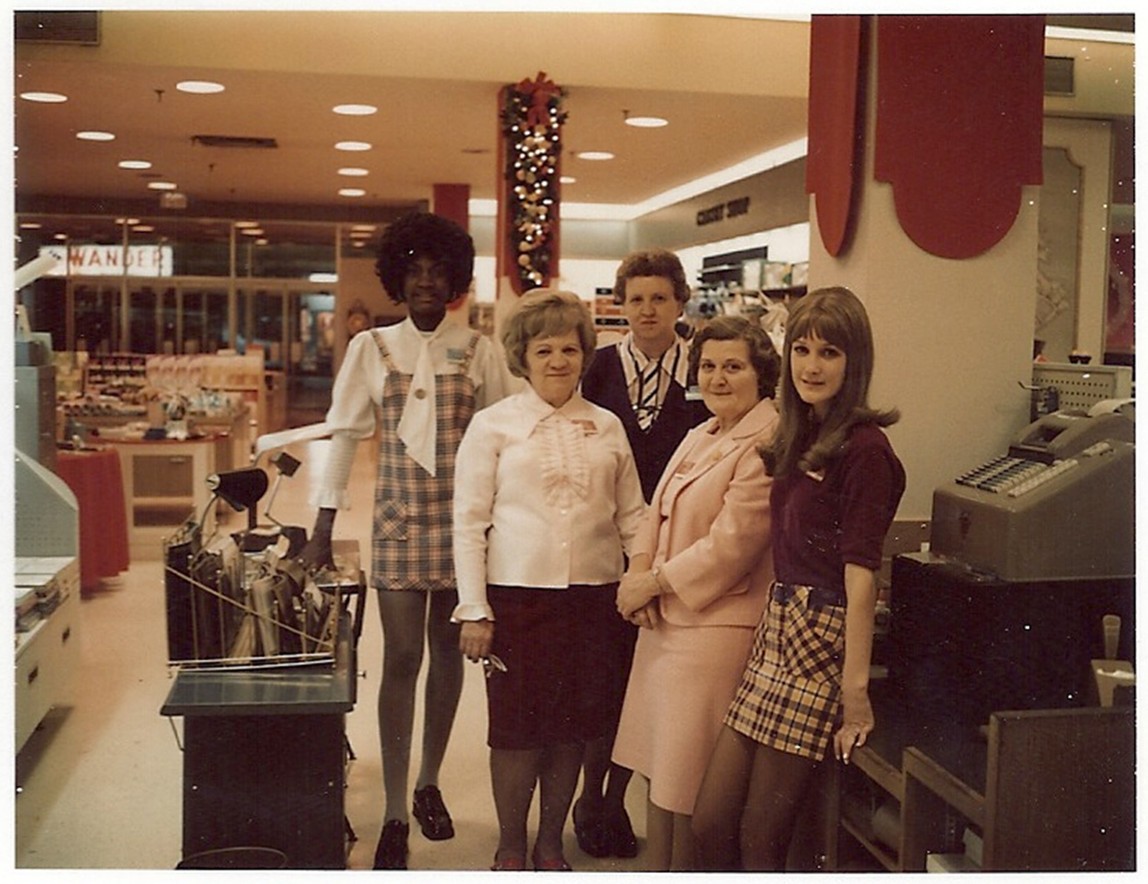
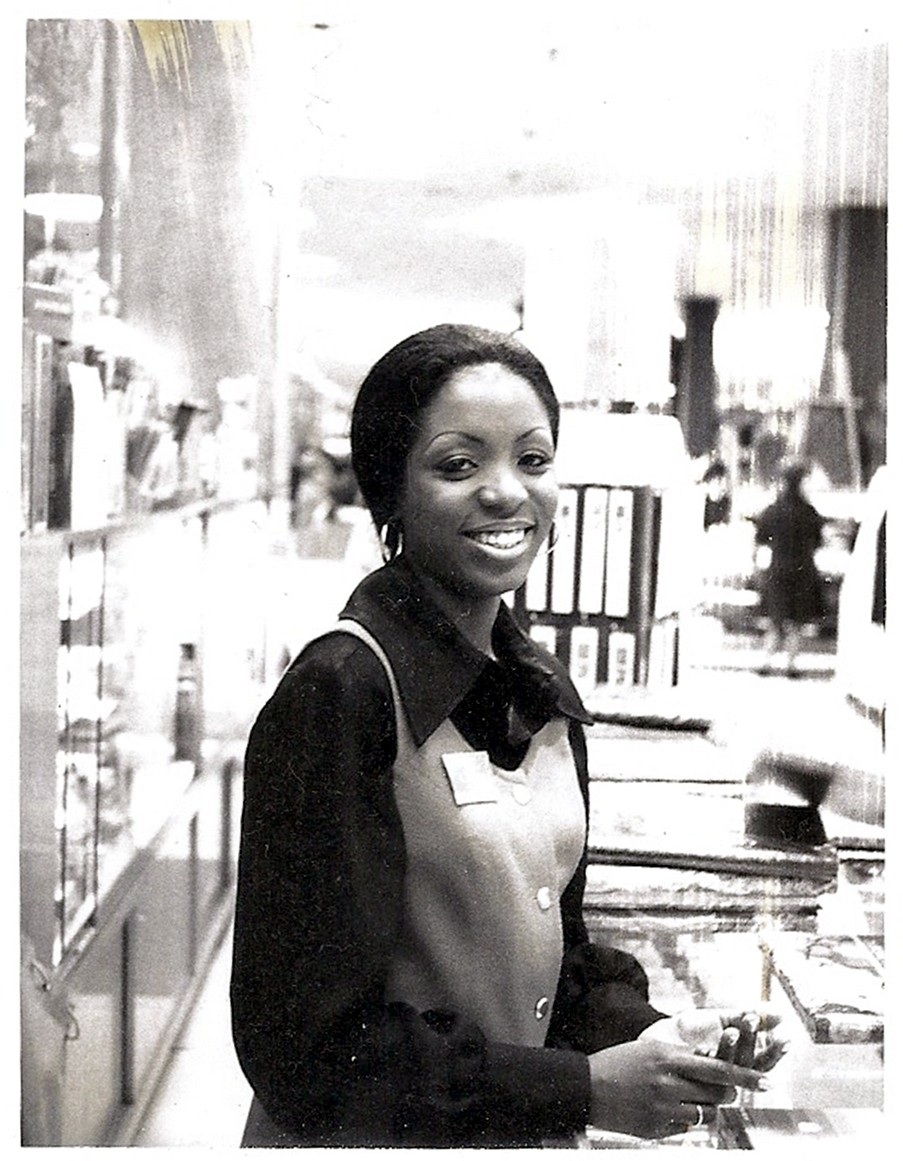
When I turned 18 shortly after I had graduated from Serra High School, I began working at Gimbels in Eastland Shopping Plaza. As a Christmas “extra,” I was moved from department to department throughout the season until I finally was moved to the Camera Department, where I stayed until I resigned after college graduation and headed off to California.

The Camera Department was located on the First Floor and ran alongside the Up Escalator to the Second Floor. Positioned behind the counter, I looked out of the side entrance to the store and could easily see Wander Sales at the end of the mall. If you were facing the camera counter, the Coin and Stamp Department was to the right, and directly behind you was the Stationary and Card Department, immediately adjacent to the “Notions” Department.

Periodically, we would receive new camera models and would be permitted to take some test photographs with them to check out all of the features. I hung on to a few of them and have posted them below. These were taken prior to the mall was enclosed, and a few of them were taken on a snowy day in November that was the day before Thanksgiving. Others were taken later that December and in April.

The parking lot outside of Gimbels front door – Day before Thanksgiving – 1971

I hope you enjoyed seeing these photos. Maybe you knew one of them, maybe you saw one of them and just maybe it was fun to reflect back over 40 years ago when Eastland was young, when Gimbels was thriving and when days were just a bit gentler.

Posted in McKeesport, Stores and Businesses | 44 Comments

Time to Empty the Ketchup Bottle Again

Well, it’s just about time for another ketchup bottle to be cleaned out. As I mentioned in past posts, periodically, my wife will create a pot of the most fantastic chili by adding miscellaneous ingredients that may need to be used up, rather than just discarded. One of those items is the ketchup from a nearly empty bottle. With just a bit of water added to thin the contents, Judy will add the watery mixture to the pot of chili and voilà, tastier chili!!  To me, emptying the ketchup bottle on my blogs allows me to post some random and disjointed thoughts that I’ve been holding inside. Thanks for putting up with the haphazard comments that fortunately do not surface too often! Here goes:

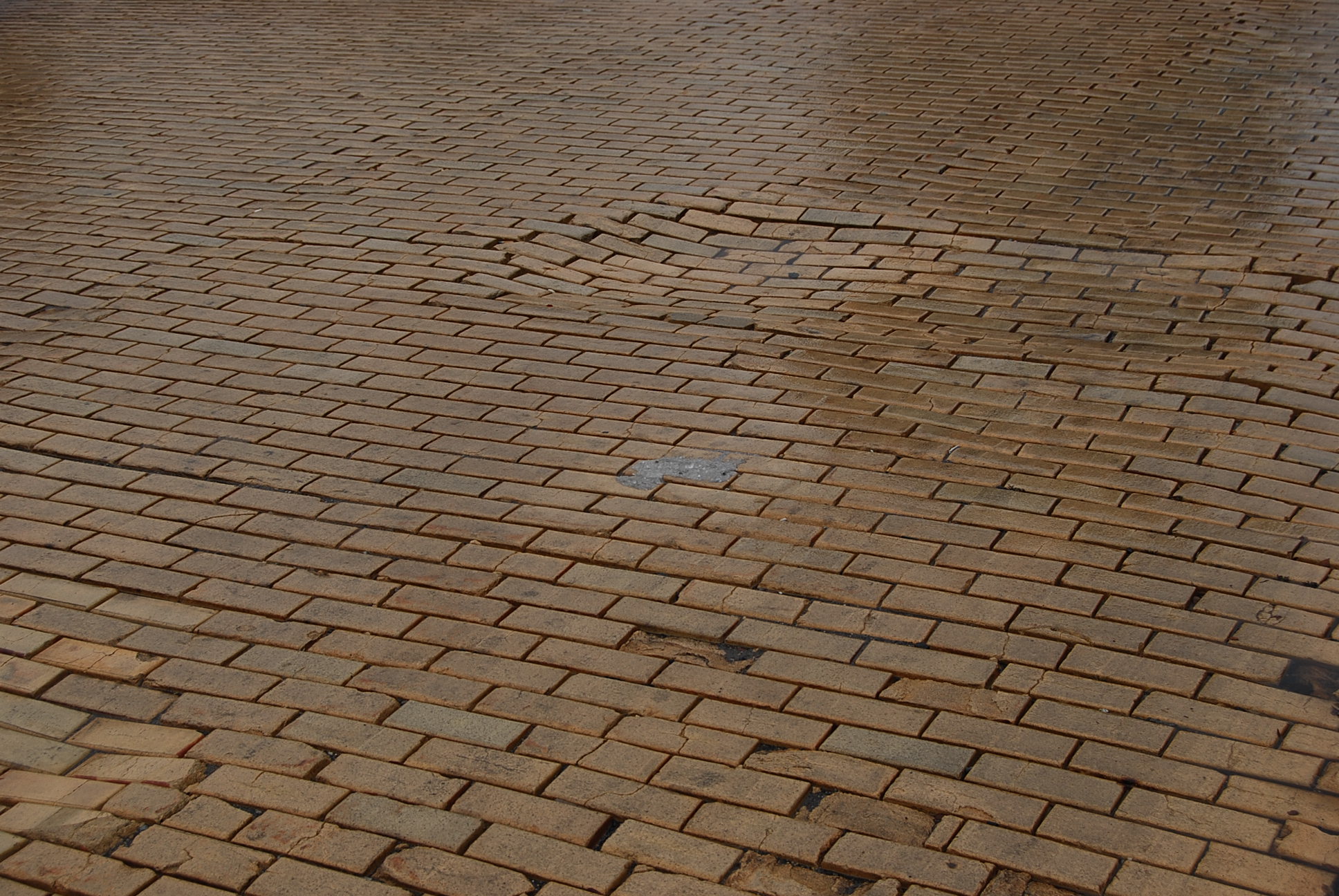
I remember those big piles of bricks that were always piles next to the site where a street crew would be working on a repair along Kennedy, Grant or any one of the many brick paved streets in Duquesne. Each one would be lovingly replaced when the work was done, thus preserving the streets we loved.

Truth be known, I hated the smell at Avenue News, aka “Elsie’s” when they were roasting peanuts. I can’t stand the smell or taste of peanut butter either, so it’s no wonder the smell turned me off.

I used to love going to the Hilltop Dairy at the top of Kennedy Ave., but was always scared of the back portion of the store. It always seemed kind of ominous to me. I preferred the front part of the store and the candy counter where Mrs. Simcina would always be standing.

♥ I remember how excited my brother and I got each week as my mother collected two different sets of encyclopedias from Kroger’s. The first was The Golden Book Encyclopedia. If I remember correctly, Volume 1 was priced at 49¢ with the remaining 15 volumes priced at $1.49. Each week I would eagerly await the next volume to arrive in the store. The book was an adventure, containing page after page of colorful illustrations, photos and information. I used these books throughout grade school, researching information that helped me to ace homework assignments.

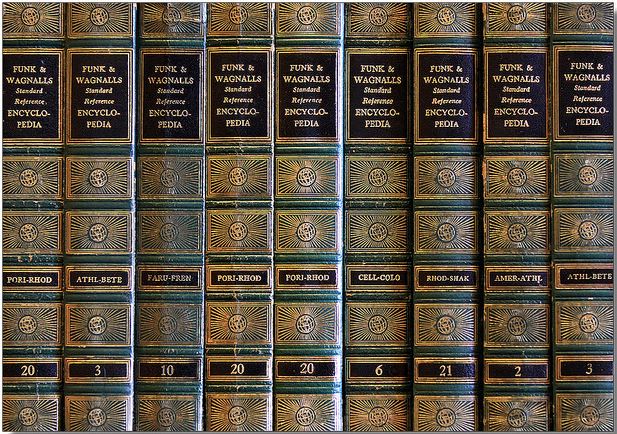
Kroger’s launched another promotional program in the late 50’s that caught my mom’s attention once again. Although the premise was the same, this time the encyclopedia offered was the Funk & Wagnall’s Standard Reference Encyclopedia.

There were 25 volumes in the set and it took Mom half of the year to collect the entire set. They had a green binding with shiny gold lettering. The set was published in virtually all black and white, including illustrations and photos. There were only a few color insets, so my excitement when a new volume arrived had waned a bit versus the Golden Book Encyclopedia. Nonetheless, long before of the existence of the internet and thanks to Kroger’s promotion, Funk & Wagnall’s served as the resource for home based research for many Duquesne students!

In case the name Funk & Wagnall’s sounds somewhat familiar, in the late 1960s through the early 1970s, Funk and Wagnall’s became part of one of the iconic jokes on the ground-breaking show Rowan and Martin’s Laugh-In, where a frequently-made reference was “Go look that up in your Funk and Wagnall’s.” Also, Johnny Carson’s Carnac the Magnificent sketches on The Tonight Show frequently made reference to the ‘answers’ being hidden from Carnac as “These envelopes have been hermetically sealed. They’ve been kept in a mayonnaise jar on Funk & Wagnall’s porch since noon today.” (Wikipedia)

Former Duquesne area resident and fellow hunky, Patti Salopek, has created a page on Facebook that is dedicated to Duquesne’s Croatian Immigrants. According to the page’s basic information section, the purpose of the page is to:

“Preserve Information and Pay Tribute to first and second generation Croatians that immigrated to Duquesne, Allegheny County, Pennsylvania and to those who lived and loved there through the first half of the 20th century.”

“Many Croatians immigrated to the city of Duquesne at or around the turn of the 20th century to work in the steel mills. Generations of their descendants have since scattered throughout the United States and elsewhere, taking with them old photos and family stories that document the extraordinary lives of their forefathers. This is a gathering place where people can share, preserve, and honor the memories of those early Croatian Immigrants to Duquesne.”

Patti has posted many pictures of wedding parties of couples from Duquesne. Some of the weddings took place in Duquesne, but others were in McKeesport or Rankin. I chatted with Patti this morning, and she would love our help in identifying some of the people in the photos. I was able to identify only one person, my Aunt Rose (Puskaric) Carr, in one of the photos. Dust off your best pair of reading glasses and memories and have at it. It will certainly be an adventure.

In addition to needing your help to identify the people in the posted photos, Patti would love to have additional vintage photos posted as well. The photos do not need to be of a wedding party. The only criteria she’s looking for is that the subjects fit the theme of Duquesne’s Croatian Immigrants.

I am posting a few clips of the photos in order to whet your appetite, so be sure you make your way to the page and check it out! If you have any trouble reaching it, let me know and we’ll work through it.

Click HERE to connect to the Duquesne’s Croatian Immigrant page on Facebook! While you are visiting the page, be sure to “like it” as well!

I don’t know about you, but I sure am missing real winter weather. Living on the shore as I do, the occurrence of snow does not happen too often, but we will normally get at least a couple of measurable snowfalls each year. This year? Nada!

In my mind’s eye, I harken back to those wonderful snowfalls we used to get in Duquesne. Snow pretty much covered the ground from December through February. Repeated smaller doses of snow and the steady stream of traffic to and from the mills, kept Grant Ave. and Kennedy Ave. snow covered throughout the winter. What now frightens people living south of the Mason-Dixon Line, was a normal part of life for us. Snow, unless it was monumental, never stopped the Duquesne Hunkys! We were invincible.

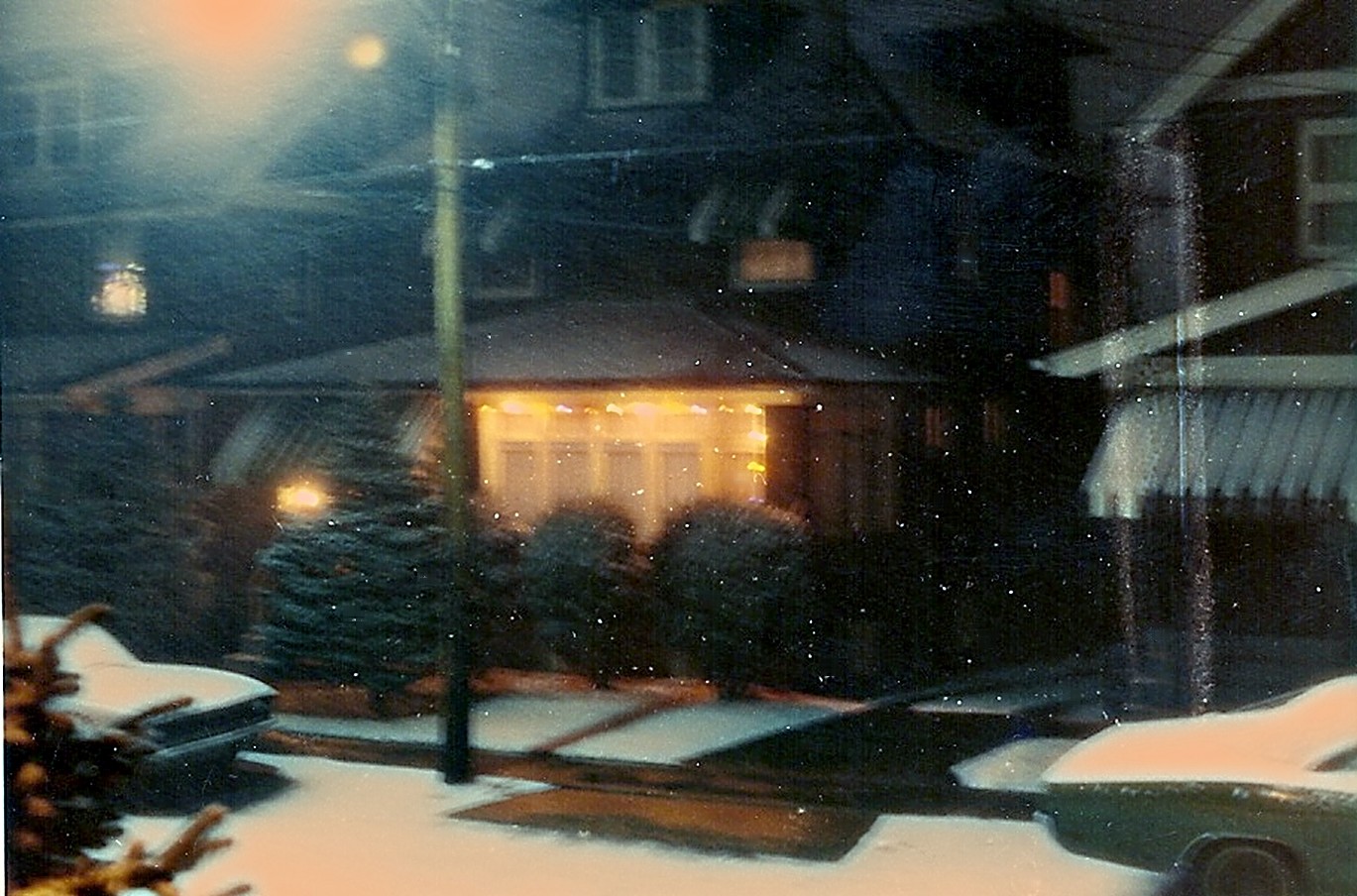
As a boy, I used to love sitting and staring out of my parent’s bedroom window at night time during a snowfall. Although the storm windows Dad put up each year helped to fend off the winter wind, icy crystals would always form on part of the glass, adding to the wintery view as I gazed out.

There was a single light pole on Thomas Street. It stood across the street from our house, right between the Gregory’s and the Hank’s homes. There was a huge incandescent lightbulb that glowed under a white round and ruffled metal shade, and just like the sky over the steel mills, the bulb cast a similar yellow-orange glow to the street below. In spite of the frosty windows, I remember seeing the snowflakes wildly flying by.

I would watch for hours, praying that the snow wouldn’t let up and the morning would deliver a day off from school and ideal sledding conditions for the roads leading out of St. Joe’s Cemetery.

I think there was a special category of food from Duquesne that would have been aptly titled “Duquesne Hunky Comfort Food.” This was especially true in the cold winter months. You could enter almost any home on a cold winter day and immediately smell the aroma of homemade soup filling the air.

To this day, nothing tastes better to me than a hot bowl of hunky chicken noodle soup. Loaded with those thin noodles, loads of carrots, parsley and celery, and then topped with some crumbled crackers. We would also have beef soup that contained the same ingredients as the chicken soup plus loads of onions as well. There was always something wonderful about coming into the kitchen from outdoors and seeing the thick condensation that had gathered on the windows from the warm and steamy kitchen. We’d immediately plop ourselves down at the table and enjoy the tasty treat Mom had prepared.

Just as good as the soup itself, was the meat that would be scooped out of the broth, placed on a platter, and surrounded by the potatoes and carrots that were cooked in the soup. We’d shred the beef on our plates and drizzle ketchup over it, a big pat of butter would be placed on our potatoes and then we would dig into one of the best meals around. Not a drop of soup or morsel of liquid, meat or veggies would be wasted. The soup pot would make its way to the stove each evening during the week until it was finally consumed, with each night’s reheating adding more and more flavor to the concoction.

In addition to soup, another favorite that my whole family would prepare would be this marvelous blend of macaroni, loads of crispy chopped bacon and thick tomato sauce that clung to the macaroni and bacon. It would be served hot and went perfectly with a grilled cheese sandwich. I could have eaten tons of the stuff. It was pasta before pasta was cool!

I am certain the each of you have your special memories of your favorite Duquesne comfort food. Please take a few moments and share your thoughts with all of us. We’d love to remember with you, and who knows, maybe you’ll help us remember a long forgotten favorite of our own!

Tu je k dobrému zdraviu a dobré jedlo” or in other words, “Here’s to good health and good food!”

Posted in Miscellaneous | 7 Comments

Words of Wisdom!

I want to thank Barry Long for sending me a a wonderful piece by Michael Gartner, editor of newspapers large and small and president of NBC News. In 1997, Michael Gartner won the Pulitzer Prize for editorial writing. Barry, one of our former Duquesne neighbors, now splits his time living in Honolulu, HI for 7 mounts of the year, and in Kirkland, WA for 5 months.

Although Mr. Gartner’s original piece was set in Des Moines, IA, I took the liberty of adapting it to bring it home…  The year, 1927; the place, Duquesne, Pa; the family any one of ours; and the message, priceless!

Enjoy………………………….


My father never drove a car. Well, that’s not quite right. I should say I never saw him drive a car.

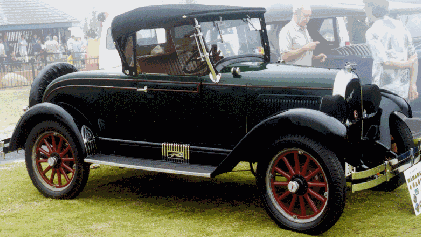
He quit driving in 1927, when he was 25 years old, and the last car he drove was a 1926 Whippet.

“In those days,” he told me when he was in his 90s, “to drive a car you had to do things with your hands, and do things with your feet, and look every which way, and I decided you could walk through life and enjoy it or drive through life and miss it.”

At which point my mother, a sometimes salty  Hunky woman, chimed in:

“Oh, baloney!” she said. “He hit a horse.”

“Well,” my father said, “there was that, too.”

So my brother and I grew up in a household without a car. The neighbors all had cars — the Kapolkas next door had a green 1941Dodge, the Merdas across the street a gray 1936 Plymouth, the Wilsons two doors down a black 1941 Ford — but we had none.

My father, a steel worker in Duquesne’s USS Plant , would take the bus to work and, often as not, walk the 3 miles home. If he took the bus home, my mother and brother and I would walk the three blocks to the bus stop, meet him and walk home together.

My brother, David, was born in 1935, and I was born in 1938, and sometimes, at dinner, we’d ask how come all the neighbors had cars but we had none. “No one in the family drives,” my mother would explain, and that was that.

But, sometimes, my father would say, “But as soon as one of you boys turns 16, we’ll get one.” It was as if he wasn’t sure which one of us would turn 16 first.

But, sure enough , my brother turned 16 before I did, so in 1951 my parents bought a used 1950 Chevrolet from a friend who ran the parts department at a Chevy dealership in McKeesport.

It was a four-door, white model, stick shift, fender skirts, loaded with everything, and, since my parents didn’t drive, it more or less became my brother’s car.

Having a car but not being able to drive didn’t bother my father, but it didn’t make sense to my mother..

So in 1952, when she was 43 years old, she asked a friend to teach her to drive. She learned in a nearby cemetery, the place where I learned to drive the following year and where, a generation later, I took my two sons to practice driving. The cemetery probably was my father’s idea. “Who can your mother hurt in the cemetery?” I remember him saying more than once.

For the next 45 years or so, until she was 90, my mother was the driver in the family. Neither she nor my father had any sense of direction, but he loaded up on maps — though they seldom left the city limits — and appointed himself navigator. It seemed to work.

Still, they both continued to walk a lot. My mother was a devout Catholic, and my father an equally devout agnostic, an arrangement that didn’t seem to bother either of them through their 75 years of marriage.

(Yes, 75 years, and they were deeply in love the entire time.)

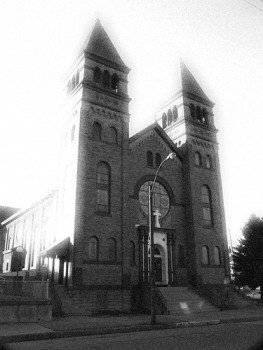
He retired when he was 70, and nearly every morning for the next 20 years or so, he would walk with her the mile to Saint Joseph’s Church. She would walk down and sit in the front pew, and he would wait in the back until he saw which of the parish’s two priests was on duty that morning. If it was the senior pastor, my father then would go out and take a 2-mile walk, meeting my mother at the end of the mass and walking her home.
If it was the assistant pastor, he’d take just a 1-mile walk and then head back to the church. He called the priests “Father Fast” and “Father Slow.”

After he retired, my father almost always accompanied my mother whenever she drove anywhere, even if he had no reason to go along. If she were going to the beauty parlor, he’d sit in the car and read, or go take a stroll or, if it was summer, have her keep the engine running so he could listen to the Pirates game on the KDKA. In the evening, then, when I’d stop by, he’d explain: “The Bucs lost again. The millionaire on second base made a bad throw to the millionaire on first base, so the multimillionaire on third base scored.”

If she were going to the grocery store, he would go along to carry the bags out — and to make sure she loaded up on ice cream. As I said, he was always the navigator, and once, when he was 95 and she was 88 and still driving, he said to me, “Do you want to know the secret of a long life?”

“I guess so,” I said, knowing it probably would be something bizarre.

“No left turns,” he said.

“What?” I asked.

“No left turns,” he repeated. “Several years ago, your mother and I read an article that said most accidents that old people are in, happen when they turn left in front of oncoming traffic. As you get older, your eyesight worsens, and you can lose your depth perception, it said. So your mother and I decided never again to make a left turn.”

“What?” I said again.

“No left turns,” he said. “Think about it.. Three rights are the same as a left, and that’s a lot safer. So we always make three rights..”

“You’re kidding!” I said, and I turned to my mother for support.

“No,” she said, “your father is right. We make three rights. It works.”

But then she added: “Except when your father loses count.”

I was driving at the time, and I almost drove off the road as I started laughing.

“Loses count?” I asked.

“Yes,” my father admitted, “that sometimes happens. But it’s not a problem. You just make seven rights, and you’re okay again.”

I couldn’t resist. “Do you ever go for 11?” I asked.

“No,” he said ” If we miss it at seven, we just come home and call it a bad day. Besides, nothing in life is so important it can’t be put off another day or another week.”

My mother was never in an accident, but one evening she handed me her car keys and said she had decided to quit driving. That was in 1999, when she was 90.

She lived four more years, until 2003. My father died the next year, at 102.

They both died in the bungalow they had moved into in 1937 and bought a few years later for $3,000. (Sixty years later, my brother and I paid $8,000 to have a shower put in the tiny bathroom — the house had never had one. My father would have died then and there if he knew the shower cost nearly three times what he paid for the house.)

He continued to walk daily — he had me get him a treadmill when he was 101 because he was afraid he’d fall on the icy sidewalks but wanted to keep exercising — and he was of sound mind and sound body until the moment he died.

One September afternoon in 2004, he and my son went with me when I had to give a talk in a neighboring town, and it was clear to all three of us that he was wearing out, though we had the usual wide-ranging conversation about sports and newspapers and things in the news.

A few weeks earlier, he had told my son, “You know, Mike, the first hundred years are a lot easier than the second hundred.” At one point in our drive that Saturday, he said, “You know, I’m probably not going to live much longer.”

“You’re probably right,” I said.

“Why would you say that?” He countered, somewhat irritated.

“Because you’re 102 years old,” I said..

“Yes,” he said, “you’re right.” He stayed in bed all the next day.

That night, I suggested to my son and daughter that we sit up with him through the night.

He appreciated it, he said, though at one point, apparently seeing us look gloomy, he said:

“I would like to make an announcement. No one in this room is dead yet”

An hour or so later, he spoke his last words:

“I want you to know,” he said, clearly and lucidly, “that I am in no pain. I am very comfortable. And I have had as happy a life as anyone on this earth could ever have.”

A short time later, he died.

I miss him a lot, and I think about him a lot. I’ve wondered now and then how it was that my family and I were so lucky that he lived so long..

I can’t figure out if it was because he walked through life,

Or because he quit taking left turns. “

Life is too short to wake up with regrets.

So love the people who treat you right.

Forget about the ones who don’t.

Believe everything happens for a reason.

If you get a chance, take it & if it changes your life, let it.

Nobody said life would be easy; they just promised it would most likely be worth it.”

ENJOY LIFE NOW – IT HAS AN EXPIRATION DATE!

Posted in Life in General, Miscellaneous, Parents | 8 Comments

Lessons From My Father

My dad has been gone for over 12 years. As cliché as it sounds, it only seems like yesterday that he was expressing his opinion about something I was doing whether I liked it or not.

My father, like many of Duquesne fathers began their life in humble beginnings and had ended it in much the same way. I now realize that it wasn’t necessarily a bad thing for that to have occurred. When I think back to everyday life for my dad and mom, my uncles and aunts, along with the village that raised me, the focus was different than when most of us stepped into adulthood.

Our parent’s opinions about what was important in life and career choices were just a few of the things that I, and many other “Baby Boomers” criticized. Just like George Baily in the classic Christmas movie “It’s a Wonderful Life,” many of us couldn’t wait to see Duquesne in our rearview mirror as we left for bigger, better, more important things that would build our career, make us tons of money and not make us get our hands dirty like our fathers. We were the Baby Boomers.

Out of curiosity, I did some research about Baby Boomers and just how we got that moniker! According to Wikipedia, my go to resource:

The United States Census Bureau considers a baby boomer to be someone born during the demographic birth boom between 1946 and 1964.

Landon Jones, who coined the term “baby boomer” in his book Great Expectations: America and the Baby Boom Generation, defined the span of the baby-boom generation as extending from 1943 through 1960, when annual births increased over 4,000,000. Authors William Strauss and Neil Howe, well known for their generational theory, define the social generation of Boomers as the cohorts born from 1943 to 1960, who were too young to have any personal memory of World War II, but old enough to remember the postwar American High.

The Golden Boomers are Baby Boomers who are retired or will retire from an occupation or profession. As the Baby Boomers are defined in different ways, the Golden Boomers can also be defined differently. The characteristics pertaining to the Golden Boomers are unique compared to those of the Traditionalist, the Generation X, and the Generation Y in population studies. In particular, with January 1, 2011 which “officially” started the Era of the Golden Boomers,” the term “the Golden Boomers” began to generate significant impact on worldwide populations. (January 1, 2011 is the date that a Baby Boomer, born in 1946, would start their social security benefits, at age 65.)

Marketing firms and professionals have begun to use the phrase “Golden Boomers” in describing the particular segment of the market as the size of older population grows and the potentials for business activities around the Golden Boomers by many industries are recognized.

Seventy-six million American children were born between 1945 and 1964, representing a cohort that is significant due to its size alone.

In addition to the size of the group, Steve Gillon has suggested that one thing that sets the baby boomers apart from other generational groups is the fact that “almost from the time they were conceived, Boomers were dissected, analyzed, and pitched to by modern marketers, who reinforced a sense of generational distinctiveness.” This is supported by the articles of the late 1940s identifying the increasing number of babies as an economic boom, such as in the Newsweek article of August 9, 1948, “Population: Babies Mean Business”, or Time article of February 9, 1948. The effect of the baby boom continued to be analyzed and exploited throughout the 1950s and 1960s.

My wife and I often talk about how significantly different our life is versus our parents. Early in our marriage, we would talk about how much more exciting it was to venture out from our childhood homes and explore new cities, new friends and new jobs. We both had good jobs and we both climbed aboard the Corporate Ladder, focus on moving forward in our careers. Our motivation was not only being able to earn as much as we could and to advance as far as we could, but also to satisfy that inner voice of our parents that urged us to “be all that we can be.”

In my career, I spread my wings and flew far from home, each time with my father’s blessing. Since leaving Duquesne, I have lived in California, Ohio, Illinois, South Carolina, Georgia, Alabama and Maryland. Each move meant bigger jobs, bigger responsibilities and huge adjustments. As I moved countless times from state to state and within each state, Dad remained in my childhood home. He was surrounded by his family and very content with his life. I on the other hand, continually tried to convince myself and my family that all of these moves were “good things, adventures and positive steps.” I used to think of those who never ventured out from their hometown during their career, as non-aggressive, unassertive and unadventurous. I now know that I could not have been more mistaken with my assessment. I came to this conclusion by reassessing the people who had populated my childhood years.

Let me explain. I have been attempting to rejuvenate my career in retailing. My primary reason is that currently, as a real estate agent, I am affected by the serious housing slump that is occurring. Actual home sales are very few and far between, and certainly, not even close to providing an income that could sustain us. For that reason, I am attempting to make use of my retail experience and secure a position with a company. Even though I have had over 35 years as a retail manager, running large department stores that generated over 100 million dollars in sales, I cannot get my foot in the door anywhere. Although my background is flawless and my references are outstanding, bottom line, my age has caught up with me. The fact that the vast majority of companies are looking for relevancy puts me at a disadvantage since I have been out of retailing for over four years. As one company representative put it:

“The competition is very hard in the position you are in. The basic skills are much the same as when you were in the field but the technical part has changed and the way people manage is very different. You have been out long enough that there are many new faces that are ready to be promoted into a management position with experience fresh from today not a few years ago and work at progressing not getting back to something.”

I will continue to plod along, hoping that I will hit upon an opportunity and company that will consider my experience an asset rather than a detriment. Hopefully, there’s someone out there that realizes that even though I have been out of the field for a few years, I’ve only had birthdays……not lobotomies.

This is where my father continues to provide life lessons. Through the example of his life and the lives of the thousands of hard working hunkies in the Duquesne area, I’ve come to realize that “true happiness” isn’t something that is achieved by chasing it. Happiness just sneaks up on you when you’re not looking and simply envelops you. My dad was a prime example of this point-of-view.

Dad was not a wealthy man, at least not in the material sense. However, he was one of the happiest guys I ever knew. He thoroughly enjoyed life, family and friends. He hunted, he’d play golf occasionally, he would meet and play poker, or just listen to the “Bucs” and Bob Prince while enjoy a few beers on the back porch with the neighbors. An impromptu Volk or Puskaric family picnic on a summer weekend, an evening excursion to the drive-in theater, or perhaps a trip to Jim’s Hot Dogs occurred throughout his life in Duquesne. A visit to the GBU on Grant Ave., sitting in his favorite pew at the 7:15 mass at Holy Name or even watching a rerun of his favorite John Wayne western all brought him happiness…. Real happiness.

As we ‘Baby Boomers” were out there pursuing the perfect life, our fathers were living it. Sure, there were plenty of bumps and potholes along the way, but they knew that there were support mechanisms surrounding them among family and friends. Often times I have felt I was living out my life surrounded in the company of strangers. I certainly have built many friendships among co-workers and neighbors, but none were ever as strong as the bond I’ve continued to have with my family.

There is an old Pennsylvania Dutch saying “We grow too soon old and too late smart.” My dad would quote this quite often. Little did he or I know how prophetic those words actually were. Just like Dorothy in the Wizard of Oz, in the end, happiness was just a click of the heels away. There truly is “No place like home!”

Posted in Life in General, Parents | 4 Comments

A Generation Fades

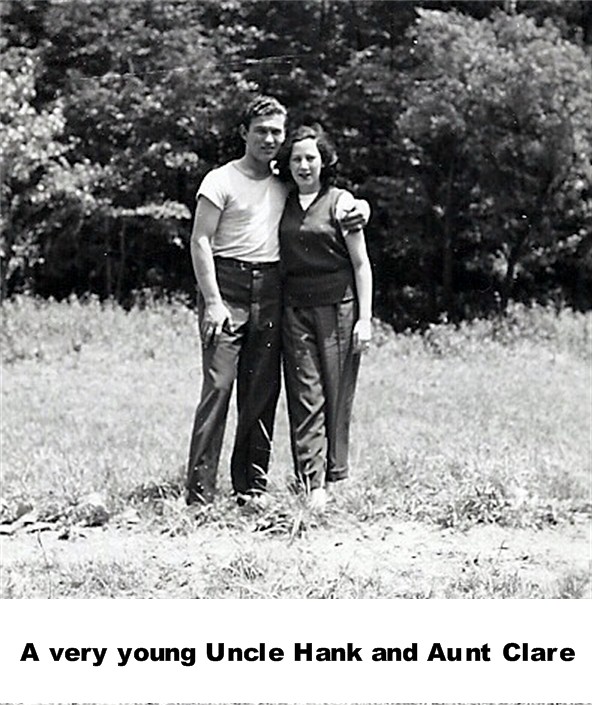
Last night, I received some very sad news. My Aunt Clare passed away at 85 years of age. Slowly but surely, the very roots of my childhood, my aunts and uncles, are regrouping for a spectacular family reunion in God’s kingdom. Although it gives me solace that Aunt Clare has been reunited with my Uncle Hank and our entire departed Hunky Clan, the sense of loss for her children and her entire extend family will be deeply felt.

Aunt Clare was my Godmother. We had a very special connection. Although we haven’t talked or visited in some time, she has always held a special place in my heart. From a very young age, I always felt “special” in Aunt Clare’s eyes. The truth be known, I think she made all of her nieces and nephews feel the same way. It was just her nature. However, I prefer  to feel that as her Godson, I was the singular recipient.

I remember that I would always receive an extra gift at Christmas from Aunt Clare and Uncle Hank. That’s what Godparents did back then. It certainly made me feel special since my brother and other cousin’s weren’t as fortunate as I with another gift to open when we visited her home. Aunt Clare was always sensitive to that fact and would quietly present the gift to me when others were not around. No pomp and circumstance….. just a quiet token of her love.

Aunt Clare had four children, two girls and two boys. Cheryl is the first born. She is about the same age of my only brother, Steve. Tommy was her first son, and he and I are about the same age. Etta, her third child, was her second daughter and the person who has been caregiver to Aunt Clare. Finally, Aunt Clare’s youngest child is Jerry. All of her kids live in the area and have been a constant part of her life.

Aunt Clare had that innate hunky ability to make everyone immediately feel welcome and part of the family. No truer examples of this exist than with the special relationship she had with her son-in-law Mike (Cheryl’s husband), and her two daughters-in-law, Marianne (Tommy’s wife) and Linda (Jerry’s wife.) Aunt Clare was an equally loving Grandmother and Great-Grandmother. As her family expanded, the love just grew and grew. The joy she felt when they were all together had to have been immeasurable based on the huge smile on her face.

Although those special times with Aunt Clare when I was a very young child will always be a part of my memory, our relationship blossomed even more in my teens.

Aunt Clare was ALWAYS COOL! She was “the aunt” in the family that understood trends, music, fashion, movies and all things important to the teenage mind. You see, Aunt Clare managed the concession stand at the South Hills Drive-In on Rt. 51 in Pleasant Hills. Along with her own children, I was also hired as part of the crew that worked at the concession stand. I think I worked there for 3 seasons, 1968, 1969 and 1970.

Working conditions were ideal for a teenager at the drive-in. Aside from the obvious….free movies, free popcorn, free pops…. was the fact we didn’t begin working until about 6 in the evening until about 2 in the morning. As any teenager will tell you, being able to sleep until 2 or 3 in the afternoon was near nirvana!

In addition to those perks, was the fact that Aunt Clare was my boss. Yes, she was very focused on providing great food and service, but she was always fun to work for and a blast to be around.

Each evening, I would make my way to her home on Lindberg Ave in Munhall to hitch a ride to the drive-in. I never minded the ride to work since my “Cool Aunt Clare” always drove the neatest cars. For two of the years that I worked at the drive-in, I was driven back and forth in a 1968 or 69 GTO convertible! It was a bright lime green with a white convertible top, white leather interior AND an 8-track player! I’m sure you can get the picture, a carload of teenagers (seatbelts didn’t become “law” until 68 or 69, but no one really paid attention to it) and the sounds of the Beatles, the Jackson 5 and the Beach Boys blasting as we tore up the road.

Most adults complain about the musical tastes of their teenage children. I know I did (with just cause!) Aunt Clare never complained about the music, she embraced it and pumped up the volume whenever we were together. When we were done with our workday at the drive-in, she’d suggest that we all jump into her above ground pool and swim for an hour or so. I’m sure the neighbors didn’t like it, but we were living and loving life.

I suppose that is how I choose to remember Aunt Clare. She was my one aunt who lived life to the fullest! In the words of Helen Keller, “Life is either a daring adventure or nothing at all.” There should have been no reason for Aunt Clare to have regrets when she left us yesterday. She HAD lived life to its fullest as well as positively impacted those that surrounded her with the love she craved and the love she gave.

I love you Aunt Clare, rest in peace.

Posted in My Hunky Family | 14 Comments

When Duquesne Was Young

Many of you share the same  perspective in time as I do about Duquesne. For the most part, the 40’s, 50’s and early 60’s are the “Golden Days of Duquesne” in our memories. If compared to the City of Duquesne’s present conditions, the differences are monumentally dramatic. When I was born in 1951, the city was 60 years old. The memory of what Duquesne looked like in the 50’s is forever etched in my mind, as if I always appeared that way. However, I was amazed at the beauty of the city just 36 years earlier in 1915.

Thanks to the generosity of Jim Hartman from the Mifflin Township Historical Society, I have been able to share countless photos and articles that illustrate the Duquesne we all remember. I will forever indebted to him for his kindness.

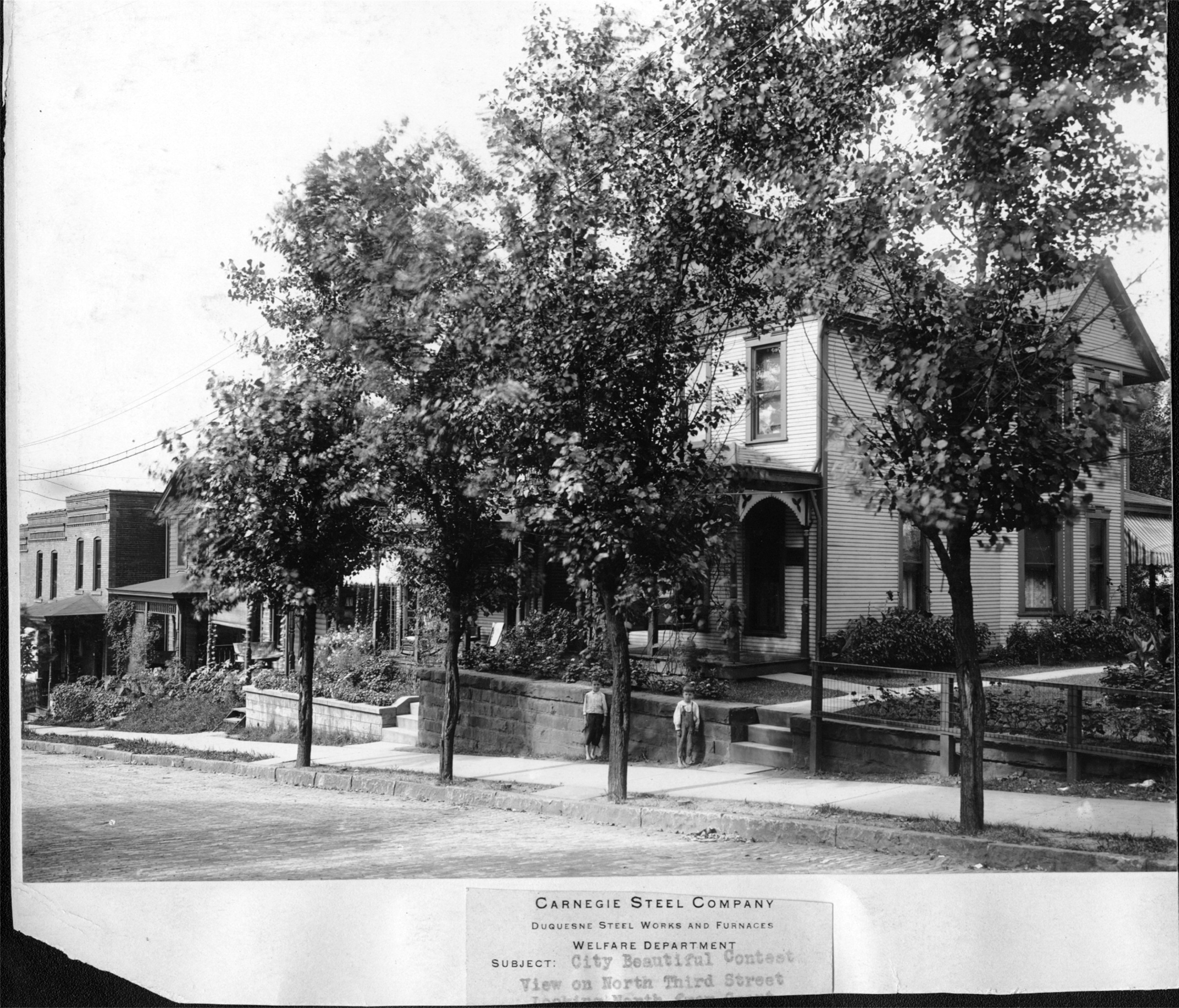
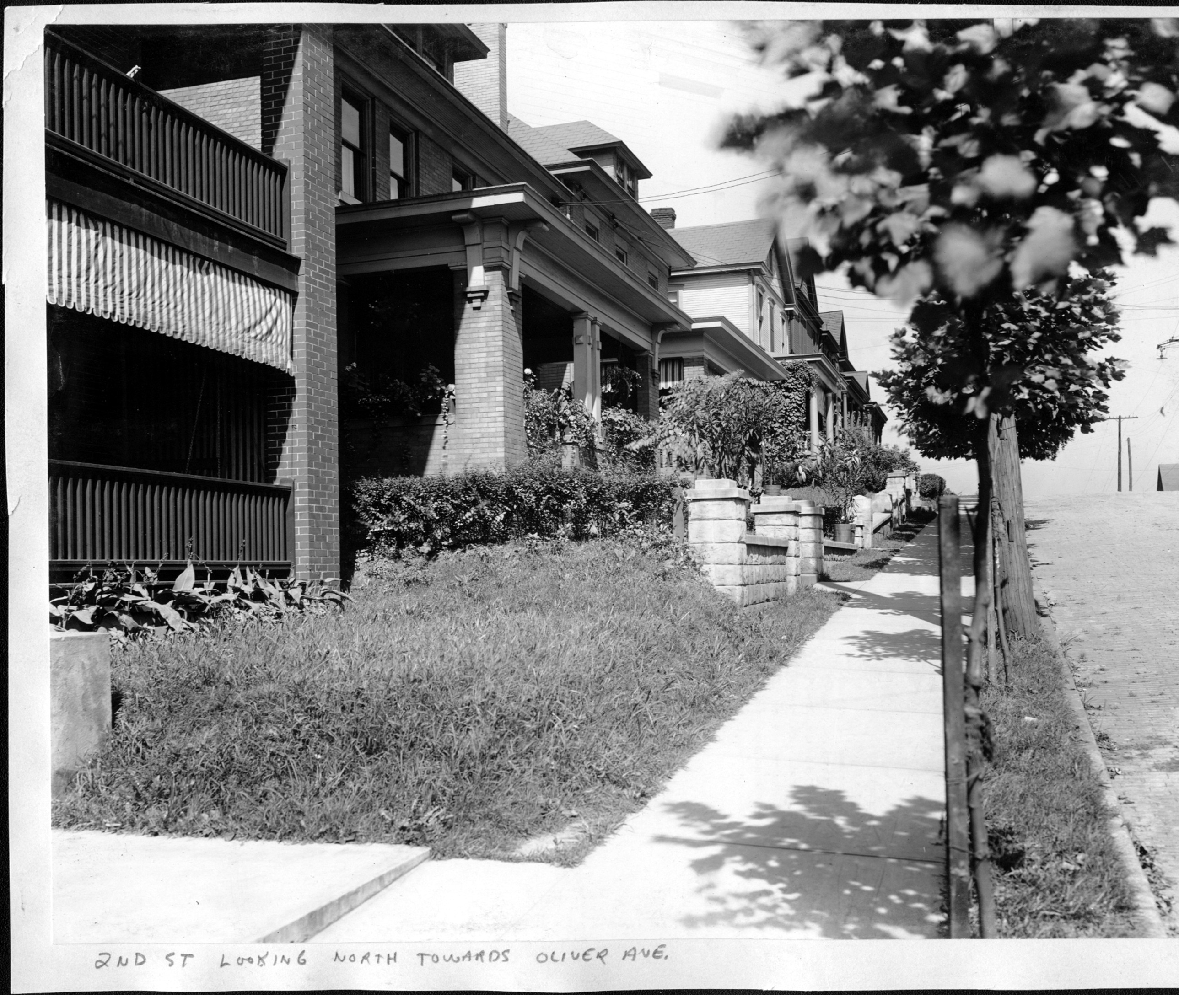
As I was sifting through some of these photographs, I found a group that struck me as such a striking array of images. It dawned on me that as special a place that Duquesne holds in our minds, we may have a skewed perspective on how incredible it really was!

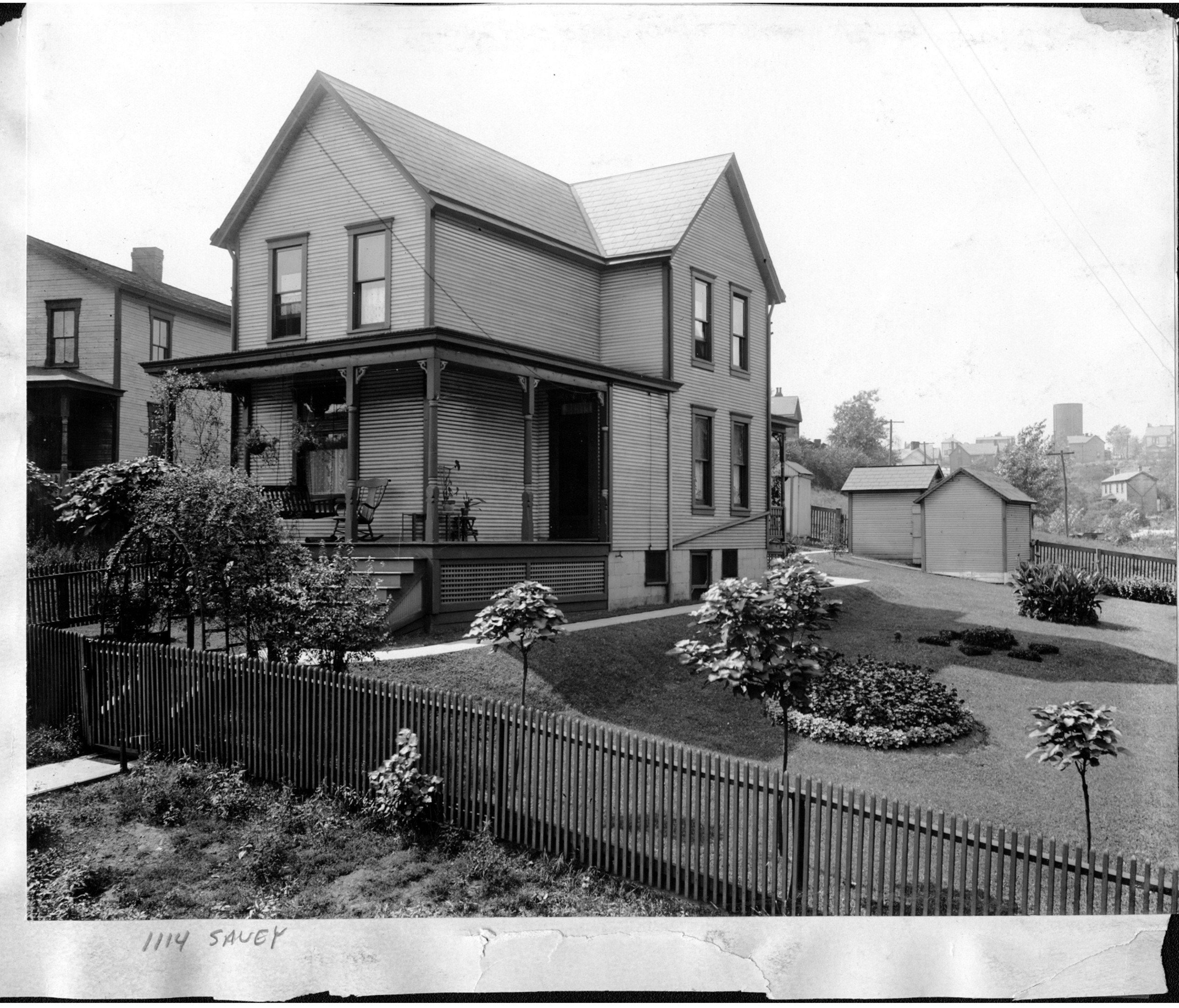
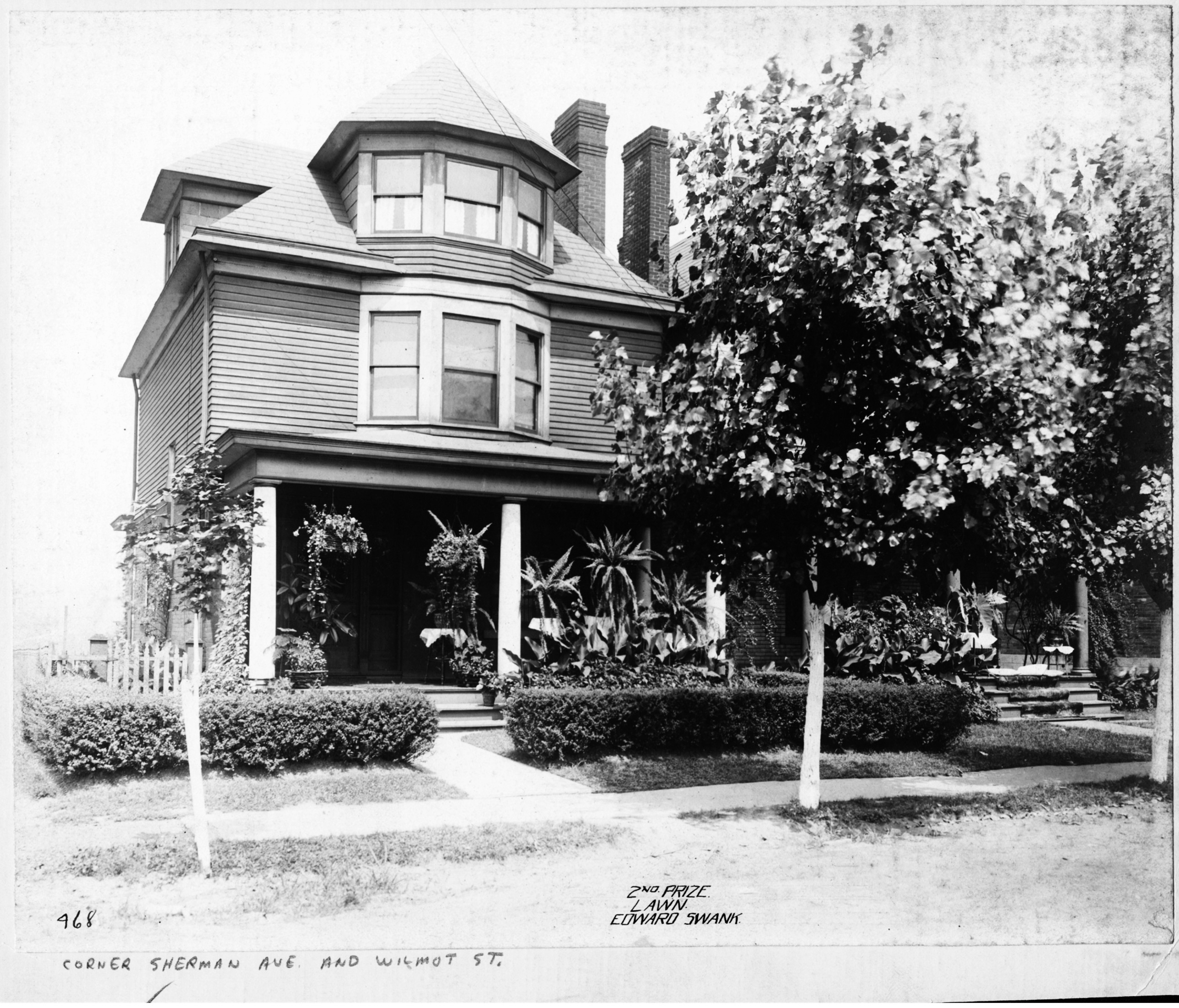
Duquesne was incorporated in 1891. The pictures I was looking at were taken in 1915 when the city was a mere 24 years old. In August of 1915, the city sponsored a “City Beautiful Contest.” Four years earlier in 1911, the Board of Commerce made the determination that “there were not enough flowers raised in this town to assemble a respectable bouquet from.” At that point, they formed a City Beautiful committee to address the issue. The committee encouraged the propagation of plants and flowers throughout the city, and the following year, began their annual “City Beautiful Contest. As you can see from the photos, by 1915, a virtual hunky rainforest had been created by some citizens!

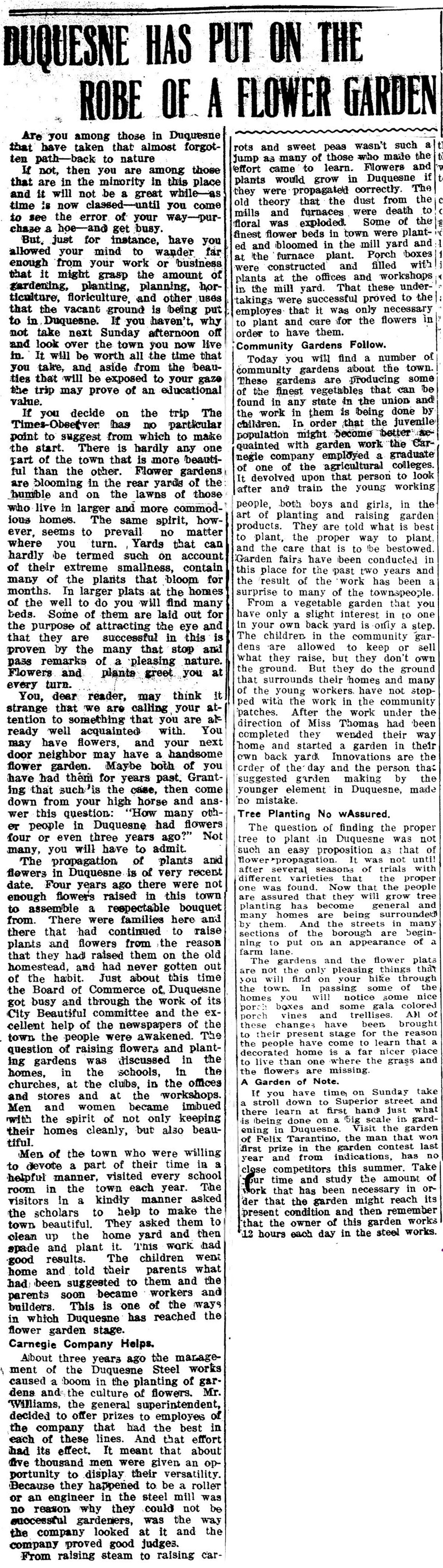
In addition to the photographs, I was able to find an article from the year they were taken that speaks to the contest and the entire concept of beautifying Duquesne. Unfortunately, I was not able to find a photo of the prize winning home of Felix Tarantino, but you’ll certainly get a flavor of what it was like.

I hope you enjoy looking through these. It was very hard for me to recognize any of the homes as they were. I ended up viewing them either on the PA Tax records or with Google Earth to see what they looked like today. I decided to refrain from sharing those “todays” with you. It was far too sad.

Posted in Duquesne History | 11 Comments

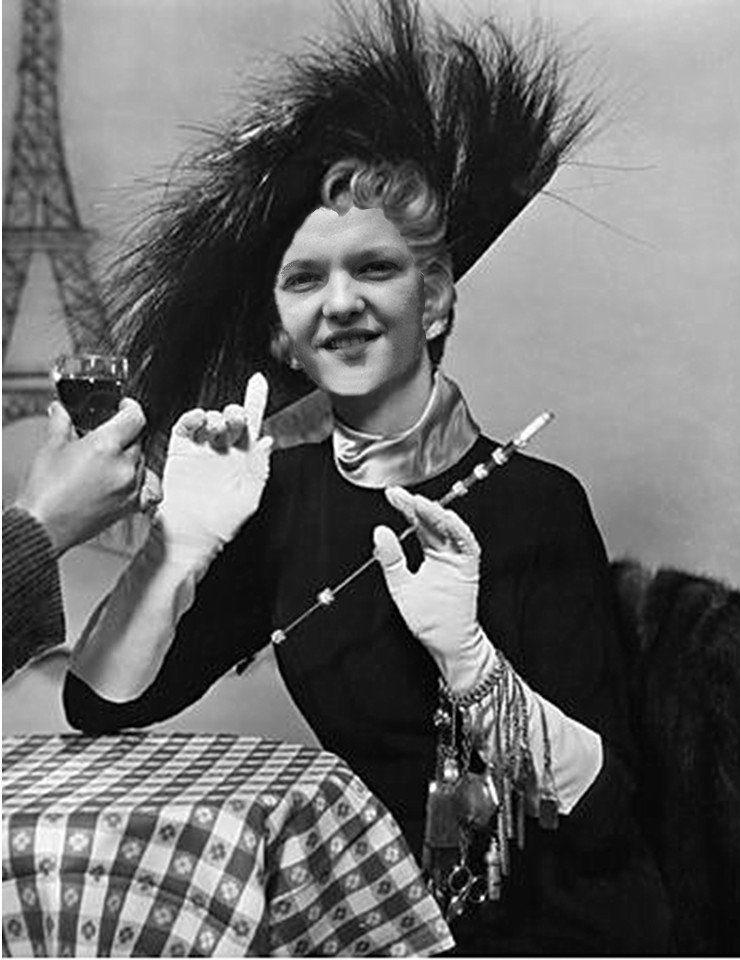
My Own “Auntie Mame”

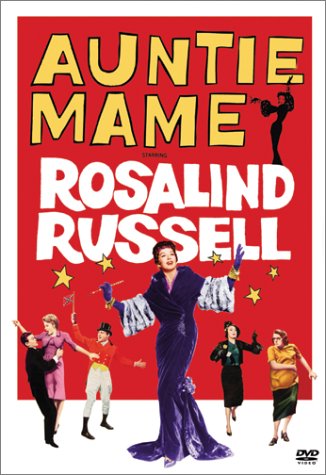
In 1955, Patrick Dennis published a novel that was loosely based on an eccentric aunt that was part of his life as a child. The novel followed the adventures of a young Patrick who had been placed in his Auntie Mame’s care after he was orphaned.

Eventually the novel became a play and then a movie in 1958, starring Rosalind Russell as Mame Dennis. It eventually received 3 Golden Globe and 6 Oscar nominations as well as being recognized as one of AFI’s (American Film Institute) 100 funniest films.

On a lazy weekend recently, I was up rather late, just surfing the net and occasionally glancing up at the TV. Around 1 a.m. in the morning, a local channel began to broadcast Auntie Mame. I really wasn’t in the mood to watch a movie so I decided to change the channel to see what else might be on. That’s when I discovered one of the biggest dilemmas a guy must occasionally face. The remote was missing! I frantically pawed all around the recliner, peered over the arms to see if it had dropped to the floor and scanned the room to see if I could spot it without getting out of smy eat. It then hit me….. I had mistakenly carried it to the kitchen during a commercial and had probably left it on the counter next to the fridge. I now had three choices –

• Do I get up and walk ALL THE WAY back to the kitchen to retrieve the remote?

• Do I, God forbid, get up and MANUALLY change the channels? – OR

• Do I remain seated and enjoy a vintage film that I probably hadn’t seen for at least 20 or 30 years?

The decision was obvious to me, the movie won and the channel stayed put and so did I.

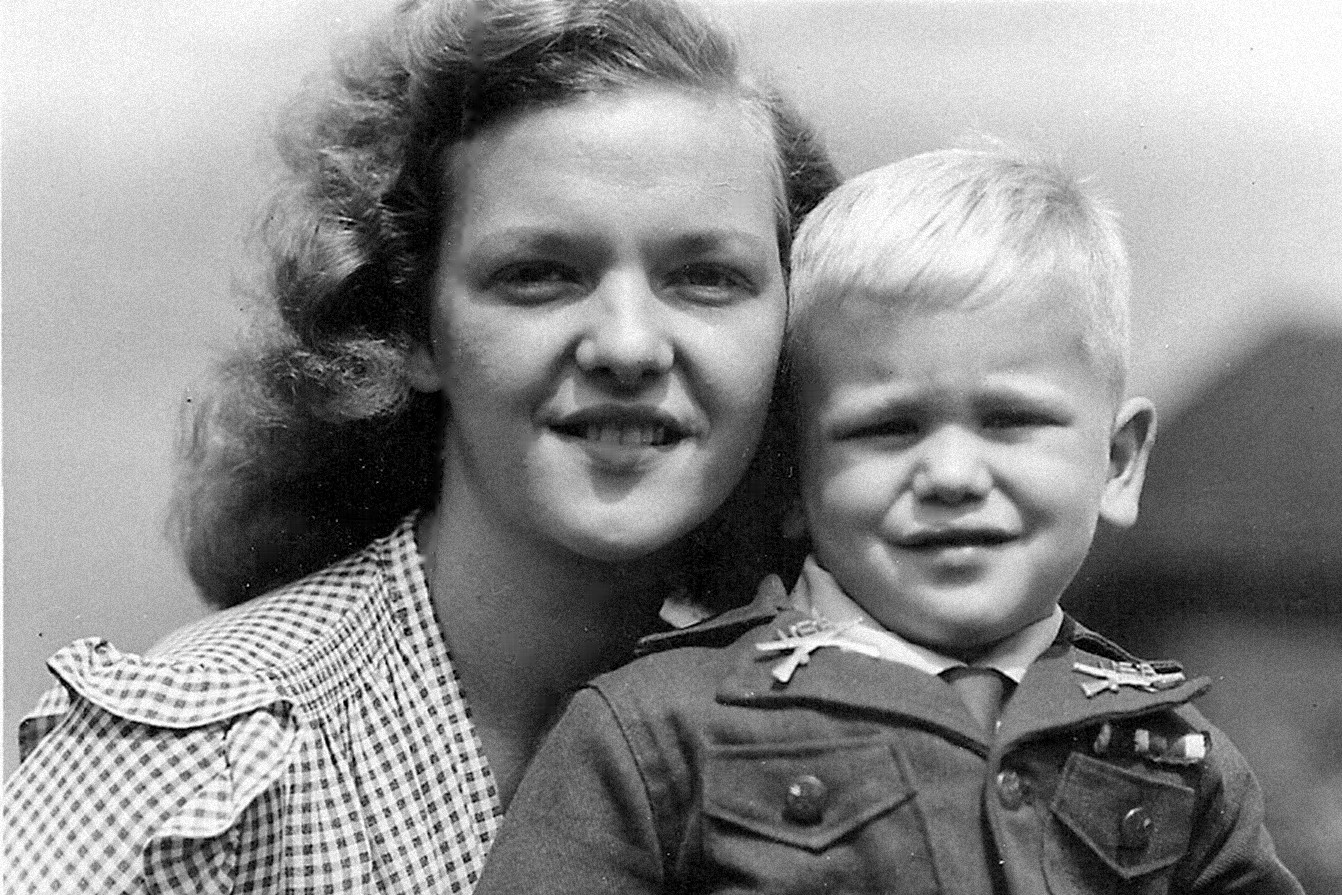
Aunt Mary – Bobbie Carr – ME!

As I watched the movie, I couldn’t help but think back to someone who was my family’s and perhaps the neighborhood’s reincarnation of Auntie Mame.  This relative would be best described as “colorful” and “larger than life.” She could easily be thought of as a clone of the TV character “Maude.” Brash and sometimes outspoken, while at the same time a loving, caring and giving “good soul,”……. that was my Aunt Mary.

 You may be somewhat familiar with Aunt Mary from some of my previous posts. She was always part of my life. She was born in her childhood home on Hamilton Avenue in Duquesne in January, 1922. She was #8 in a family of 9 children, and was my mother’s full sister. If you happened to read some of my earlier posts, you’ll remember that my grandfather and his first wife had three children together before she died. He remarried my grandmother, a widow, who had three children from her first marriage. The new Mr. and Mrs. Puskaric had three more children together AND my mother and Aunt Mary were two of the three.

Mary Puskaric was the product of the good Sisters that taught at St. Joseph’s School in the late 30’s and early 40’s, part of the Duquesne High School Class of 1940, a wartime bride, a mother of three, a Duquesne girl and Duquesne Hunky through and through. Unlike the character Rosiland Russell played in Auntie Mame, my Aunt Mary was not a world traveler. In fact, the number of times she traveled outside of the Duquesne area and didn’t return home on the same day could be counted on my two hands.

In spite of the fact that Aunt Mary wasn’t a member of the “jet set,” she was an enigma and fancied herself as Duquesne’s own Perle Mesta(1), who was known as the “hostess with the mostest” in Washington D.C. Everything she did, she would do “bigger than life” itself. This was particularly evident when she served as the president of what used to be known as the Holy Name Mother’s Club.

In addition to always thinking BIG, she was also an advocate of women’s rights and the power of women. As such, she convinced the members of the Mother’s Club, during her tenure as president, to change the name and the by-laws of the group. The new name,  “Holy Name Women’s Guild,” was adopted and the membership was opened to women who weren’t necessarily mothers or wives. This was in the late 60’s and of course, raised a few eyebrows in Duquesne. You go Aunt Mary…. burn that bra!!!
Because of my background in art, I was often recruited by Aunt Mary to assist her and the Women’s Guild with various projects. I remember she decided that the guild should sponsor a fashion show (not really a rather feminist POV.) Of course, Aunt Mary would NEVER settle for just an ordinary show. Instead, she pulled together a show that featured bridal gowns from every decade, beginning in 1890! In addition to a historic collection of gowns which she managed to collect from Duquesne residents, she also had live entertainment and a huge luncheon. My part was to create huge silhouettes of models that were mounted to the Holy Name School cafeteria walls and stood about 15 feet tall. I made them out of black construction paper and assembled them piece by piece.

Aunt Mary and Fr. Dennis at Holy Name were a great team. They would butt heads occasionally, but they always managed to remain friends. With Fr. Dennis’ permission, Aunt Mary launched an annual event at Holy Name that ran in conjunction with the parish’s summertime festival. Each year, she would chair the committee for the Holy Name Flea Market. Held in the church basement each year, the event would make the church thousands of dollars. It seemed there was a never ending supply of items donated by parishioners and non-parishioners alike.

Of course, I was always recruited, along with her daughters, Paula and Karla Goldman, to help with the set-up. We, along with her team of volunteers, would spend weeks sifting through item donations, determining prices, where they would be located, AND if any of them might be a particular value as an antique. She would arrange for a group of antique dealers to review these items prior to the beginning of the sale, knowing that she would get more money from them for the church than from the general public. She was generally correct!

I recall how she and all of the ladies on her committee would work tirelessly during the Flea Market event . From early morning until late in the evening they would wheel and deal with every person who entered. By the end of the sale, which lasted about 3 or 4 days, each worker was totally exhausted and ready to never see the church basement again. Aunt Mary made the last day of the flea market a “bag day.” She and the ladies would sell brown grocery bags for one or two dollars and then allow the customers to stuff as much as they could into the bags. The more they filled them, the less they would have to get rid of. It was a great idea, and it worked.

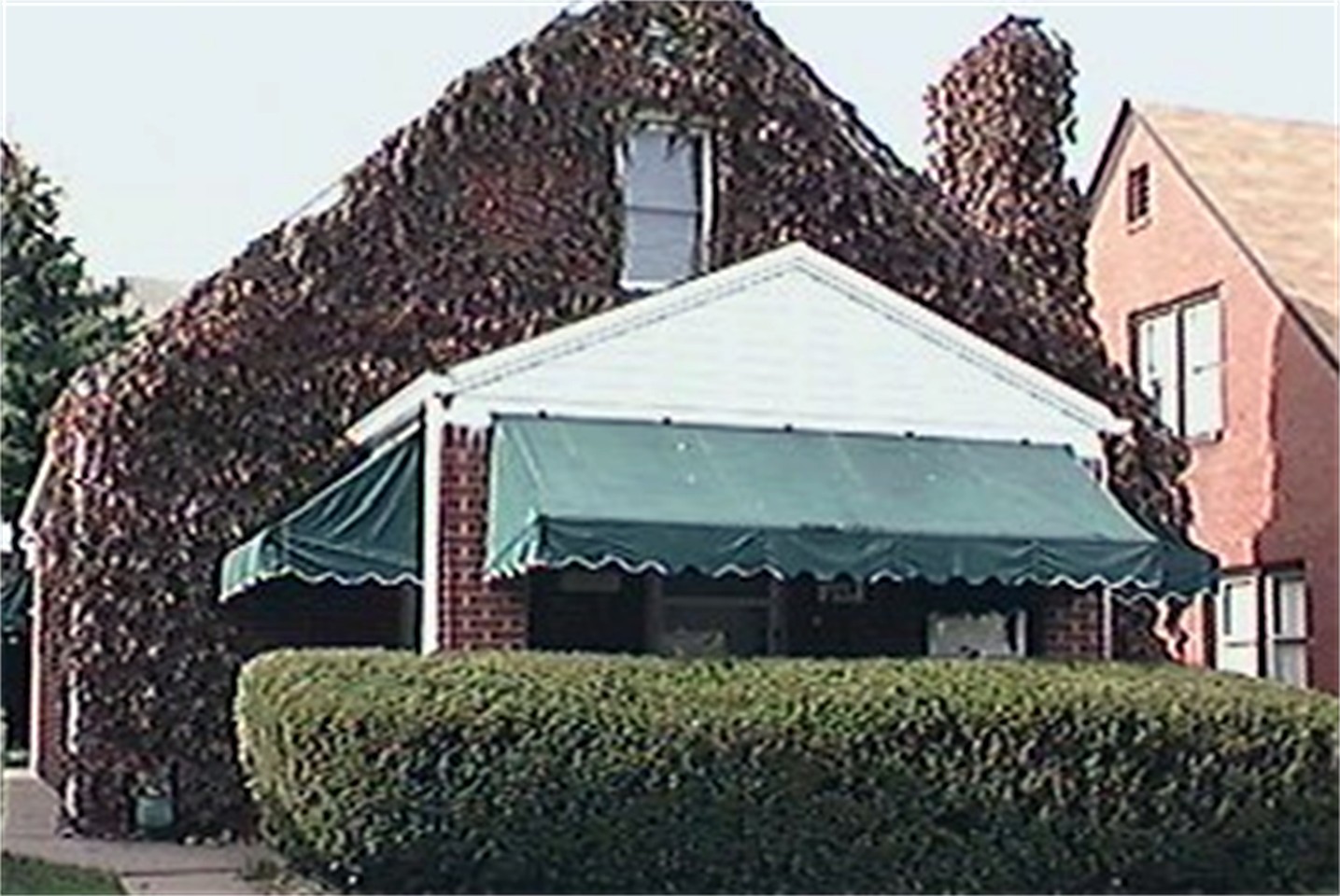
Aunt Mary’s propensity toward going “over the top” was evident in her home as well. She had impeccable taste in her clothing and her home. The house was located on Martin Street just over the Duquesne/West Mifflin border. It sat across from the power plant that runs along Mifflin Street. I have checked the county records and have found that the home was only 1150 square feet , BUT looked and felt as if it were a mansion! From the picture above, you can see that she wanted it to look like an English cottage and decided to turn it into an ivy covered home. I’m not sure how she managed to do it, but in the course of about 5 years, she had managed to coax a few little cuttings that she planted on the side of her home, into fully covering the property. Actually, it was very impressive looking, but the problem was that it looked out of place among the stark looking homes that surrounded it. In honor of Aunt Mary, I decided to Photo Shop her house into the English countryside (right), complete with cobblestone walkway.

When it came to her clothes, she and I would sit for countless hours just thumbing through catalogs such as JCPenney, Sears, Montgomery Wards and Spiegel’s, as she decided what she liked. Most of the time, we would make fun of everything. When it came to making choices and actually buying something, Aunt Mary would regularly go to the local stores. Salkowitz’s Dress Shop and Sally Fashions, both on Grant Ave., were her favorites. She would also make trips to McKeesport in order to fill her needs. Jaison’s, Cox’s, Katzman’s and Immel’s were her “go to” places there. The items she would buy were sometimes very reminiscent of the clothes Rosaline Russell work in the movie Auntie Mame.

I certainly could write volumes about Mary Martha Puskaric-Goldman if I had the opportunity. In spite of the fact that she was an “over the top” character, she was a Duquesne Hunky at her core. Driven by a profound love for her family, a pride in her heritage and a lust for life, she will ALWAYS be one of my most unforgettable characters. I am so honored and grateful that I could call her my “other mother.”

In closing, let me sum up my Aunt Mary again with the piece of dialog from the movie that I mentioned earlier:

“Auntie Mame: Oh, Agnes! Here you’ve been taking my dictations for weeks and you haven’t gotten the message of my book: live!

Agnes Gooch: Live?

Auntie Mame: Yes! Live! Life’s a banquet and most poor suckers are starving to death!”

                                    – – – – – – – – – – – – – – – – – – – – – – – – – – – – – – –

Footnote on Perle Mesta:

1. She was born Pearl Skirvin, in Sturgis, Michigan, a daughter of William Balser Skirvin, an original 89er who became a wealthy Oklahoma oilman and founder of the Skirvin Hotel. Her younger sister was a silent-film actress, Marguerite Skirvin (1896–1963). She married steel manufacturer and engineer George Mesta in 1916, but was widowed in 1925; she was the only heir to his $78 million fortune.[1] Mesta settled in Newport, Rhode Island, but moved to Washington, D.C., in 1940. She also maintained a home in the Pittsburgh suburb of West Homestead, the location of her late husband’s steel machining plant, but spent little time there, as she felt largely unaccepted by the Pittsburgh social scene. Four years later, Mesta changed the spelling of her first name to Perle.[2]

She was active in the National Woman’s Party and was an early supporter of an Equal Rights Amendment. She switched to the Democratic Party in 1940 and was an early supporter of Harry S. Truman, who rewarded her with the ambassadorship to Luxembourg where she launched the Nordstrom Sisters. Former President Richard M. Nixon said in grand jury testimony after the fallout of Watergate and his resignation, in June 1975, that Mesta was appointed by Truman because: “Perle Mesta wasn’t sent to Luxembourg because she had big bosoms. Perle Mesta went to Luxembourg because she made a good contribution.”[3]

But Mesta is most noted for her parties, which brought together senators, congressmen, cabinet secretaries and other luminaries in bipartisan soirées of high-class glamour. Invitation to a Mesta party was a sure sign that one had reached the inner circle of Washington political society. Her influence peaked during the Truman era and being an old friend of the Eisenhowers, she maintained her social position throughout the 1950s despite her support of the Democratic Party. Her power waned significantly with the rise of the Kennedys in 1960. Perle was in fact a friend of Rose Kennedy, however, the generation gap between her and Jacqueline Kennedy had made it impossible for her to stay relevant during the Kennedy era. Nevertheless, she remained an avid hostess until her later years.

Mesta wrote an autobiography Perle: My Story, published in 1960, and was the subject of a book by Paul Lesch, Playing Her Part: Perle Mesta in Luxembourg. Lesch also directed a documentary film about Mesta’s stay in Luxembourg entitled Call Her Madam (Samsa Film, 1997).

She was the inspiration for Irving Berlin’s musical Call Me Madam, which starred Ethel Merman as the character based on Mesta in both the Broadway play and the movie. She appeared on the March 14, 1949 cover of TIME. Mesta was said to have been to some degree a model for the character Dolly Harrison in Allen Drury’s 1959 novel Advise and Consent, in a 2009 essay.[4]

Mesta died on March 16, 1975, aged 85. She is interred with her late husband in Homewood Cemetery, a nonsectarian burial ground in Pittsburgh.

http://en.wikipedia.org/wiki/Perle_Mesta

Posted in My Hunky Family | 4 Comments

Hunky See, Hunky Do!

My dad was a master mechanic. If any of his customers were still around, they would attest to that fact. The man could drive a car around the down to the end of South First Street and be able to precisely diagnose the problem just by listening to the engine. With today’s electronic technology, engines are far less mechanical, so Dad’s talents would certainly be put to a test.

A spinoff of my dad’s mechanical abilities was his knack for being able to reinvent, repurpose and fabricate items for everyday use. If he saw it, he could make it! Dad was 15 when the depression hit in October of 1929 with the stock market crash. He was attending St. Adrian’s School in Adrian, Pa which was about 45 miles west of Punxsutawney. Although he never talked about the Depression to any great degree, it must have had an impact on him based on his need to “make do” with items around the house rather than replace them.

My dad was famous for jerry-rigging just about anything. For example, when his garage on South First Street was forced to close due to the “Redevelopment in Duquesne,” Dad salvaged two of the overhead garage doors and carefully and expertly adapted them for our garage on Thomas Street. It was no small feat since they had to be shortened about 4 feet and narrowed about 2 feet. What I remember more than anything was the confidence that Dad approached this project with.

The determination, the drive was something that was part of not only my dad’s but virtually every hunky possessed. My grandfather built a really awesome cabinet for my dad to use for storing nails, screws, etc., for use at my dad’s business. I remember it sitting on his work bench at his shop and later at his house on Thomas Street. Grandpa built the whole thing out of old fruit crates. In fact, the labels were still attached if you look inside the cabinet. Nothing went to waste.

Our home on Thomas Street was built in 1925. The original owners were a couple whose last name was Stoner. Over the years, the basement began to leak. It seemed to be the fate of every basement in the area. Determined to resolve the problem, my dad tried all of the usual methods of correcting the problem; waterproof paint both outside and inside foundation walls, new downspouts, etc. Finally his hunky ingenuity kicked-in and he created an interior channeling that allowed the water to be directed into a drain. He basically took sheets of galvanized sheeting, shaped long L-shaped strips that he attached to the basement floor around the entire perimeter of the basement. They were attached about 2 inches from the walls and then were then sealed with tar inside the interior of the strips and along the basement floor. There was only one opening along the entire length of channels and that opening was directed the water flow smack dab into a floor drain. It was ingenious. In the 20 years or so that he remained in the house after he had remedied the situation, the basement floor remained dry without exception.

When my mom decided that she would like a larger patio area in the back of the house, Dad went to work creating one. Along with a few of his brothers, he dug out an area that spanned the entire back of the home and into the back yard about ten feet. He created a form to hold the poured concrete without any background in construction, just hunky common sense. When Mom decided that she would like to have a roof over the new patio, Dad once again used his instincts and designed the perfectly pitched roof from scratch without any engineering training. Instead of using wooden posts to support the roof, Dad took some iron pipes he found near the incinerator on Polish Hill and welded them onto iron plates, creating three awesome, decorative posts for the new roof. He had also managed to find an old rusted section of wrought iron railing at the dump that he then cleaned and scraped back to nearly-new condition, painted and then installed at the end of the patio.

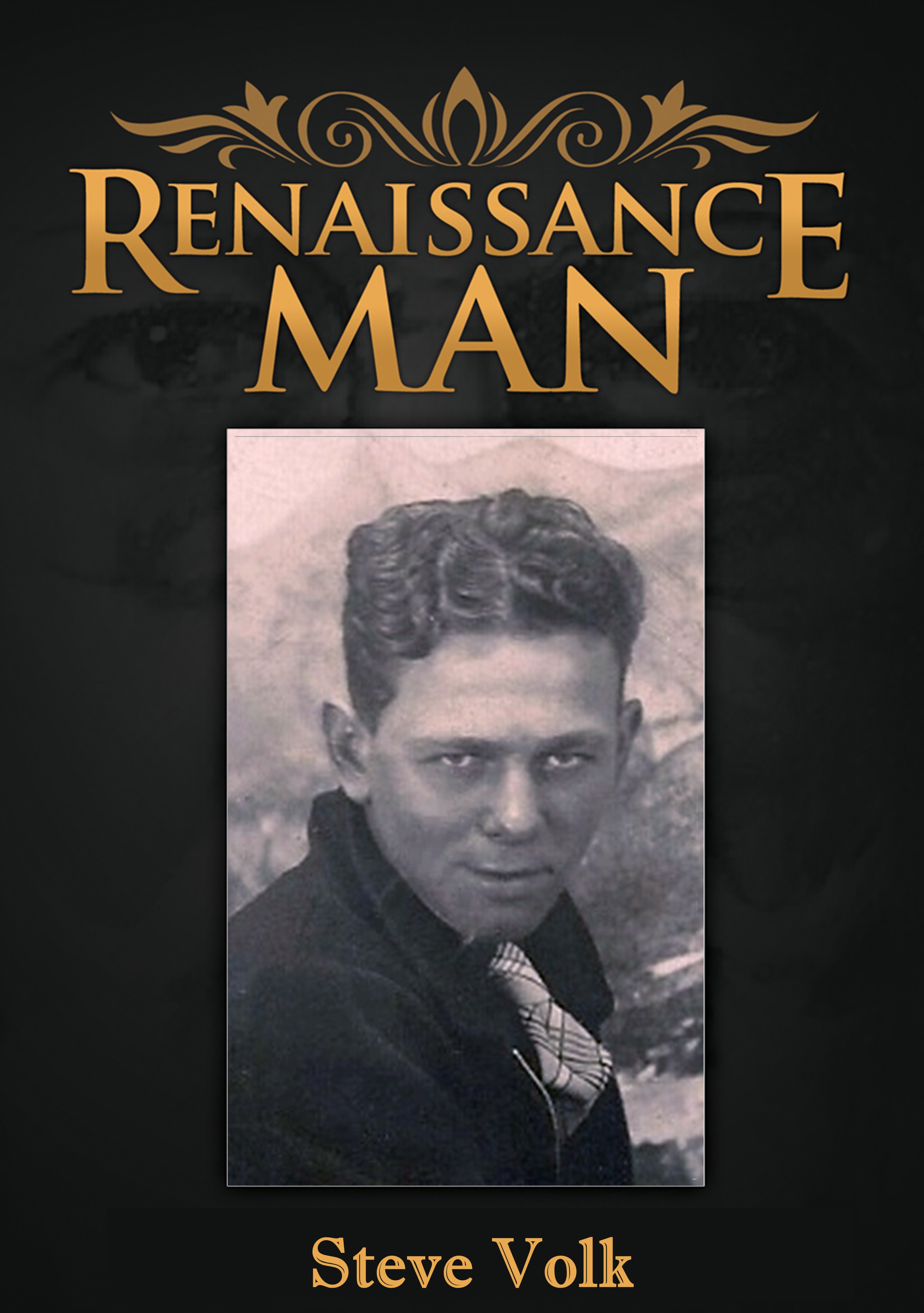
To some degree, my dad as well as most dad’s at that time, were Renaissance Men….. at least the hunky version. A Renaissance Man is defined as a person whose expertise spans a significant number of different subject areas. That definition, loosely interpreted, defines many of our fathers.

On occasion, my dad’s attempts at correcting a problem sometimes fell short of its mark. Once, my dad stayed at the GBU a bit too long. He came home a bit tipsy, and a bit cranky. I remember my mother expressing her “displeasure” about his condition. He yelled something and then stormed up the steps to the second floor. Along the way, he decided it was appropriate to punch a hole in the plastered wall with his fist. That was the first and only time I ever saw him lose his temper like that. I believe it was shortly after he had learned that his business was going to be closed as a result of the redevelopment and “eminent domain.” The very next morning, I remember sitting on the sofa in our living room and watched as Dad sat on the steps, groaning from time to time, and expertly plastering the hole he had created. Mom sat next to me on the sofa, occasionally verbalizing a “hummpf” every once in a while, in order to make Dad feel a bit more guilty about his outburst the night before. The best part however, was when my dad went up to see if it had dried after about an hour. He discovered the entire blob of plaster had fallen out of the hole and lay in a dried-up heap on the steps.

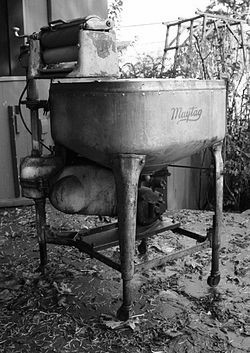
Then there was the time that he decided it would be a good idea to be able to wash really soiled items, such as work clothes and dirty rugs, in a washing machine that would be located outside of the house. I figured he would place it in the garage based on his description of the project. Not so! He decided it would be more appropriate to place it on the back porch, just outside of the kitchen door!

According to his opinion, he had “ingeniously” drilled through the outside wall of the house and inserted ordinary garden hoses to be able to the hot water faucet in the basement! The sight of a washing machine on the back porch was reminiscent of a scene from the movie Deliverance with only the strange looking kid with the banjo and a moonshine still missing from the scene. It didn’t take long for me to convince Dad that he just might have made an error in judgment when he initiated that gem of an idea!

I suppose it was in our father’s hunky genes to inherit certain traits from their ancestors. After all, Slovakia has been responsible for a number of important inventions over the years. Just a few of these inventions and inventors happen to be:

Motor-driven helicopter – Jan BAHYL (1865-1916)

Wireless telegraph (forerunner of the radio) – Rev. Jozef MURGAS (1864-1929)

Parachute – Stefan BANIC (1870-1941)

Speaking machine and a special typewriter for the blind – Wolfgang von KEMPELEN (1734-1804)

Water pump machine (water-pillar) – Jozef Karol HELL (1713-1789)

Camera zoom lens – Jozef Maximilian PETZVAL (1807-1891)

Makes me so proud to be an all-American hunky boy!

Posted in My Hunky Family, Parents, Stores and Businesses | 10 Comments

Schoolyard Memories

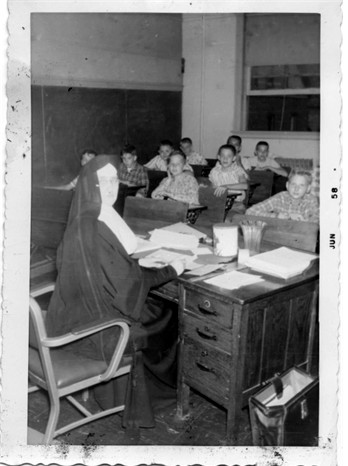
First of all, many thanks to Frank Mullen for gracious sharing the pictures from Holy Name contained in this post. They were taken in June of 1958 which places most of the 8th graders shown in the last picture in Duquesne High School’s Class of 1962. When I looked at these pictures when Frank first shared them with me, I felt a HUGE rush of nostalgia. I recognized every little detail; the steps behind Sister Richard that where we used to clean blackboard erasers, the blackboards, our desks, the huge windows with transoms above them, etc. The first picture is Sister Incarnata, my first grade teacher. What memories!If anyone has more pictures to share, dig it out send them along. Frank scanned these images to share with us and I am eternally grateful!!

Sister Incarnata entering her First Grade classroom

As a student at Holy Name Grade School for eight years, I became very used to the daily routine after so many years. Very little changed from day to day; we started at the same time each day, ate lunch at the same time and went home at the same time.

The part of our day that wasn’t set in stone was what they were serving in the cafeteria and what adventures recess would hold for us. After our morning routine in the classroom, we would normally break for lunch around noon. The entire school would eat lunch at the same time. The concept of staggering the times to avoid backups wasn’t embraced; however the nuns and teachers had their own strategy for sending us to lunch.

Sister Marie Ersla, 1958

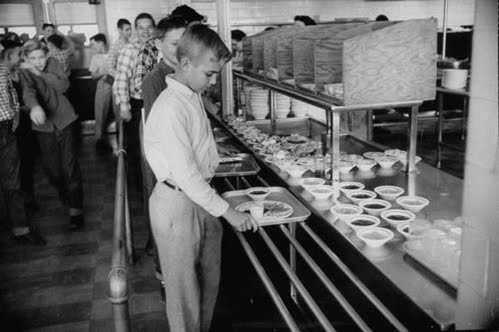
I recall marching to the cafeteria as a child and trying to guess what was being served for lunch. The guessing game among my pals and me was simplified to an extent, by intensifying our sense of smell before we entered the school hall. The cafeteria had these immense exhaust fans, measuring at least 4 feet wide, which would belch out the smell of what was cooking into the space between the school and building occupied by Gerry Reed’s Insurance Company. For some reason, the aroma was event stronger during the dead of winter. Some meals were easy to figure out; fish, spaghetti and even stew were pretty obvious. The harder ones to guess would be things like chicken, hot dogs and other foods that did not have an obvious identifiable odor.

I remember standing in line for my lunch and being told to keep quiet by the “good sisters.” Students in first through third grade were served in pastel colored divided trays. The volunteer moms behind the counter would fill the trays and pass them to us as we moved down the cafeteria line. The thought process behind this strategy was that if we were given a tray to carry that contained plates, silverware and loose items; we would probably spill something or tip the tray. Somehow, by the time we began our 4th year at Holy Name, it was assumed that we had somehow gained a fantastic sense of balance over the summer are would be well equipped to carry “big people” food trays for ourselves. Based on my first day in the 4th grade when I managed to dump a bowl of Mrs. McCormick’s stew on the floor while carrying my grown-up tray, they might have been a bit off on their strategy!

Sister Joseph Catherine 1958

We were permitted to leave the cafeteria after we had finished our lunch and cleaned off our trays. We would automatically head to our designated spot in the area surrounding the school to begin recess. In the winter months, our activities were somewhat limited due to icy conditions. Running and slick surfaces made for a precarious situation at times and for some dangerous play.

Hunkys however, are very adaptable. Whenever a snowfall had created icy surfaces surrounding the school or on Muir Alley, the alley that ran between South First and South Second Streets immediately behind the school, we had a field day! Much to the nun’s chagrin, we would make the best of the situation and create some great ice tracks to slide on. The fact that the temperature stayed cold for so long, the tracks would remain for weeks at a time.

Sister Richard 1958

The imagination and inventiveness that we all possessed as a child growing up in Duquesne was truly amazing. When I think about the fact, that for 8 years, we were able to entertain ourselves day after day in a schoolyard that could be easily described as barren is pretty remarkable. Without the aid of any equipment, very little supervision and only an asphalt surface to play on, we were able to fill our recess time with fun, excitement and in most cases, the pure joy of youth! I don’t remember there being very many fights. Everyone seemed to peacefully co-exist. In spite of our youth and naivety, we somehow were able to respect one another’s “space,” get along and just have fun.

Too bad we grew out of the ability to “play nice” with one another!

Sister Agnes Eugene – Principal aka BNOC (Big Nun On Campus!)

The future class of 1962

Posted in Church and School - Holy Name, Playing and Games | 9 Comments

When The Library Was New

С Рождеством and Happy New Year everyone!

Well, it’s official. We have reached the close of the “Hunky Holiday Season.” Friday, January 06, 2012, is the Epiphany,  the 7th will be the Orthodox Russian Christmas, and the following day will be the day that the party was over in Duquesne. Once this date had arrived, most residents began the process of packing away their Christmas decorations, and one by one, dried tree carcasses began appearing outside of everyone’s home.

I remember sitting on the floor with my mother and helping her pack away the Christmas ornaments each year. She would carefully wrap each and every ornament, usually with some old tissue paper that had been saved from gifts from previous years. That was a time before the “BIC disposable everything” mentality most people have today. The ornaments were cherished and were always handled with “TLC” to assure that no damage would occur during their eleven month hibernation in our basement’s “fruit cellar.”

Along with the holidays this year, I have made my fair share of New Year’s resolutions, many of which I’ve already failed to keep. However, I made one resolution that I am determined to keep, without fail. I am bound and determined to continue writing my blog and hopefully increase the number of people reading it by leaps and bounds. My plan is:

  • I have secured a direct web address for the blog. Going forward, you can reach The Duquesne Hunky blog by simply using duquesnehunky.com as the link. It just makes it more accessible.
  • I will provide more information about our hometown that you might find interesting or fascinating. After all, we are all part of Duquesne’s Family Tree and it would be nice to know more about the components that were part of our culture and roots.
  • I will continue to find as many photographs as I can, to share with you. I have recently found more resources and hopefully will have additional photos from our era to share.
  • Realizing that it is not just current or former Duquesne residents that are reading this blog, I hope to include more perspectives about the surrounding communities that were part of our lives such as McKeesport, Dravosburg, West Mifflin, Munhall, etc.
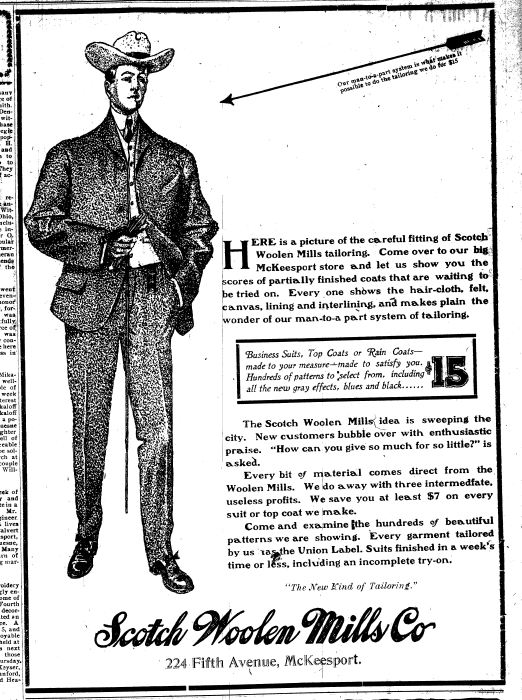
What the gentlemen were wearing when the library opened in 1904.

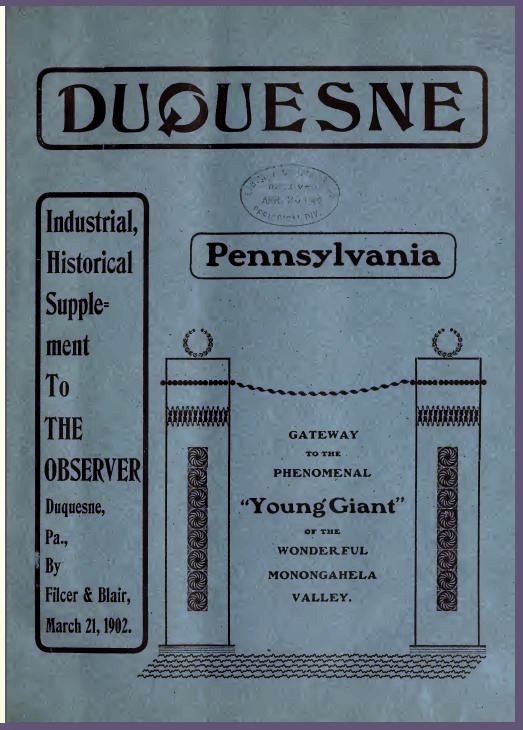
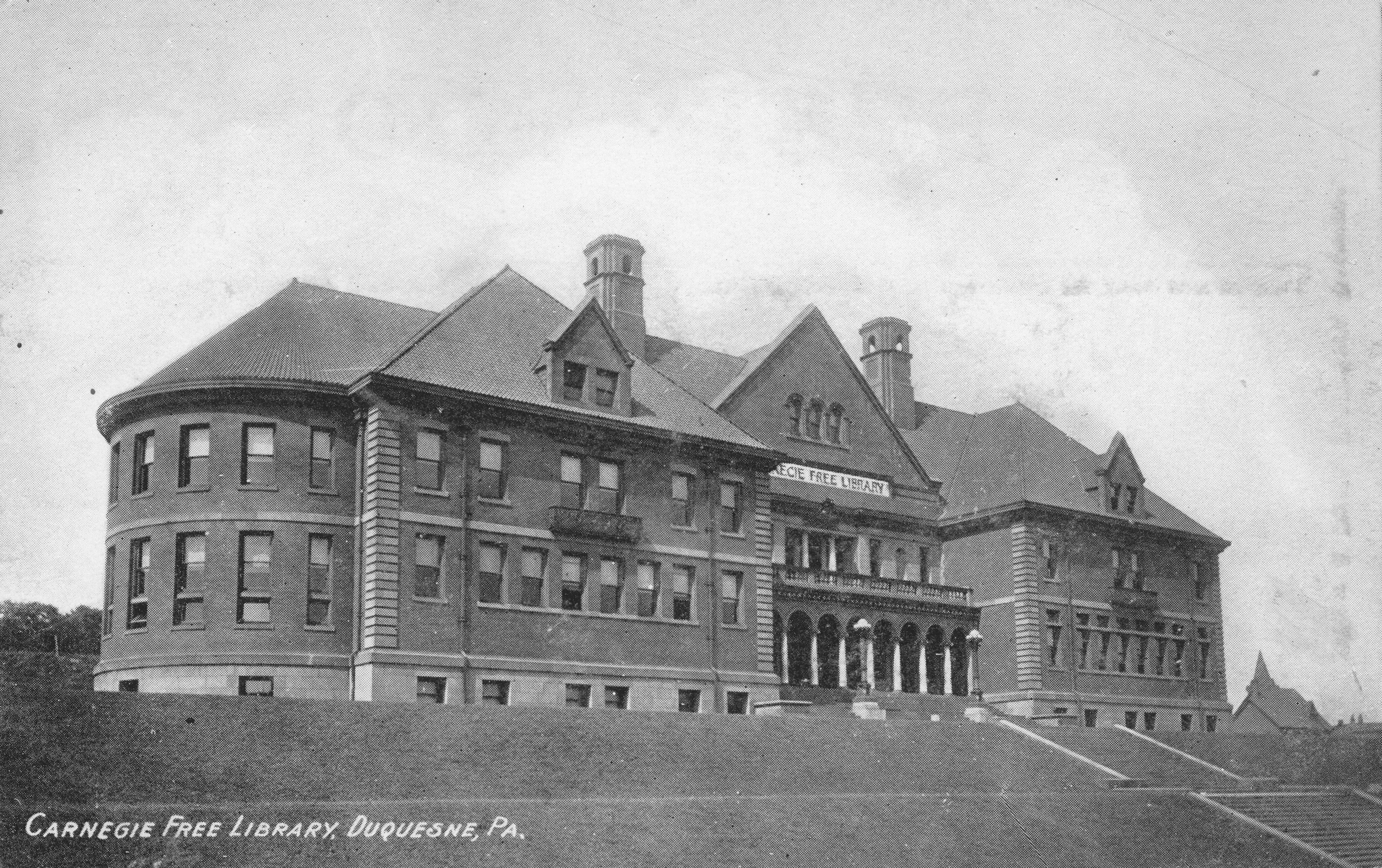
So, in order to begin the new year right, I would like to share with you, an article that was part of a special section of the Duquesne Observer, and published in 1902. The Duquesne Observer was published from 18?? to 1912. I believe it may have first been published in 1890, but cannot confirm that date. The Observer eventually merged with the Duquesne Times in 1912.

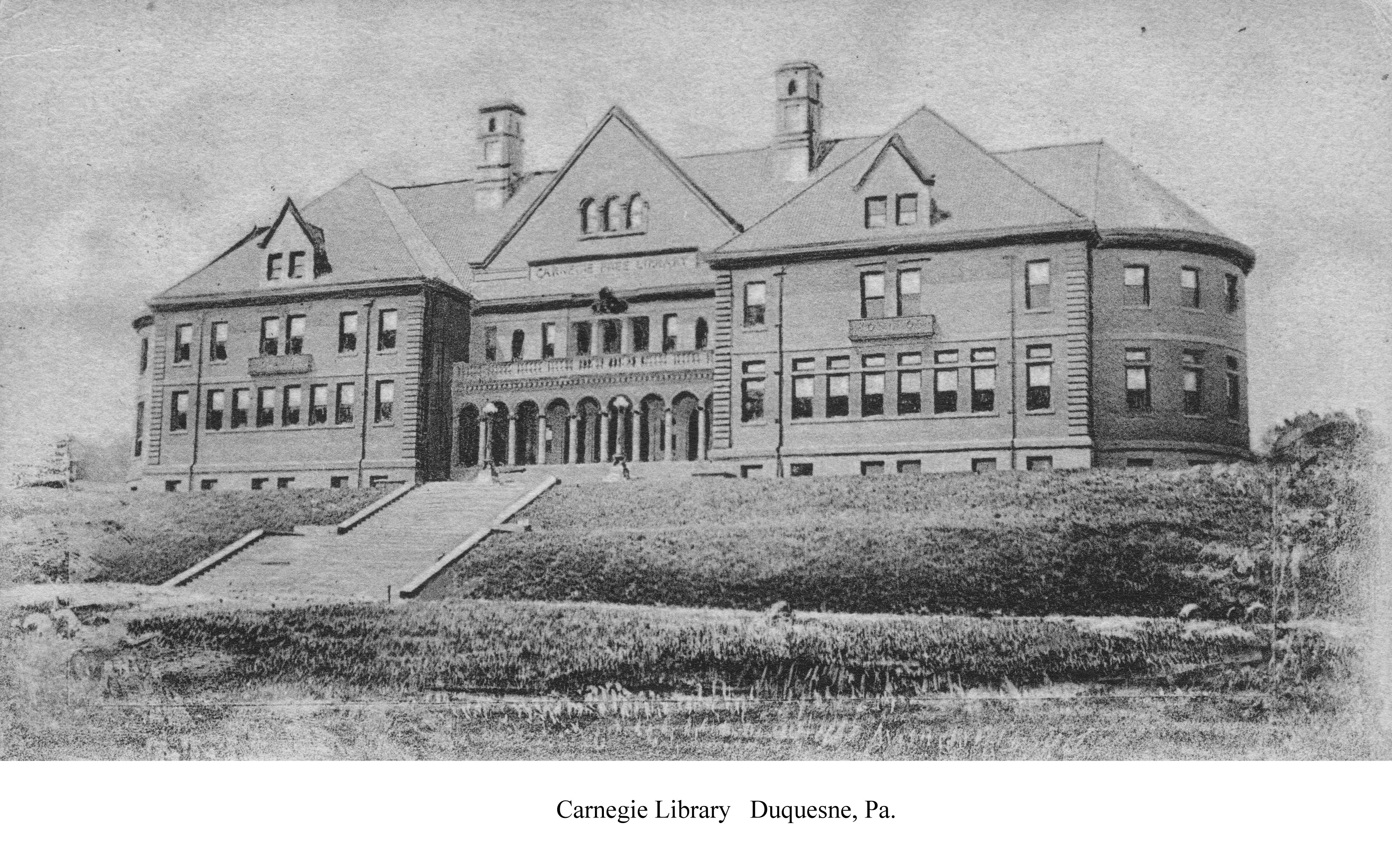
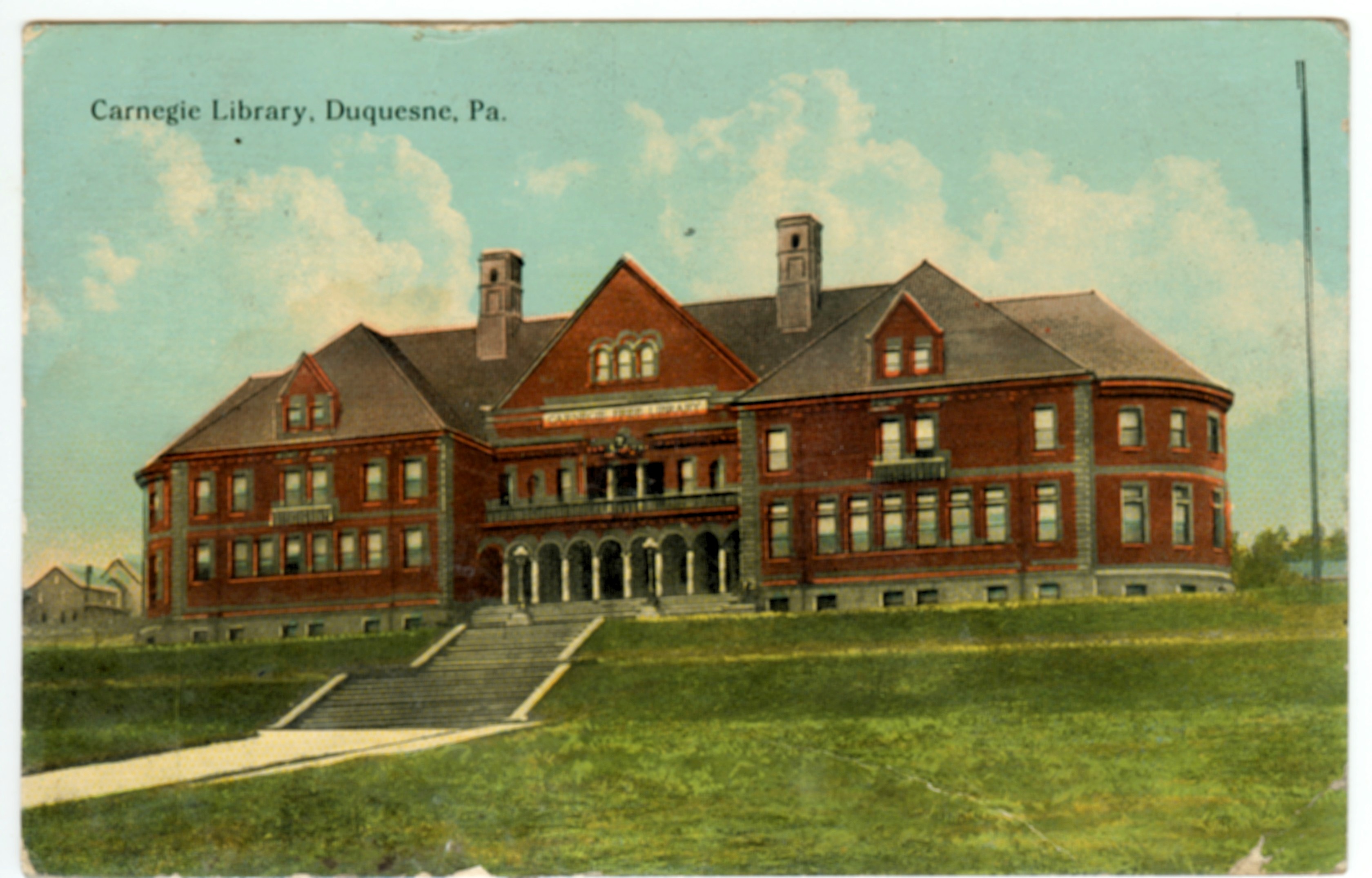
In 1902, the special edition was titled “The Industrial, Historical Supplement to The Observer.” The publication contained a wealth of information about our hometown; however the section that immediately captured my attention was the part that addressed our beloved library. I realize that I have written about the library previously, but that was basically from a personal perspective. Until I read this article, I never realized the magnitude of our loss when the library was torn down. I’m sure you’ll be feeling as “violated” as I did once you read the article.

It was VERY evident that there was already a deep love for the library even before it opened its doors for the first time on Saturday, May 14, 1904. Following the article, I have included a front page article from The Observer which describes the opening day ceremonies. When the library was demolished, it was a mere 64 years of age. For some reason, I always thought it to be much older. We have all said it before; the demolition of the Carnegie Library of Duquesne was among the greatest travesty’s that occurred in Duquesne. These two articles further exemplify that fact…….

THE DUQUESNE LIBRARY

The ground has been broken and actual work of erection commenced upon the Duquesne public library building, and the indications are that the institution will have been completed and dedicated to the use of the people within another year. The proposed arrangement of the edifice has received the sanction and approval of the donor, Andrew Carnegie, and as a whole, the building will take high rank among the libraries of the world. The structure will be sub-divided as follows:

THE BASEMENT

• Swimming Pool

• Shower baths

• Individual dressing rooms

• Bath rooms

• Wash Rooms

• Lavatories

• Men’s and Women’s retiring rooms

• Boiler room

• Engine room

• Two bowling alleys

• Unpacking rooms

• Cataloguing rooms

FIRST FLOOR

• The library

• Stack room

• Adults’ reading room

• Children’s reading room

• Librarian’s room

• Attendant’s room

• Billiard room

• Game room

• Reception room

• The office

• The foyer

• The loggia*

• The vestibule

• The music hall

• Dressing rooms

SECOND FLOOR

• The gymnasium and locker room

• Physical director’s room

• Balcony of music hall

• Two class rooms

• One lecture room

*Note – Loggia is the name given to an architectural feature, originally of Minoan design. They are often a gallery or corridor at ground level, sometimes higher, on the facade of a building and open to the air on one side, where it is supported by columns or pierced openings in the wall.

A wondrously beautiful and magnificent gift is that which Andrew Carnegie, the prince of the iron and steel world, is about to bestow upon Duquesne. It is a library building, fashioned after the most pleasing and approved models of architecture, substantially constructed, attractive to the eye, stocked with pleasure-giving and strength-bestowing equipment, and furnished in the most luxurious manner – a home for the people, and particularly those who may desire a greater development of mind and body.

The cost of the elegant structure and institution, exclusive of the books with which the library is to be stocked, the apparatus which is to find a place in the gymnasium, the fine pipe organ which is to ornament the music hall, and the grading of the grounds surrounding the building will be $250,000. With these things added, however, the total expenditure to be made by Mr. Carnegie in favor of the town will aggregate considerably more than $300,000. Nothing is to be left undone that will add to the beauty of the edifice or the comfort and enjoyment of those whom Mr. Carnegie seeks to reach. It will be not only a fine institution, but beyond a peradventure, one of the greatest and most complete of its kind in the world, and one of which the people may well afford to be proud. It will likewise be an enduring monument to the munificence of the donor and his intense interest in the intellectual, moral and physical welfare of the workmen through whose efforts and co-operation he has risen to such heights of fame.

THE LIBRARY GROUNDS

The building is to be erected on the elevation bounded by South Second and South Third streets and Kennedy and Whitfield avenues at a point whence it may be seen for a considerable distance in all directions. The ground between the entrance and South Duquesne avenue is to be graded off to a gently falling slope, all the houses now within the limits of the park are to be removed and a 100-foot boulevard is to be opened, running from South Duquesne avenue to the library. The side streets will likewise be open, giving easy access to the building. Spacious lawns will also be laid out, beds of flowers and other of nature’s choicest gifts will be sprinkled about here and there and the surroundings made just as attractive and beautiful as possible.

At the head of the 100-foot boulevard and facing South Second street and the east will be the building itself. The structure will be in the form of the letter “T” inverted, the main part extending along South Second street and the music hall reaching back towards Third street. Its greatest length will be 230 feet and its greatest depth 136 feet. The ends will be circular in form. The walls will be pressed red brick and stone and the roof of tile. At the main entrance an offset, 59 feet in length and 20 feet in depth, is provided, so that the sameness of the front might be relieved. Scores of windows make certain an abundance of good light, not only in the first and second floors, but also in the basement.

The architects have created a pleasing entrance for the building and one that cannot but be greatly admired. It is 59 feet wide, and leading up are a number of stone steps, planted in which are two electro-plated bronze posts, holding aloft, clusters of brilliant electric lamps. At the head of the steps are eight stone pillars, which act as supports for a balcony over the entrance. The passageway into the building is separated into three entrances, the one on the left leading to the library proper, the one in the center leading to the music hall, and the one on the right leading to the gymnasium and billiards hall. These three vestibules, however, are provided with swinging doors, thus giving access from one to the other. They may, also, be all thrown into one, should the occasion require.

THE GREAT BASEMENT

The basement occupies all the space under the entire building and is fitted up in a manner that is keeping with the entire institution. In it are the swimming pool, the dressing rooms, the shower baths, the bath tubs, the wash rooms, the lavatories, the retiring rooms, the boiler and engine rooms, two bowling alleys, the work room and the cataloging room. The swimming pool is situated in the northern end of the basement. It is 60×28 feet. Around the pool is a marble coping, and the pool itself is lined with white enameled tile. The water in the basin will vary in depth from four to six feet. Around three sides of the room are 46 individual dressing rooms, and connected with the apartment are two shower baths. To the west of the pool is the men’s bath room, I8 x 5O feet containing 11 individual bath tubs and three shower baths. Back of this are the men’s lavatory and wash rooms. From the bath room leads a circular stairway to the gymnasium on the second floor. In the rear of the basement are the men’s and women’s retiring rooms, which are connected by stairways with the stage in the music hall on the first floor.

Large boiler and engine rooms are situated under the music hall and two bowling alleys occupy the space under the entrance. These alleys are 85 x 18 feet and are provided with comfortable seats for both spectators and players. To the south of this little pleasure resort is a work room, 40×20 feet, and immediately adjoining it is the unpacking room, 28×20 feet, where all books and furniture may be received and unpacked. In the southern circular end of the basement is a commodious cataloguing room. Here all books will be properly catalogued, marked and placed in bookcases, preparatory to being sent to the library by means of an elevator.

THE FIRST FLOOR

The first floor, the most important of the institution, is separated into the library, the main reading room, the librarian’s room, the children’s reading room, the game room, an office, the foyer, the music hall and dressing rooms, all elaborately furnished, finished and decorated.

The library proper occupies the entire southern wings of the building, and in the circular part is the stack room, which is provided with huge bookcases for the proper care and listing of the books. Its greatest dimensions are 42×21 feet at the entrance to the apartment are the delivery clerks’ desks, and adjoining these desks is the delivery room, 66×14 feet. A person wishing to obtain a book may pass from the delivery room (by means of turn doors) into the stack room, where he may look through the bookcases and select whatever volume he may desire, the same being delivered to him by the delivery clerics, of whom there will possibly be three. At the start 20,000 volumes will be placed at the disposal of the public.

In the eastern part of this end of the building is the main reading room, 48×20 feet. It is for the use of adults only and is provided with numerous bookcases for periodicals and books. Fourteen tables are arranged at different points for readers. Adjoining this apartment on the north is the librarian’s room, 8×20 feet. To the west of the delivery room is the children’s reading room, 48×20 feet. This apartment is for the use of children only, is provided with necessary bookcases and twelve tables. The chairs, tables, washstands and all the furniture are smaller and lower, to suit the convenience of the little folks. Adjoining this room on the north is the attendants’ room, 8×20 feet.

From the entrance vestibules of the building one is ushered into the foyer or reception hall, which is 40×22 feet. It is beautifully decorated and brilliantly lighted. Two stairways lead from it into the balcony of the music hall.

The music hall is in that end of the building west of the foyer. Its greatest dimensions, from door to stage, are 52x6O feet. It will be seated with comfortable opera chairs and have two main and two side aisles. Its seating capacity will be 850. At the western end of the hall is the stage, 65 feet wide and 22 feet deep, with dressing rooms on either side. At the left of the stage room is provided, also, for a large pipe organ, which is to be presented by Mrs. Carnegie. The balcony extends out over a part of the rear of the hall and is also provided with opera chairs. The decorations of the music hall will be very fine.

The billiard and pool room is situated in the northern end of the first floor and is 52×56 feet in dimensions. On its floor are five billiard and two pool tables, with seats in the circular end of the room for spectators. Persons will be allowed the use of the tables for 20 minutes at a time —that is, if there be others waiting their turn; otherwise they may play as long as they wish. Adjoining the billiard room on the south is a parlor, or more properly, a reception room. It is 21×21 feet.

Adjoining this reception room on the east is the game room, which promises to become very popular with all classes. It is a commodious apartment and will be provided with all sorts of innocent games and amusements. Next comes an office 8×20 feet, and a coat room of the same dimensions. A vestibule, 14×02 feet, extends all the way from the billiard room to the delivery room of the library proper.

THE SECOND FLOOR

The second floor is fully as spacious as the first floor and contains much of interest. Included within its walls are a complete gymnasium and locker room, a physical director’s office, the balcony of the music hall, two class rooms and one lecture room.

The gymnasium is located in the northern wing and immediately over the billiard room. Its dimensions are 80×55 feet, and around three sides of it are forty lockers, or closets, in which the members may keep their clothing and valuables under lock and key. It is fitted up with the very latest apparatus, such as horizontal bars, parallel bars, swinging rings, Indian clubs, dumb bells, weights, etc. A flight of stairs leads from one end of the room directly to the swimming pool and bath rooms in the basement, making access from the gymnasium to the baths very easy. The gymnasium will be in charge, of course, of a physical director whose office will adjoin the gymnasium. The rear wing of this floor is taken up with the upper part or the music hall and the balcony of the same.

In the southern wing is a lecture room, 53×28 feet. It is to be seated with chairs and is for the use of smaller gatherings than would require such a large room as the music hall. Alongside of it are two class rooms, each of which is 29×20 feet. These are for the use of different classes which it is proposed to organize for study of various subjects.

The floors in both stories of the building will be of yellow pine, except in the loggia (just inside the entrance), the foyer and the vestibule on the first floor, in which case marble is to be used.

The contract for the heating and ventilating apparatus has been awarded to Baker, Smith & Co. of New York. It will, of course, be of the very latest design and of the most approved pattern. Steam heat will be employed. Electricity will be used for lighting both the building and grounds, the current to be supplied from the Carnegie works. Weldon & Kelly of Pittsburg have the contract for the plumbing of the institution, and it goes with the saying that it will be complete in every detail.

MODE OF CONDUCTING

This great building and its furnishings are to be presented to the people of Duquesne free of all cost, but it cannot be expected that all the privileges of the same are to be extended gratis. A board of directors will be in control and will have charge of all affairs relating to the conduct of the institution. These directors will probably be six in number, three coming from the Carnegie works and the remaining ones from the town. The privileges of the library proper and the reading rooms will be absolutely free to those who care to make use of them Any reputable person—man, woman or child — may take out one book per day, providing he or she return it, in good condition, within a certain length of time, say one or two weeks. Otherwise the lease on the book must be renewed or a fine paid.

Immediately after the dedication of the building an organization will be formed, to be known probably as the Duquesne Library Athletic club, the members of which will be granted the use and privileges not only of the library, but also every remaining department of the building, including the gymnasium, the baths, the billiard parlors, the bowling alleys, etc. Rates of membership in this organization will be about as follows: For employees of the Carnegie works, $1 per quarter; for residents of the town, not employees of the Carnegie works, $2 per quarter.

HISTORY OF THE PROJECT

On November 12, 1898, a committee of citizens called upon Mr. Carnegie at the Carnegie offices in Pittsburg, and through Dr. L. H. Botkin, their spokesman, made known the fact that Duquesne desired a library at the hands of the steel king. On the committee were: Messrs. John W. Crawford, L. H. Botkin, L. Kurlong, Rev. Father D. Shanahan, Prof. W. D. Brightwell, W. C. Libengood, G. W. Richards, A. E. Freeman, Wm. Dell, C. S. Harrop, P. H. Gilday and A. M. Blair.

The committee was introduced to Mr. Carnegie by Jos. E. Schwab, then general superintendent of the Duquesne steel works, and was soon informed that the town would be presented with a library building fully as good as that which had been erected at Homestead. The matter of arranging the details for the erection of the library was left by Mr. Carnegie in charge of Supt. Schwab who, after consulting with leading citizens, selected for the site that plot of ground surrounded by South Third street, Kennedy avenue, South Duquesne avenue and Line alley (now Whitfield avenue). The property was purchased from Mrs. Priscilla Kennedy and Miss Zella Bovard, at a cost of about $80,000. The plans for the building were prepared by Alden A Harlow of Pittsburg, and the contract for the erection of the edifice was awarded to Miller & Sons of the same city. The actual work of construction was commenced on July 10, 1901, and is now progressing in a satisfactory manner.

THE FOLLOWING ARTICLE APPEARED IN THE OBSERVER ON FRIDAY, MAY 20, 1904. IT ADDRESSES THE OPENING DAY CEREMONIES FOR THE DUQUESNE LIBRARY:

Posted in Christmas Memories, Duquesne Carnegie Library | 30 Comments