A Moment in Time from the Times

Every now and then, I encounter stumbling blocks when it comes to subject matter for my blog. I suppose that I could refer to it as “writer’s block,” but then I would have to be an actual writer to be able to call it that. At any rate, whenever I am having difficulties such as this, I rely on finding interesting tidbits from the Duquesne Times.

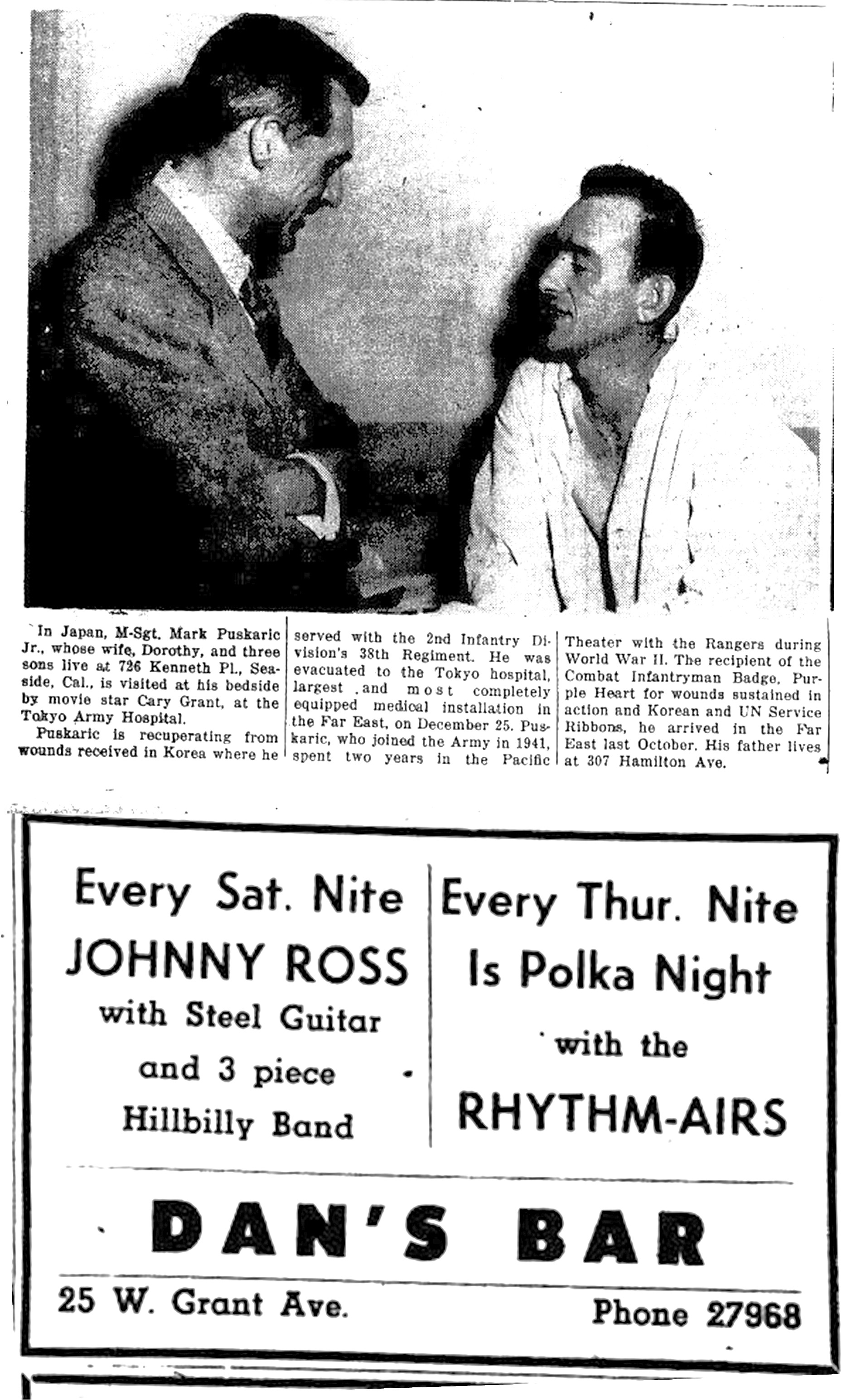
Today,  I decided to dig into the Duquesne Times once again, and as if by Divine Providence, I decided to opened the Times from 60 years ago today, March 9, 1953. To my amazement, right on the front page was a photograph of my Uncle Mark and Cary Grant!! I remember being show copy of this photo when I was a young boy, but had long since misplaced it.

Uncle Mark was the youngest of 9 brother and sisters living at 307 Hamilton Avenue in Duquesne. As a young boy growing up in Duquesne, Uncle Mark was the family’s “wild child,” always up to mischief and constantly getting into “monkey business.” I believe it came as a relief to my grandfather when he enlisted since he believed it would “settle him down.” Little did he know, but Uncle Mark became a war hero and made the military a career, retiring after over 20 years of service. Unfortunately, he never returned to Duquesne to live after he enlisted, but it was always in his heart.

All of the following articles we published on March 12, 1953:

Article 3

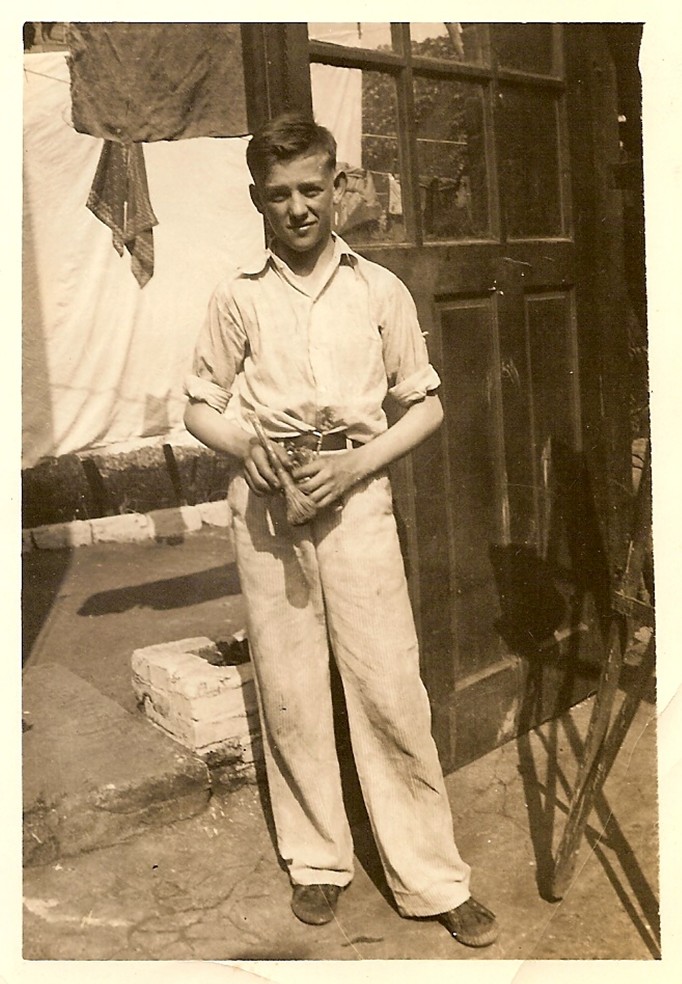
Uncle Mark as a young boy in Duquesne – taken at his home at 307 Hamilton Ave.

Young Mark F Puskaric

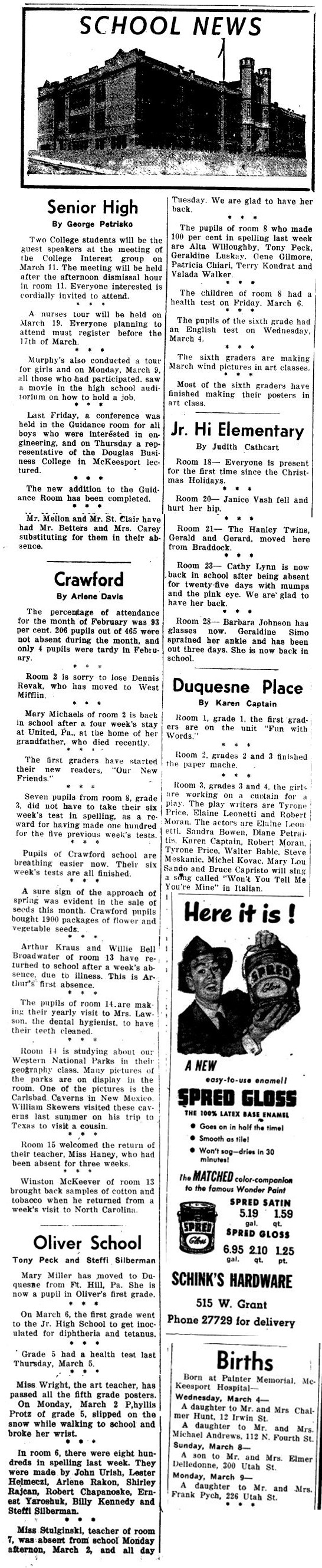
 How many names do you recognize from the SCHOOL NEWS, a weekly feature in The Duquesne Times…

Article 1

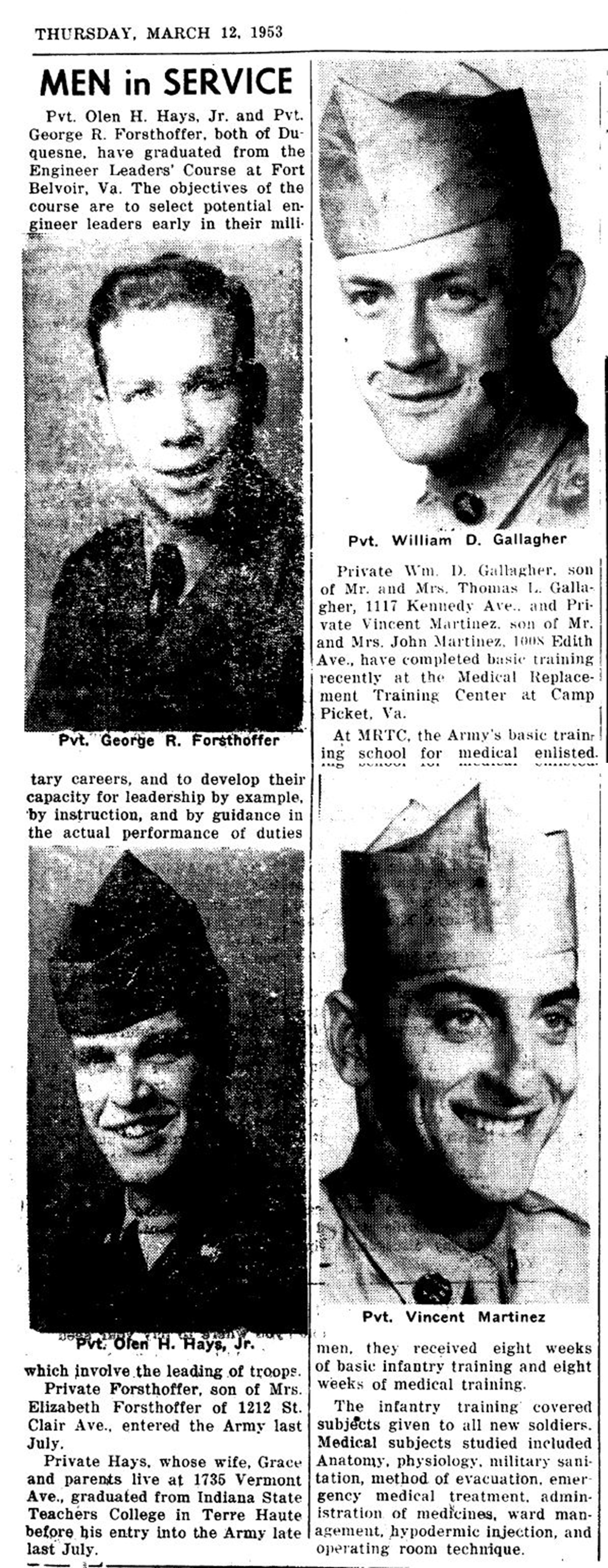
I found another article that pays tribute to our men in service, and although one doesn’t typically think of the early 50’s as a time of war, the KOREAN WAR was actually taking place from June 1950 thru July 1953.

 Article 2

Thanks for understanding this poor hunky’s mental block. I hope that you enjoyed this little trip back in time 60 years ago ! – Jim

Posted in Uncategorized | 7 Comments

Hunky Springtime Rituals

As a student at Holy Name School on First Street, I remember vividly, all of the traditions that we followed during the Lenten and Easter season. Most of the activities were initiated by the good Sisters of St. Joseph that taught us each day, however, some were also family traditions that were started by our families.

I remember that having to decide what I was doing to “give-up” for Lent was always one of the most difficult decisions I had to make each Lenten season. Being a picky eater, it seemed that if I gave up any particular food, I was probably eliminating a major food group. I was never able to convince the nuns or my parents that it was a good idea to give up things like spinach, brussel sprouts or kohlrabi was a good idea since I basically would never eat them anyway. As a result, I was more inclined to sacrifice playtime instead. I would typically give up a few hours each weekend to help my mom or dad around the house, doing extra chores. If I felt particularly “saintly,” I also remember giving up cookies or candy, although I tried to avoid such difficult goals.

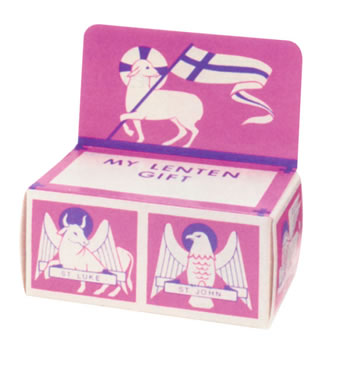
I recall being given little collection boxes by the nuns at the beginning of the Lenten Mite-Boxesseason. The purpose of the boxes was to sacrifice part of our allowance for the poor. Dutifully, I would keep my collection box in the kitchen and periodically drop pennies, nickels and dimes into it as I earned them. On Holy Saturday, the boxes would be collected at the back of the church prior to the afternoon Stations of the Cross. Every child at Holy Name would bring in their little collection boxes, crammed with change and proudly place it in the box next to their classmate’s contributions.

As an altar boy, I would participate in Station of the Cross services throughout the Lenten season. Although they Stationswere somber services, as mere lads, altar boys were able to derive pleasure, albeit mischievous in nature, from serving at the Stations of the Cross. First of all, it was a sign of altar boy hierarchy to be able to carry the cross to each station. However, that privilege only came with tenure and age. However, the real fun was carrying the candles around to each station. The mission was to see if we could tilt the lit candles in such a way as to allow them to drip down the sides of the candle without getting onto the floor or our hands. If we were successful, by the time Jesus is laid in the tomb at Station 14, we would have a large accumulation of wax at the bottom of the candle from our efforts.

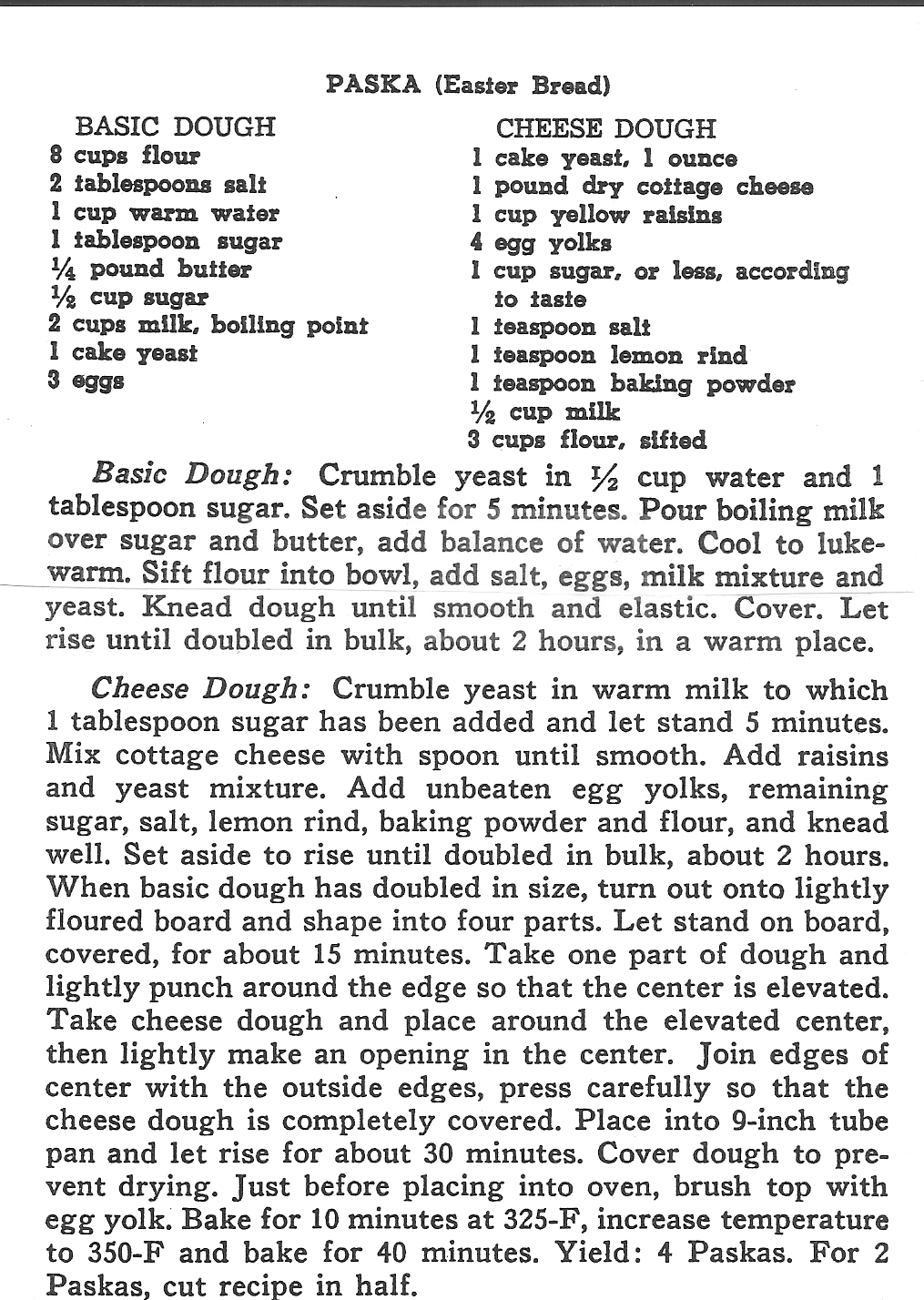
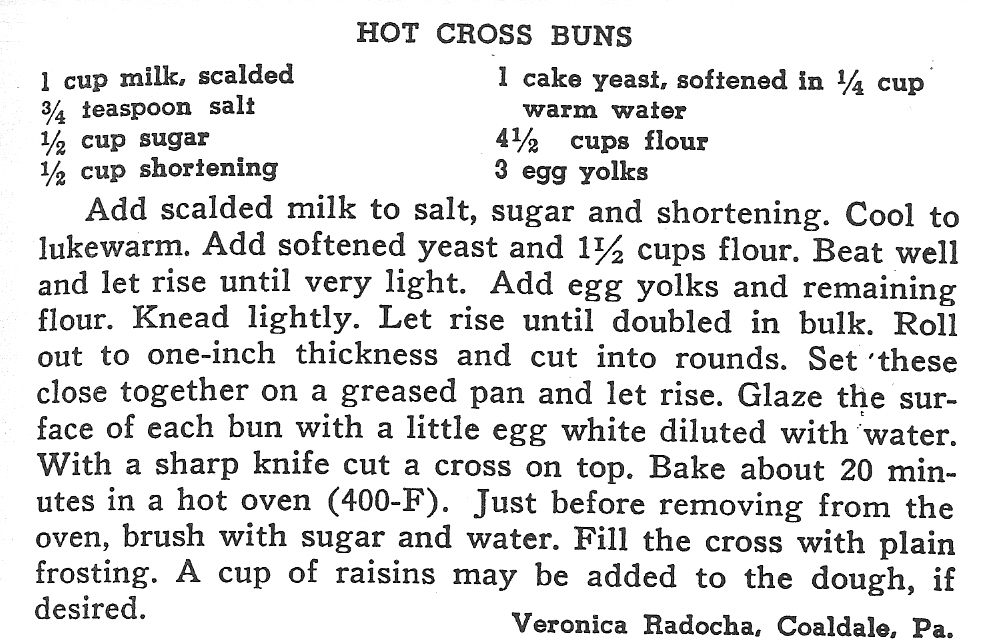
As we approached the end of the season of Lent, I recall visiting by Grandfather’s house on Duquesne Avenue in West Mifflin and watching my Aunt Peggy and Aunt Helen busily preparing some traditional Easter foods. In particular, I remember the smell of freshly baked breads as they made perfectly formed loaves of paska with raisins and my favorite, Hot Cross Buns.

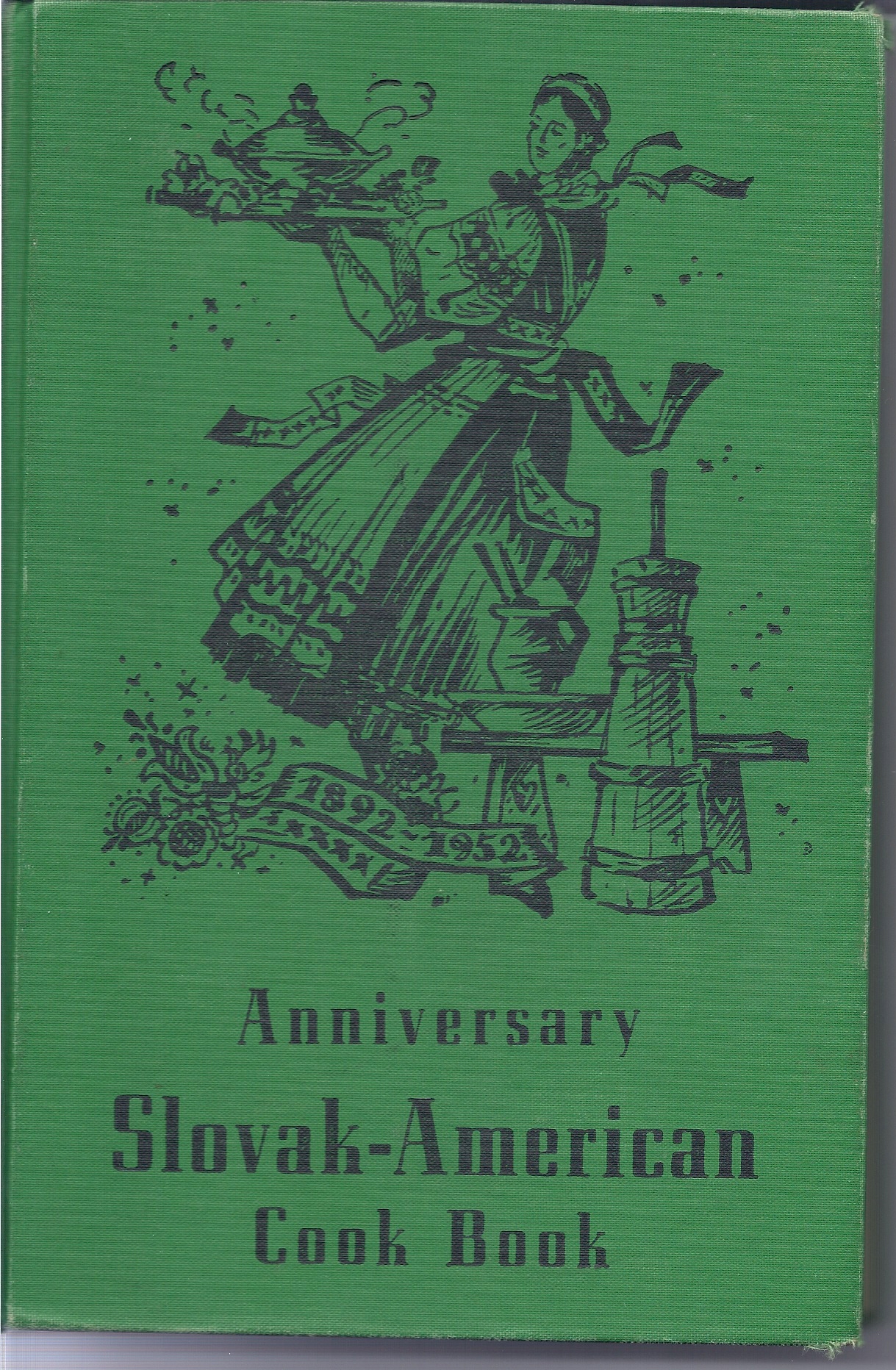
I found the two recipes that my aunts used for their Easter baked goods. The cookbook ofScan_Pic0001 choice, sort of the hunky cook’s bible is the Slovak-American Cookbook that was published in 1952. All of my aunts and my mother used it, and I still do to this day. Both recipes are contained in the book and I am going to be very daring and attempt both of them this year. Both items were always made with raisins, so I too with use them. If I remember correctly, my aunts would always use a combination of white and dark raisins in their paska, and of course I’ll be doing the same.

paska

Paska0001

HotCrossBunsDSC_0263_006

Hot Cross Buns0001

As I was surfing the web, I discovered another entry that describes Slovakian Easter traditions. No matter how often I read about, I still shake my head in amazement over the idea that “whipping” women would be any culture’s tradition. But, leave it to us hunkys!!!!

Posted 12 Apr 1999 – Martina Pisárová Culture & Society

As a native-born Slovak, it never occurred to me that there was anything striking about the way we celebrate one of the biggest of all Christian festivities, Easter. The suspicion that there was something peculiar about some of our customs only came when I was first confronted with the bewildered looks of foreign visitors to our country who obviously could not understand how they had managed to survive. And though these guests did not ask directly, they all seemed to wonder what the point of our ancient practices could possibly be.

It is difficult to understand, I admit, why a young girl dressed up in the national costume should be screaming with apparent enthusiasm while being chased by a bunch of young men who are trying to catch her and throw her in a nearby creek. But such scenes – I promise you- are now rarely seen in modern Slovakia.

An inevitable part of our Easter fun stems from a special willow cane which is hand-woven and decorated with colourful ribbons. Men pursue women brandishing the light branch, called a “korbáč” in Slovak, and use it to “whip” women on the legs when they catch up with them.

According to the traditional ritual, the ribbons on the cane, one of which is added by each victim, testifies to the number of girls and women a lad has managed to soak or whip. In turn for the happy bath and the enjoyable whipping of legs, girls give away hand-painted eggs, or chocolate eggs to young boys. The adults are usually offered a drink of spirits. While some parts of the genuine ritual are no longer observed, the drinking still remains on the list of inevitables nationwide. If you are lucky you can see the traditional Easter in villages. But even there the tradition has been adjusted to a more modern approach. In the cities, of course, people have always had the tendency to neglect folklore.

If I could speak for the women of this wonderful country, I would definitely say that if some progressive national assembly suddenly decided that the Easter Monday craze would be dropped forever, we would all be for it. Just imagine that you have spent the whole weekend shopping for food to be able to prepare all the necessary dishes for Easter. Common throughout Slovakia, for example, is the dish of potato salad and smoked ham, which is cut in thin slices and served on a plate. Every good housewife also bakes at least three sorts of cakes or pastry. When all tasks are done and finished on early Monday morning, women are usually simply too exhausted to resist the water violence effectively. They feel lucky if they manage to sneak out of the bed while the males of the house are still asleep because by male standards it is thought to be the greatest fun if they can attack the unwary victim with a bucketful of cold water in her bed. During the morning, the male relatives and friends ring the doorbell and repeat the ceremony of splash-and-whip again and again. As a woman you have to make sure that you have enough dry things to change into because you never know how many visits you can expect.

One variety of late 20th-century “whipper” has gotten, thank God, a bit more practical. He no longer carries a bucket of water with him. Instead he asks the lady for a cup, fills it with cold water, and then splashes it in her face. The whipping is culturally in retreat as well. Originally thought to keep women fertile, healthy and fresh for the rest of the year, our men are not so sure about that anymore.

In most areas of Slovakia to be a fully equipped whipper you have to have a small bottle of perfume in your pocket. To spray a few drops of perfume on the hair of the fairer sex is considered the final phase of a successful whipping turn.

Easter in Slovakia is loved by men and hated by the women. Never in my life have I met a woman who would praise this tradition. If possible, some women even choose to leave their homes for Easter weekend, and spend it in peace with friends who also find traditional Slovak Easter a little too much to handle.

So, if you need to make a decision about which tradition you’ll be honoring, I would suggest attending the Stations of the Cross and tackling a wonderful loaf of paska! It sure is something that you will enjoy AND it will keep you out of jail for whipping and drenching some poor unsuspecting hunky young lady!!!

Posted in Church and School - Holy Name, Holidays - Non-Christmas and New Years, My Hunky Family, Springtime | 17 Comments

Looking For “Otecko Warbucks”

I needed a diversion today. For the past 3 or 4 weeks, I have been dealing with the “almost sale” of our house in Ocean Pines, Maryland. I am a REALTOR®, and for the past two and a half years I have been trying to sell our home. Judy and I made the decision to sell based on our NEED to be closer to our children in Eastern Pennsylvania. My wife, Judy, was successful, and was able to secure a position in her field, Education Administration, in one of the Wilmington, Delaware school districts. She is very happy in the position and confident that it was the right move. The downside has been the fact that I am still in Ocean Pines, MD trying to sell our home while Judy and my kids are all up in PA. Judy is staying with my youngest daughter for the time being in Coatesville, PA until something happens with our house.

The “almost sale” I referred to earlier, was a solid contract that fell apart when the buyers were scared off by a home inspector. They rescinded their offer, and once again, the house is back on the market. I know there is a butt for every seat in the pew, but I am so antsy about wanting to be with my family, I am getting very discouraged.

IMG_2787editedwebTo get my mind off of the situation, I decided to re-read a report that was tucked away in the top drawer of my nightstand. The report was completed by Impact Economics and Perkins Eastman, both Pittsburgh based consulting firms, and funded by the Pennsylvania Department of Community & Economic Development. It was commissioned by the Redevelopment Authority of the City of Duquesne (RACD) and finalized in 2008. I can’t remember how it happened to end up in that drawer, but nonetheless, every time I open the drawer I am reminded about what “could be” for my hometown. 

The City of Duquesne created the Redevelopment Authority of the City of Duquesne (RACD) in 1996 under the Urban Redevelopment Law. The Urban Redevelopment Law provides for the creation of authorities for the public purposes of acquiring blighted properties to hold or dispose of them so that they may become available for redevelopment. In addition, redevelopment authorities undertake other activities to promote development. 

According to RACD’s website, “The plan prioritizes redevelopment strategies and actions based on an assessment of community assets and opportunities.” 

“It outlines an ambitious but realistic program designed to spur public and private investment in the revitalization of the Duquesne Center of the City (CBD) and the improvement of Duquesne’s “design quality and sense of place”.” 

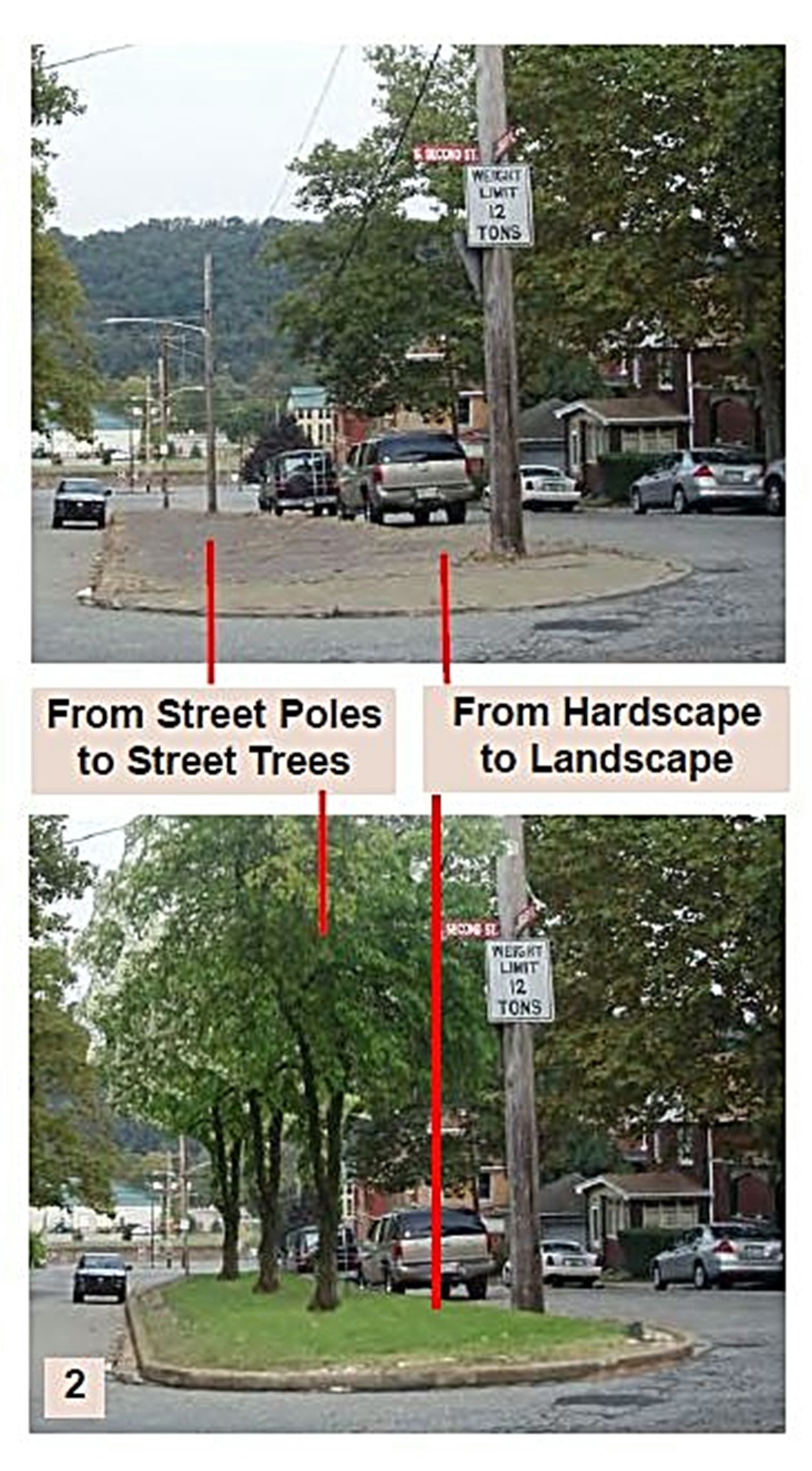
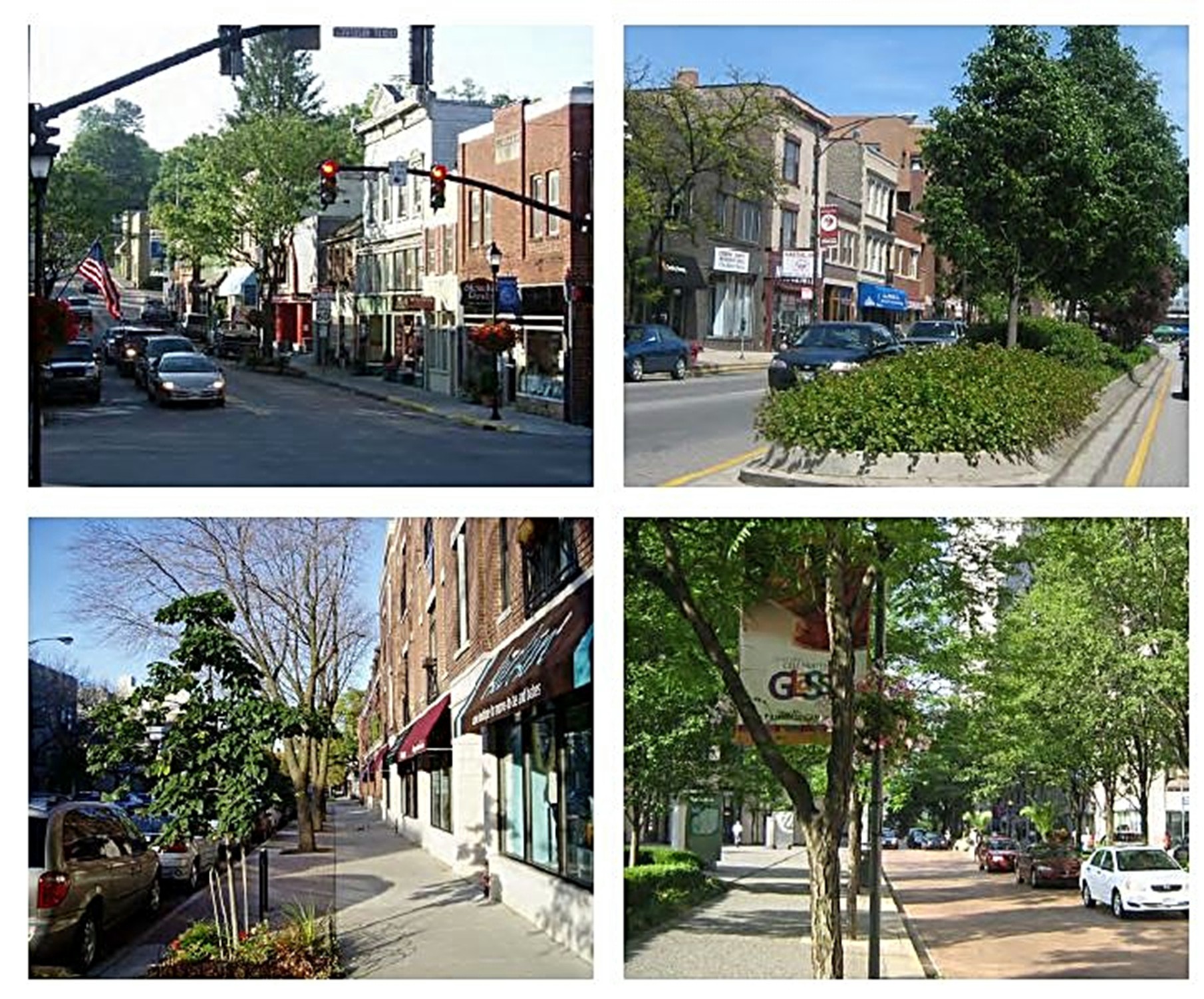
By browsing through the report, one is able to understand what unlocked potential exists in the City of Duquesne. The pages are jam-packed with current economic conditions, business scenarios, market possibilities and even rendered photos of “what could be!” 

So that you too can enjoy that thrill of Duquesne’s potential, I’ve included a few links and a few photos of what could lie ahead for our hometown and a recap of what the costs might be. 

stanmikita2The greatest challenge is to find a bighearted hunky or group of deep pocketed investors to make all of this happen. Perhaps the descendants of Andrew Carnegie would be open to considering another “gift” to the City of Duquesne? Perhaps someone could convince someone, such as actor Jeff Goldblum, who grew up in West Homestead and graduated from West Mifflin North High School in 1970, to donate the money to the city! A Telethon or perhaps a nationwide bake sale??? 

In any event, once we find this person….be sure to tell them about my house! Maybe they would like to buy it too!!!! LOL 

Enjoy the report. To view or print the report, click on the link below. Also, I have included the link to the Redevelopment Authority of Duquesne!

Click here for full report

Redevelopment Authority of Duquesne Website

What it will cost

What it will cost

2 4 5 6 7

Posted in Duquesne Buildings, Life in General, Miscellaneous, Stores and Businesses, Surveys and Opinions | 11 Comments

A Hunky in Distress!!!

Mzes-szvek-nagy-pirosI received an email from a Duquesne Hunky Blog reader that is requesting some information about a particular cookie that he husband remembers from his youth in Duquesne. The  cookie is a mezekalac and from the research I have done, is basically a Hungarian version of gingerbread.

If anyone can help Linda out, please add your recipe as a comment to this post. I have found a Youtube video, featuring a Hungarian Rachael Rae,  that illustrates how to make the cookie, but unfortunately its in Hungarian and I’m lost at the first word!

Time to pull out the ol’ cookbooks and recipe cards to help a friend out and perhaps expose a whole new group of us this this tasty delight!

Hi,

My guy, my significant other, grew up in Duquesne–he’s 64 years old, and has talked about cookies they would buy at Easter time at the orthodox church they attended  and how those cookies would disappear immediately with 3 boys in the family. He has referred to them as ” mezekalacs”. I have rustled up a couple ” mezekalacs” recipes on the internet and they are spice cookies. He says these are nothing close to the  ” light and airy” cookies he remembers from his childhood.

I’m trying ever so hard to locate the recipe. Does this sound familiar to you at all or do you know anyone I could contact? I’d love to be able to surprise him with just the right thing.

Thank you much,

Linda Whalen

Posted in Uncategorized | 18 Comments

One of Duquesne’s Own Sport Heros!

120911_ScarryI have learned SO much about the town that we all love since beginning this blog. Stories about people, places and events that were perhaps destined to be lost forever, have now been noted, recapped and made available to Duquesne neighbors, friends and to the world for posterity.

One such “revelation” was made known to me by Paul Duffy, a Duquesne native and one of our blog followers. A few days ago, Paul commented on a story that I had posted regarding Duquesne High School’s Football Team. I was fascinated by the story Paul provided and researched for more information about a Duquesne HERO that I was unaware of. Paul’s recollections about Mo Scarry are priceless and are so heartfelt. THANK YOU Paul for your poignant contribution.

In addition to the information I located on the web, I have also included an article that was published in The Duquesne Times 75 years ago, this week, recapping a basketball game in which Mo starred. The extent of his athletic prowess throughout his youth and adult life is incredible!

From Paul Duffy:

Submitted on 2013/01/25 at 7:46 pmPlease allow me to lengthen the historical mosaic of Dukes football:With deep sadness and respect, I must report that Mo Scarry, one of our Duquesne brethren recently passed.Beyond the details in the obit, I can fill out a bit more of the richness of a remarkable man, since I played for Mo at Waynesburg. Not noted in the obit, you’ll be interested to know that Mo was a graduate of Holy Name High School, while also playing both football and basketball at DHS (as it was done, BITD).Also omitted from the obit is the abiding impact he had on his players and teams. Mo was as old-school as ever has been seen, not in any sense mean but as tough as iron. It’s not noticeable in the portrait accompanying the obit, but he had a huge broad scar across that Irish nose. Mo could fuss and fume and bluster with the best of them. A common experience for many of us was to have Mo stick his face with that vicious scar and which was as vast as Galway Bay into our face masks, and in highest dudgeon and his characteristic faint lisp, proclaim “Shon, I want you to go chlean that guy’s clockh!”.The obit notes that Mo was drafted during WWII. Like most of those vets, he didn’t talk about it much, but over time we managed to learn a bit more about his service. He landed with Patton in North Africa, was captured in combat, and while being shipped back to Italy, his POW boat was torpedoed and sunk; somehow Mo survived but regrettably I don’t know much more of that tale.At one of our occasional team reunions some years ago, Mo was circling around his former payers and body-slamming and clip blocking us; he was about 80 at the time. Later at the bar, I happened to ask Mo what it was like to serve under Patton. As usual, that launched Mo immediately into his characteristic high bluster, saying “Why that shon of a ….”, and he paused, then adding “but you know what, that guy knew how to WIN!” Classic Mo.The obit only implies it, but it’s worth noting that perhaps the highlight of his coaching career was coaching the defensive line of the legendary No-Name Defense of the 1972 undefeated Super Bowl champion Dolphins. (http://www.miamidolphins.com/news/article-1/Former-Dolphins-Coach-Mo-Scarry-Dies/11824e4d-be3b-40b9-bbf3-dfeba6682004) Vern Den Herder, one of his defensive tackles on that team, later named one of horses Mo in honor of the coach. Shortly after Mo had moved on to the NFL, we won the NAIA national championship at Waynesburg, and of course, we invited Mo as guest of honor to our celebration dinner. As we gathered around him, we asked him, “Coach, what’s the biggest difference coaching in the NFL?”. His curt and obviously snide response was simply, “Agents”.May God grant him eternal peace.Paul Duffy

From Wikipedia:

Michael Maurice “Mo” Scarry

Personal Information

Date of birth: February 1, 1920

Place of birth: Duquesne, Pennsylvania

Date of death: September 9, 2012 (aged 92)

Place of death: Fort Myers, Florida

Career Information

College: Waynesburg College 

Career History

As player:

Cleveland Rams (1944–1945)

Cleveland Browns (1946–1947)

As coach:

 Western Reserve (HC) 1948–1949

 Santa Clara University (Asst.) 1950–1951

 Loras College (HC) 1952–1953

 Washington State University (Asst.) 1954–1955

 University of Cincinnati (DL) 1956–1962

 Waynesburg College (HC) 1963–1965

 Washington Redskins (DL) 1966–1968

 Scout, various teams 1969

 Miami Dolphins (DL) 1970–1985


Career Highlights and Awards

 NFL Champion (1945)

 2× AAFC Champion (1946, 1947)

 Member, Pennsylvania Sports Hall of Fame


Career NFL Statistics as of 1947

Games – 45

Interceptions – 7

Stats at NFL.com

Michael Joseph “Mo” Scarry (February 1, 1920 – September 9, 2012) was an American football player and coach. He grew up in Pennsylvania and was a star on his high school basketball team. Scarry, however, played football in college at Waynesburg College in Waynesburg, Pennsylvania and went on to join the Cleveland Rams in the National Football League as a center following a stint in the U.S. Army during World War II. The Rams moved to Los Angeles after winning the 1945 NFL championship, and Scarry elected to stay in Cleveland and play for the Cleveland Browns under Coach Paul Brown in the new All-America Football Conference. The Browns won the AAFC championship in 1946 and 1947 while Scarry was on the team.

Scarry, who coached the basketball team at Western Reserve University in Cleveland during his playing career, retired from pro football after the 1947 season to take up a post as head coach of the school’s football team. He stayed there for two seasons before moving to Santa Clara University in California as an assistant coach. Scarry then moved in 1952 to Loras College in Iowa as an assistant. After a stint at Washington State University, he spent six years as the line coach for the University of Cincinnati. Scarry served as head football coach at Waynesburg, his alma mater, for three seasons between 1963 and 1965. He got his first professional coaching job in 1966 with the NFL’s Washington Redskins, the following year, and became the defensive line coach of the Miami Dolphins three years later. He stayed with the Dolphins for 15 seasons until his retirement; during his Dolphins career, the team won two Super Bowls. Scarry was inducted into the Pennsylvania Sports Hall of Fame in 2000.

High school, college and military service

Scarry grew up in Duquesne, Pennsylvania, where he was a star on his high school basketball team. He also played football, but was not a standout.[1] Scarry attended Waynesburg College, a small school in Waynesburg, Pennsylvania, where he continued to play football and basketball. He served in the U.S. Army during World War II in North Africa, but came down with asthma and was given a medical discharge. He signed with the Cleveland Rams of the National Football League starting in 1944. 

Professional career

Scarry began the 1944 season with the Rams at left tackle, but was shifted to center in September. He played on defense and offense, occasionally as a forward passer.[3] After a season in which the Rams contended for but lost the NFL’s western division, Scarry spent the offseason as a student at Western Reserve University in Cleveland and served as the director of a YMCA camp in Mantua, Ohio. Scarry suffered a knee injury near the beginning of the 1945 season, but soon returned to action as the Rams, led by quarterback Bob Waterfield, won the NFL championship. Scarry was the captain of the Rams during the championship run. 

The Rams moved to Los Angeles after the 1945 season, and Scarry, along with teammates Chet Adams, Tommy Colella, Don Greenwood and Gaylon Smith, decided to stay in Cleveland and play for the Cleveland Browns, a team under formation in the new All-America Football Conference. The Rams sought an injunction in Federal court to prevent Adams from defecting to the Browns, arguing that he was still under contract with the Rams despite the move. Adams argued that his contract described a team in Cleveland, and was no longer valid because of the Rams’ relocation. A judge ruled in favor of Adams in August of 1946, clearing the way for him and other former Rams players to join the Browns. 

While Scarry was playing for the Browns, he was named head basketball coach at Western Reserve, where he had taken classes between games and in the offseason. In his first season, Scarry was a workhorse who often played between 50 and the full 60 minutes of games, lining up on the offensive and defensive lines. Toward the middle of the season, Cleveland coach Paul Brown began to use him as the defensive leader, letting him call the unit’s formations. In December, Scarry’s Western Reserve basketball team played its first games; he had missed numerous practices because of his duties with the Browns. The Browns went on to win the AAFC championship later in the month. 

Scarry remained with the Browns the following season. In September of 1947 he received a bachelor of science degree from Western Reserve, completing an educational career at Waynesburg that was cut short by the war. By October, he was mentioned as a possible successor to Tom Davies, who had resigned as Western Reserve’s football coach. While still one of the AAFC’s top centers, Scarry was bothered by injury and asthma and was considering leaving pro football. The Browns, meanwhile, won a second straight AAFC championship in December. Scarry was named Western Reserve’s football coach the following January, ending his career with the Browns. Frank Gatski took over as the Browns’ regular center after Scarry’s retirement.

Coaching career

Scarry borrowed Paul Brown’s coaching techniques at Western Reserve, instituting well-organized practices there. “I had a lot of ideas about coaching before I went to work for the Browns,” he said in 1947. “But the manner in which Paul organized his practice and all his duties impressed me. I try to do the same here.” With no good passer or runner and a lack of depth, Reserve’s Red Cats performed poorly in Scarry’s first season, but he was praised for making the most out of a thin squad. In his second year in 1949, the Red Cats improved to a 4–5–1 record, and Scarry was expected to stay on for a third season. The following year, however, he resigned to take an assistant coaching position at Santa Clara University in California under former Browns assistant Dick Gallagher. 

Scarry stayed at Santa Clara for the 1950 and 1951 seasons before getting a job as an assistant at Loras College in Dubuque, Iowa. He stayed at Loras for two years, moving to Washington State University in 1954. He left that school in November of 1955 when head coach Al Kircher was fired in the wake of a 1–10 season. In February of 1956, he was hired as a line coach by the University of Cincinnati. During his time at Cincinnati, Scarry served as an assistant to Otto Graham, the former Browns star quarterback, as a coach in the College All-Star Game, a now-defunct annual matchup between the NFL champion and a selection of the best college players from across the country. 

After seven seasons at Cincinnati, Scarry got his third head coaching job, for the Yellow Jackets at Waynesburg, his alma mater. He was also the school’s athletic director. Scarry held the position for three seasons, from 1963 until 1965, and his teams had a 17–8–1 record during that span. As of the conclusion of the 2010 season, this ranks him 12th at Waynesburg in total wins for a coach and fifth at the school in winning percentage (.673). Waynesburg won the Pennsylvania Intercollegiate Athletic Conference title in 1965, and Scarry was voted the conference’s coach of the year. Scarry continued to act as the line coach under Graham for the college all-stars in the offseason during his tenure at Waynesburg. In 1964, he was inducted into football hall of fame of the National Association of Intercollegiate Athletics, an association of smaller college sports programs. 

Graham became the head coach of the NFL’s Washington Redskins in 1966, and he hired Scarry that year as his defensive line coach. Scarry stayed with the Redskins through 1968, when Graham resigned after three unsuccessful seasons. He then scouted briefly for the San Francisco 49ers, Los Angeles Rams and Dallas Cowboys before taking a job in 1970 as the defensive line coach for the Miami Dolphins under Don Shula, a former Browns player. Scarry spent the remainder of his coaching career with the Dolphins, retiring after 15 years in 1986. Miami reached the Super Bowl five times while Scarry was a coach there, winning the championship twice, in 1972 and 1973.

 Later life and death

After retiring from football, Scarry worked informally for the Dolphins as a volunteer assistant.[33] He moved with his wife, Libby, to Fort Myers, Florida in 1994. Scarry was inducted into the Pennsylvania Sports Hall of Fame in 2000. He died in 2012 at his home in Fort Myers; he was the last surviving member of the original Browns team. He had four sons and a daughter.

120911_Scarry2

From The News-Press:

Former Dolphins Coach Mo Scarry Dies 

Posted Sep 11, 2012

David Dorsey-The News-Press @DavidADorsey The News-Press  

Article Link: http://www.miamidolphins.com/news/article-1/Former-Dolphins-Coach-Mo-Scarry-Dies/11824e4d-be3b-40b9-bbf3-dfeba6682004 

Former Dolphins long-time assistant coach passes away at the age of 92. 

Don Shula called Michael Maurice “Mo” Scarry a “father figure to me,” a man he just had to have on his Miami Dolphins coaching staff, which he did for 16 seasons. 

Jim Scarry called Mo Scarry “Dad,” but he also called him coach.  

Even at age 77, Mo Scarry refused to retire, working for his son as the defensive line coach at Bishop Verot High School for four seasons.  

Mike Scarry called Mo Scarry not just his father but his friend.  

The two of them bonded during road trips from Fort Myers to Miami Dolphins games at least twice a year, long after Mo Scarry ended 25 NFL seasons as coach or player.  

Mo Scarry died early Sunday morning at his Fort Myers home. He was 92. He and his late wife Libby moved to Fort Myers in 1994. The funeral for Mo Scarry is scheduled for 9 a.m. Saturday at the Church of the Resurrection at 8121 Cypress Lake Drive.  

“I’ve been blessed with some great assistant coaches, and he has to be considered one of them,” Shula said during a phone interview from his summer home in Monterey, Calif. “He has to be considered one of the best. He was like a father figure to me. When I was playing in college, he was coaching at Western Reserve. He was always interested in how we were doing.  

“I was a fan of his even before that. I was a Browns fan when he played for them.” 

After serving in north Africa for the U.S. Army during World War II, Mo Scarry entered the NFL in its infancy, playing center and linebacker first for the Cleveland Rams in 1944-45 and then for the Cleveland Browns in 1946-47.  

After coaching for the Washington Redskins in 1966-68 and then scouting for the Redskins in 1969, Scarry became Don Shula’s defensive line coach from 1970 to 1985, which included that undefeated 1972 season. 

“He was a great coach and a great friend,” Shula said. “I will always remember him.”  

Mo Scarry kept coaching even after retiring. When he left Shula’s paid staff after 1985, he continued advising from the press box on game days as a volunteer assistant.  

After he moved to Fort Myers, Mo Scarry told his son Jim he would advise the coaches at Bishop Verot.  

“He was 77-years-old when he was helping me,” said Jim Scarry, 56 and an assistant coach in Montrose, Colo. “The plan was for him to come to practice twice a week, watch the coaches coach and then help them out. That lasted one day.  

“He wanted to coach the kids. He loved coaching the kids.”  

Hands on and with a firm handshake, even right before he died, Mo Scarry would get into a defensive lineman’s stance at age 77 and fire his legs, throwing his shoulders into a two-man blocking sled to demonstrate proper technique.  

“One of the cool things was he coached the kids at Bishop Verot the same way he coached with the Miami Dolphins,” said Jim Scarry. “He coached fundamentals, fundamentals, fundamentals.That’s just what he believed in.”  

Mike Scarry said his father played in the first televised college football game, suiting up for Waynesburg vs. Fordham on Sept. 30, 1939. The VIP seating section at Waynesburg is named in Mo Scarry’s honor.  

Dave Shula, an assistant coach to his father Don Shula while with the Dolphins, grew up around Mo Scarry.  

“He was one of my father figures and mentors,” Dave Shula said. “When describing people, like people who were always discipline problems or were always overweight, he’d use the same expression all the time. He’d say, ‘Tigers never change their stripes.’ That’s one of the things that stuck with me.”  

“He was an extra set of eyeballs,” his son Mike Scarry said. 

 After he moved to Fort Myers, Mo Scarry told his son Jim he would advise the coaches at Bishop Verot.  

“He was 77-years-old when he was helping me,” said Jim Scarry, 56 and an assistant coach in Montrose, Colo. “The plan was for him to come to practice twice a week, watch the coaches coach and then help them out. That lasted one day.  

“He wanted to coach the kids. He loved coaching the kids.”  

Hands on and with a firm handshake, even right before he died, Mo Scarry would get into a defensive lineman’s stance at age 77 and fire his legs, throwing his shoulders into a two-man blocking sled to demonstrate proper technique.  

“One of the cool things was he coached the kids at Bishop Verot the same way he coached with the Miami Dolphins,” said Jim Scarry. “He coached fundamentals, fundamentals, fundamentals.That’s just what he believed in.”  

Mike Scarry said his father played in the first televised college football game, suiting up for Waynesburg vs. Fordham on Sept. 30, 1939. The VIP seating section at Waynesburg is named in Mo Scarry’s honor.  

Dave Shula, an assistant coach to his father Don Shula while with the Dolphins, grew up around Mo Scarry.  

“He was one of my father figures and mentors,” Dave Shula said. “When describing people, like people who were always discipline problems or were always overweight, he’d use the same expression all the time. He’d say, ‘Tigers never change their stripes.’ That’s one of the things that stuck with me.”

 URL: http://www.miamidolphins.com/news/article-1/Former-Dolphins-Coach-Mo-Scarry-Dies/11824e4d-be3b-40b9-bbf3-dfeba6682004


FROM THE DUQUESNE TIMES – JANUARY 28, 1938:

HEADLINE

Mo Article


Posted in Duquesne High School, Duquesne Public Schools, Duquesne's Special Citizens, Feedback From Our Friends, Sports | 9 Comments

Craziness Ensues

I just wanted to let everyone know that I haven’t been sucked into a blackhole! The past few days have been insane with medical issues and I haven’t had the presence of mind to write a post recently.

My wife had surgery yesterday in order to repair a torn miniscus in her knee, I had a consultation, x-rays and an MRI to diagnose a problem I am having in my neck and shoulder, AND tomorrow mornimg at 7:40 a.m. my grandson Jackson is being operated on to have tubes put in his ears to correct a consistant infection issue. I am going to the hospital with my daughter Megan since Andy, her husband is on his way to Westminster, MD to attend his Great-Uncle Jake’s funeral, and then is traveling to Louisville, KY to attend his Uncle John’s funeral. The two men died one day appart.

So, with all of that said, lots of prayers are requested! I will surely appreciate it!

I couldn’t sign off without an inspirational picture of my little buddy Jackson, sound asleep a few minutes ago, unaware of his day tomorrow at the hospital. God love him!

Project2

I’ll be back soon my friends! Thank you in advance for your prayers! – Jim

Posted in Uncategorized | 16 Comments

In A Class By Ourselves!

Well my friends, WE are hitting a milestone with this post. This is my 200th post to my blog! Thank you so much for sticking with me and allowing me to “BS” for over two years! The one thing that is VERY apparent is that we “hunkys” sure like to gab and tell stories!

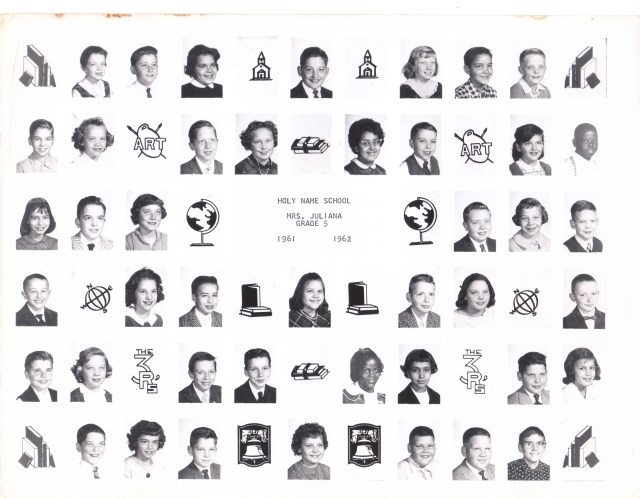
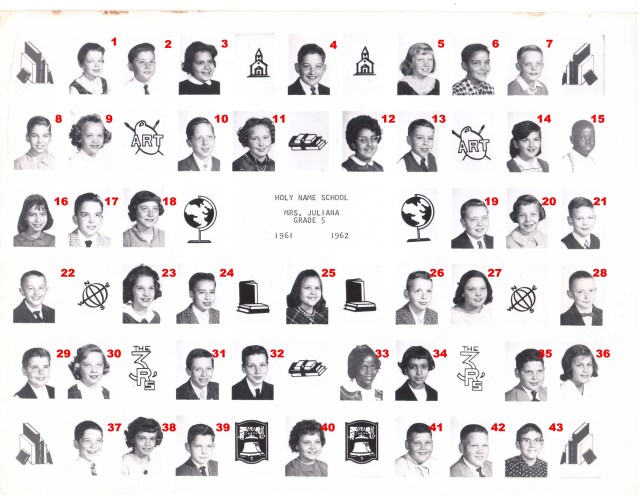
As a student at Holy Name, I remember one special event in particular that took place each year. Who can ever forget “class pictures?!?” I’m not sure what time of year they were taken, but I would guess that it might have been in the fall, based on what we were wearing the the pictures. I remember my mom fussing about what I was going to wear as well as making sure that I clearly understood how to comb my hair just right in order to take the best picture.

Judging from the example below of my 5th Grade Class, every mom was equally fussy about their little boys and girls when it came to picture day. I have to hand it to the photographer. He really did a great just and appears to have taken special care to assure he was able to get a good picture of each child. There’s not a bad picture in the bunch.

I remember being able to take the pictures home and proudly give them to my mom and dad. I can still recall the special texture on the pictures that made them feel like silk. Of course, they were always black and white and the largest size was a 5×7 and about 20 wallet size pictures for all the aunts and uncles and grandparents.

Thanks to my grade school buddy, Geno Sabolcik, I will be able to share a few of our class pictures from Holy Name Grade School over the next few months. I have stared at our 5th Grade picture for the last hour, trying to remember all of the names and faces. I managed to recall 38 out of 43 of my classmates. I hit a brick wall on five of them, although some are on the tip of my tongue. Please, if I got anywrong of the ones that I did name or if anyone can fill in the blanks for me, PLEASE add your comment! One special note – notice our class size! 43 students and one teacher! Mrs. Juliana sure had her hads full!!

Holy Name 5 th Grade

Grade 5 w-numbers

1. Mary Beth Higgs

2. Gary Huwalt

3. Debbie Abbatangelo

4. Michael Balaban

5. Noreen Shanley

6. Mat Esak

7. Bruce Olson

8. Frank Uhrin

9.

10. Ralph Lemak

11. Eileen Trubich

12. Elaine Torres

13. Raymond Lucas

14. Jay Ann Turkowski

15. Larry Pitts

16. Bernadette Lucas

17. Harry Chiesi

18. Jane Smouse

19. Jimmy Rarrick

20. Barbara Wirth

21. ME! – Jim Volk

22. David Gibas(?)

23. Lorraine Spade

24. Geno Sabolcik

25. Amy Mariani

26. Stephen Regina

27. Karen Dagle

28. Harry Wagner

29. Buddy Irons-Sekowski

30. Carol Gibbons

31. Richard Ross

32. John Lawler

33. Wanda Jefferies

34. Jane Drago

35. Raymond Terza

36. Mary Petrozza

37. Billy Gibbons

38. Judy Needham

39. Bob Chermonitz

40. Candice Sinai

41. Bernard Curran

42. Carl Kavish

43. David Newmyer

Once again, thank you for sticking with me for 200 posts!

Posted in Church and School - Holy Name, Life in General | 30 Comments

MORE Duquesne High School Football Memories

Based on the major response from all of the fans of Duquesne High School Football after I posted the GEO article featuring our hometown, I thought you might enjoy remembering a bit more. I reached back in to the Duquesne Times 1951 and 1952 editions and found some interesting articles and photos about Duke Pride and Duke performance.

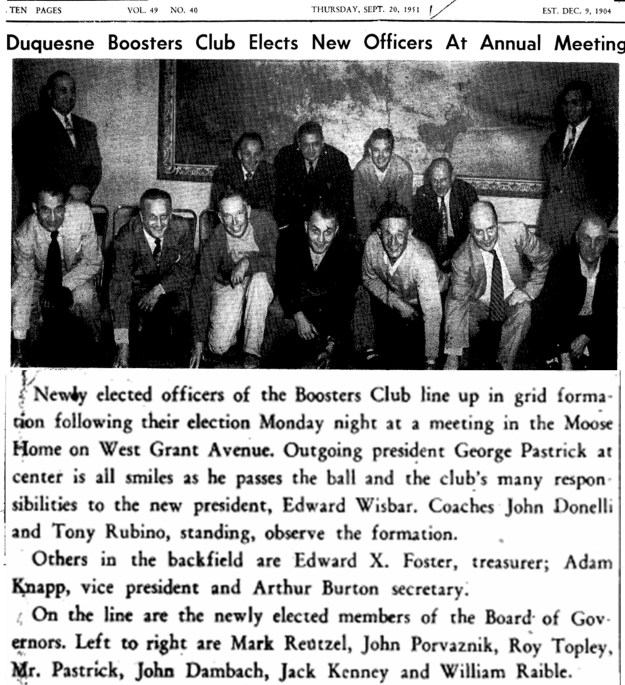
Long before today’s “Soccer Mom’s & Dad’s” Duquesne boasted a Booster’s Club whose purpose was to promote and celebrate athletics in the city schools. I recognized so many of the names of in the 1951 photo below which details the newly elected Booster Club Officers in Duquesne. What a WONDERFUL undertaking and support group for all of the kids and coaches!

Boosters Club

Throughout the Duquesne Times during the Dukes Football season, every game was meticulously recapped and served to excite those who were unable to attend the games. In 1951, we were celebrating the Dukes latest victory against Braddock which added to their undefeated record:

.9-27-1951

.

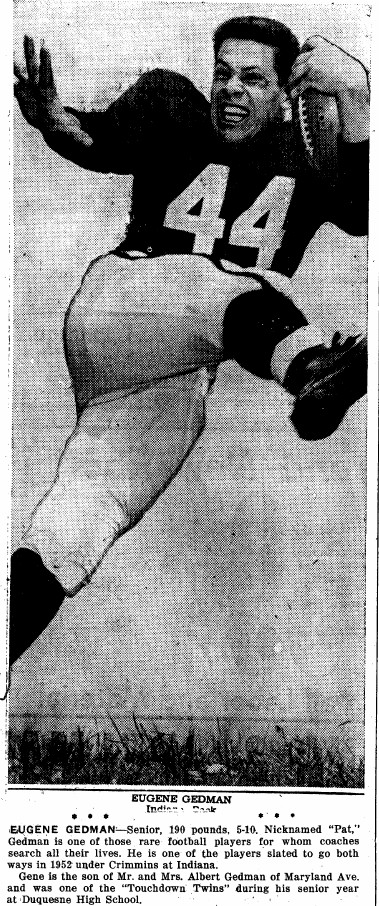

In the GEO article that I posted previously, much was mentioned about the Gedman family football legacy. Our city fathers clearly understood the achievements of these young men and honored one of them. At a game that took place at the Pitt Fieldhouse, our booster club honored Eugene “Patty” Gedman for his achievements while a student at Duquesne High School. Although he was now part of the visiting Indiana team, the admiration and love for our hometown sports hero was evident!

Here to the Duquesne Dukes! A constant source of pride, admiration and conversation among all of the Duquesne residents!

Gedman10-16-1952

Posted in Uncategorized | 8 Comments

Duquesne High School FOOTBALL

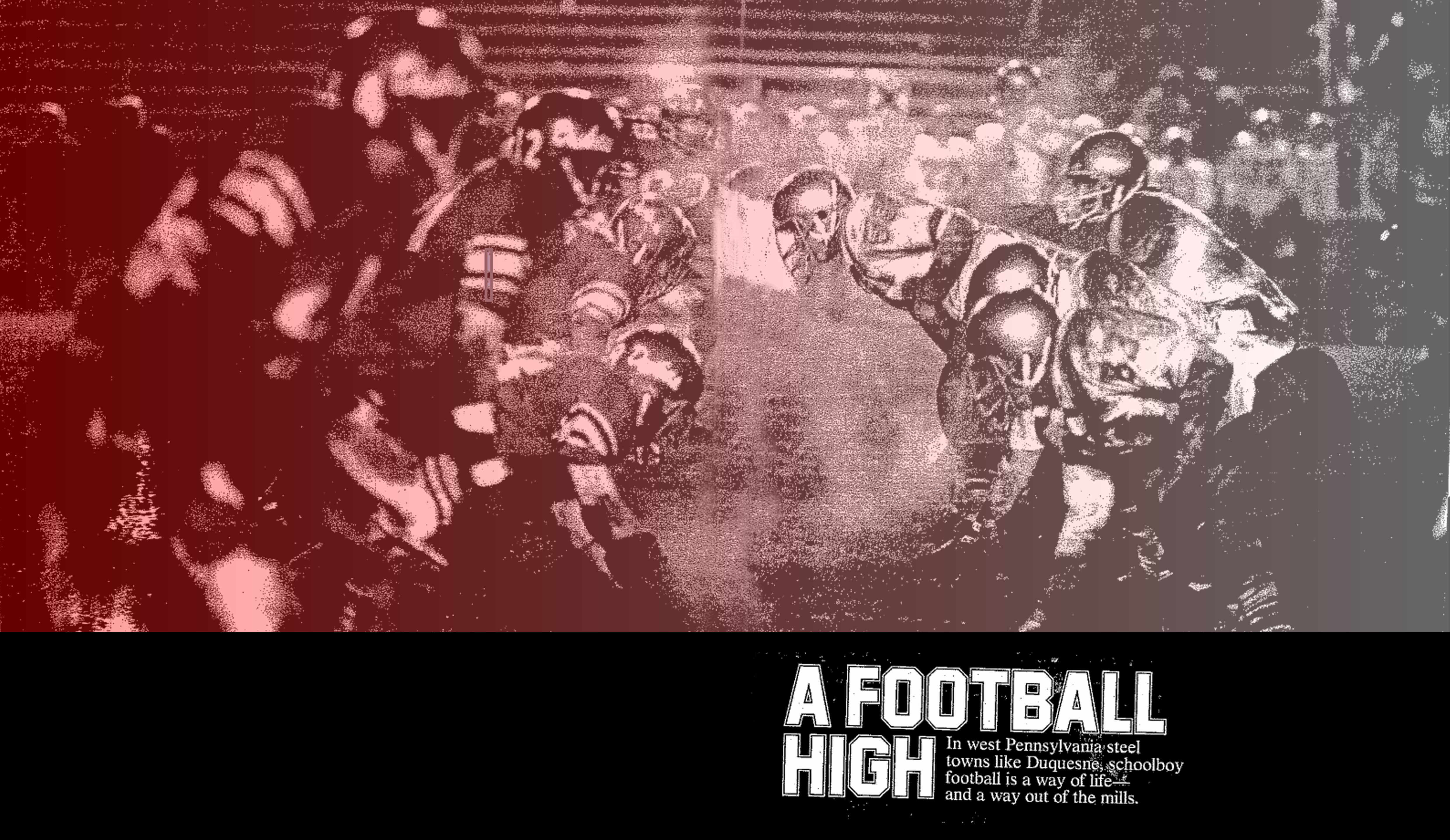
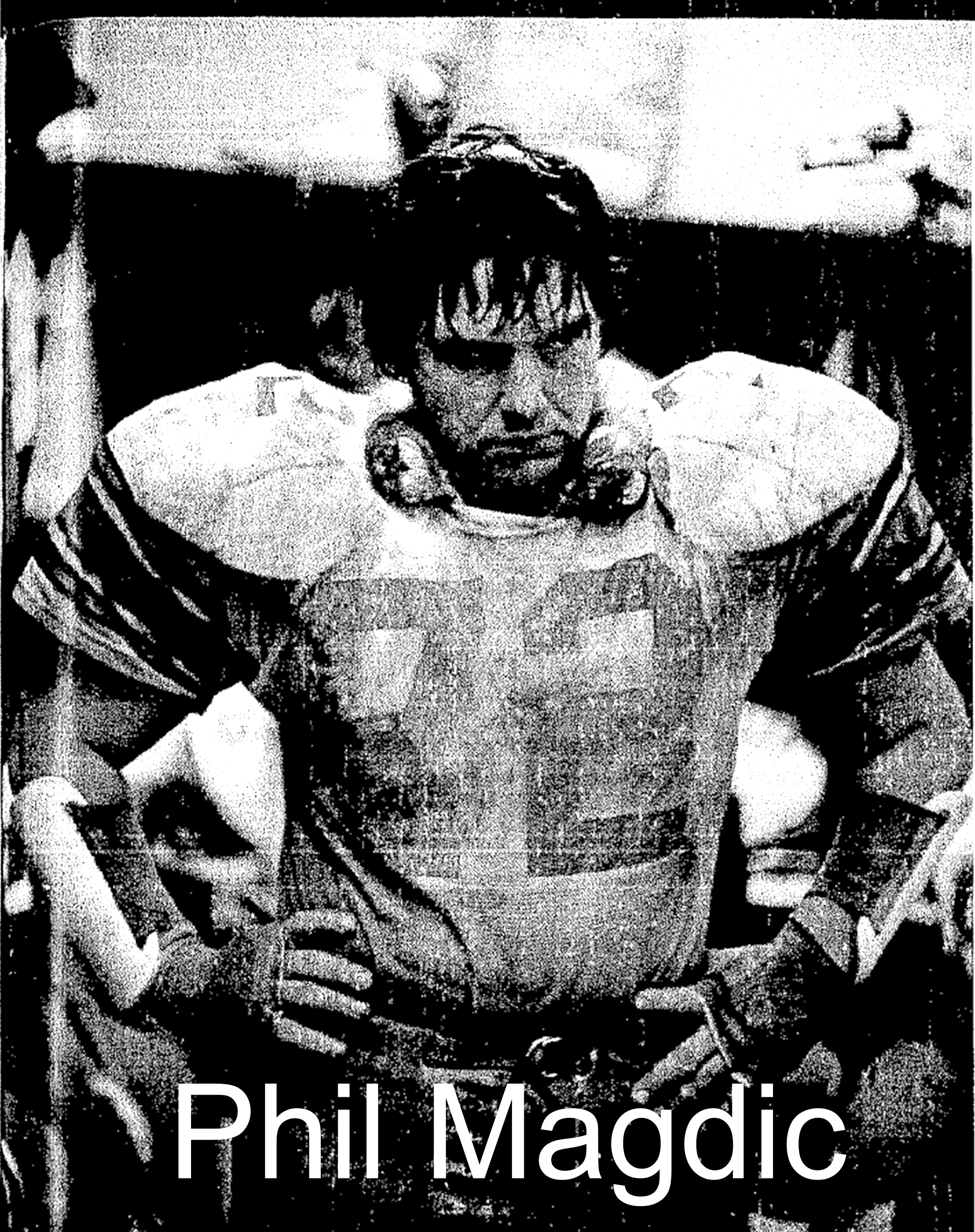
In October of 1980, GEO Magazine published an article about our hometown heros! I was unaware of this article until Rome Sikora (DHS 1953 – Seattle, WA/Mirage, CA) forwarded me a copy of the magazine a few weeks ago. I owe Rome an enormous debt of gratitude for sending this fantastic tribute to Duquesne High School Football. THANK YOU ROME!!!!

GEO COVER

Click Here

Phil Magdic

To read the full article, click the link below. Again, THANK YOU ROME!

Duquesne High School Football Article in GEO

Posted in Duquesne High School, Duquesne History, Duquesne Public Schools, Duquesne's Special Citizens, Life in General, Miscellaneous, Sports | 29 Comments

Sad News for Kennywood

So many of Duquesne’s youth worked at Kennywood at one time or another as they were growing up in our hometown. Lou Andriko forwarded an obituary from the Post-Gazette for Carl Hughes, former C.O.B. for Kennywood, and a very familiar face around the park for decades.

RIP Little Man

Obituary: Carl Hughes / ‘Man who truly created Kennywood’ never really retired

July 18, 1921 – Dec. 29, 2012
By Anya Sostek / Pittsburgh Post-Gazette
 
Hughes


Carl Hughes wrote the slogan for Kennywood’s Kiddieland — the one that reads “The most beautiful music in the world is the sound of children laughing.”

In the five-plus decades that he worked at Kennywood — rising from part-time publicity assistant to president and chairman of the board — Mr. Hughes worked tirelessly to make his words come true.

“He was the man who truly created Kennywood,” said Harry Henninger, who retired as Kennywood’s chief executive officer when the park was sold in 2008. “He made it his mission to make it a much greater place, and he achieved it.”

Mr. Hughes died Saturday of heart failure in his Mount Washington home. He was 91.

He was born in Johnstown and graduated from Geneva College. He started working as a sportswriter for The Pittsburgh Press in 1943, covering the makeshift wartime “Card-Pitts” football team that was the amalgamation of the Chicago Cardinals and Pittsburgh Steelers.

The team — which badly lost all 10 games it played — was nicknamed the Carpets by Mr. Hughes and other sportswriters, recalled Mr. Hughes’ close friend and fellow sportswriter Roy McHugh.

Mr. Hughes broke the story of the University of Pittsburgh football coach Clark Shaughnessy moonlighting as a coach of the Washington Redskins — a story that got him both kicked out of the Pitt locker room and a $5 raise from his editor, recalled Mr. McHugh in a written remembrance.

He also covered boxing for the Press, befriending Art Rooney Sr., who owned a Downtown boxing club as well as the Pittsburgh Steelers.

Mr. Rooney nicknamed him “The Mighty Atom” — a nod to his short stature, according to a 1999 Pittsburgh Post-Gazette profile.

In addition to sportswriting, Mr. Hughes sometimes would help a friend who was in charge of publicity for Kennywood with writing news releases.

Mr. Hughes’ work with both the Press and Kennywood was put on hold when he was drafted into the Army at the end of World War II and sent to the Philippines.

He returned in 1947, staying employed at the Press and taking on the publicity work for Kennywood as a part-time job. In 1956, concerned about supporting his wife and two daughters on a newspaper salary, Mr. Hughes joined Kennywood full time.

His initial job of coordinating park sales and publicity changed dramatically three years later, when Mr. Hughes’ boss, Carl Henninger, died of a heart attack, and Mr. Hughes was made manager of the park.

Around that time, said Harry Henninger, who starting working at the park in 1963, Kennywood was considered just an average amusement park with average facilities. Mr. Hughes aspired to turn it into something more.

A natural historian, he campaigned — successfully — for its inclusion into the National Register of Historic Places, making it in 1987 the first amusement park to receive that distinction.

He also had a “constant drive for perfection” and a vision for “keeping the park beautiful,” Mr. Henninger said. “It wasn’t just a roller coaster, it was a feeling that you wanted to have throughout the park for family entertainment.”

Mr. Hughes often worked six or seven days a week.

He never left the park for the day without complimenting at least one employee on a job well done, said his daughter, Mary Lou Rosemeyer, even if that meant wandering the park at night looking for a ride attendant treating a guest particularly well.

He considered himself just one of Kennywood’s many team members and on busy days when employees had to use satellite parking offsite, he would, too. “He did that even when he was 80,” said Ms. Rosemeyer, who worked at Kennywood for 23 years. “He would park his Corvette and walk down. If the folks that worked the front lines had to do it, he had to do it, too.”

He used creative tactics in public relations and marketing, employing one lesson he learned from Art Rooney Sr.’s father, Dan Rooney, who owned the General Braddock Brewery in Braddock. As recalled in the 1999 Post-Gazette profile, Mr. Hughes had read a beer labeled “premium” and asked Dan Rooney, “How do you become a premium beer?”

“Young man, the first thing you do is tell your printer,” Rooney replied.

And so, Mr. Hughes quickly dubbed Kennywood “The Roller Coaster Capital of the World.”

Kennywood expanded greatly under Mr. Hughes’ tenure, adding rides such as the Log Jammer and The Laser Loop and buying and opening other parks such as Idlewild in 1983 and Sandcastle in 1989.

Putting a Neighborhood of Make-Believe attraction into Idlewild, he befriended Fred Rogers of the “Mister Rogers’ Neighborhood” television show. The two would exchange humorous gifts — Rogers custom-ordered him a 4-foot replica of a blue Flair pen that both men used reliably.

Whenever a Friday the 13th came about, Mr. Hughes would send Rogers a birthday card for King Friday. Rogers returned the favor, sending Mr. Hughes a birthday card every year from Lady Elaine Fairchilde in the Neighborhood of Make-Believe.

Mr. Hughes struggled with heart trouble in his later life, having two heart attacks and undergoing four triple bypass surgeries, his daughter said. Taking the inaugural ride of the Steel Phantom roller coaster in 1991 — ignoring posted warnings that those with heart conditions shouldn’t ride — he joked to onlookers, “Get your cameras so when we come back dead, people can see what happens when you disobey signs,” according to the 1999 Post-Gazette profile.

Mr. Hughes never really retired from Kennywood, Mr. Henninger said.

“He really took Kennywood from just a little — kind of dirty — park into one that was envied by park owners around the world,” Ms. Rosemeyer said. “That was his goal, to make it the finest traditional amusement park anywhere.”

In addition to Ms. Rosemeyer, Mr. Hughes is survived by his wife, Anny Hughes; another daughter, Lynn Cauley of Pittsburgh; eight grandchildren; and 11 great-grandchildren.

 The family will hold a memorial service at 1:30 p.m. Sunday at Smithfield United Church of Christ, 620 Smithfield St., Downtown. The family asks donations be sent to Geneva College or Smithfield United Church of Christ.

Anya Sostek: asostek@post-gazette.com or 412-263-1308. First Published January 1, 2013 12:00 am

untitled

The International Association of Amusement Parks and Attractions (IAAPA)

Industry Loses Legend Carl Hughes

Industry legend and former general manager of Pennsylvania’s Kennywood Amusement Park Carl O. Hughes died Dec. 29, 2012 at the age of 91. Hughes had an unusual path to the attractions industry. An accomplished journalist for the Pittsburg Press, he began working with Kennywood as a part-time publicist and was ultimately lured to the park full time in 1956 as head of sales and publicity. But three years later, he ascended to general manager when then-general manager Carl Henninger had a heart attack. Hughes was determined to give Kennywood a higher profile and did so by having it added to the National Register of Historic Places, beautifying the entire park, and dubbing it “The Roller Coaster Capital of the World.” He added the “Log Jammer” and “The Laser Loop” rides and bought the Idlewild and Sandcastle parks during the 1980s. His creative vision and transformation of Kennywood garnered him the distinction of first living legend in IAAPA’s Hall of Fame in 1990. He was also IAAPA chairman of the board in 1974 and always an active and vocal member of the association. For more on Hughes, read his obituary in the Pittsburgh Post-Gazette. Hughes is survived by his wife, Anny Hughes; daughters Mary Lou Rosemeyer and Lynn Cauley; eight grandchildren; and 11 great-grandchildren.

Memorial Service: Smithfield United Church of Christ 620 Smithfield St, Pittsburgh, Pennsylvania Sunday, Jan. 6, 1:30 p.m.

Reception to follow at William Penn Hotel (two blocks) Memorials may be made to Geneva College, 3200 College Ave., Beaver Falls, Pennsylvania 15010.


Posted in Duquesne's Special Citizens, Kennywood | 6 Comments