The Cheap Thrills of Our Youth

“Let’s go fly a kite

Up to the highest height!

Let’s go fly a kite and send it soaring

Up through the atmosphere

Up where the air is clear

Oh, let’s go fly a kite!”


I was checking the calendar in my kitchen this morning to see when my dentist appointment was, when I realized that there were only a few days left in the month of March. Not that it was any big deal to me in 2012, however if I were back in Duquesne as a kid again, I’d be getting rather disconcerted. It would have meant that the prime kite flying month would be coming to an end! Whether March weather provided the best flying conditions was fact or fable, I would always be able to convince my mom or dad that I needed to have a new kite each year. Since kites were only 10¢, it wasn’t a huge deal for them to allow me to buy one, and besides, it would keep me busy and outside playing for the majority of the month!

There were many stores that carried kites around the town. I usually bought mine down street at G.C.Murphy’s 5 and 10. Two other places to buy them were at Hilltop Dairy on Kennedy Ave as well as Elsie’s on Grant. Those simpler times also meant simpler selections as well. By no means were there hundreds of varieties to choose from. The “go to” brand at that time was Hi-Flyer. The style selection was usually limited to the traditional deltoid kite shape, and the colors were normally white with either blue or red printing. I was usually able to convince my parents that I needed to buy a new ball of string for the kite at the same time, and with a minimal investment, I would always leave store as a happy camper.

Assembling my new kite was always a job that both Dad and I would tackle. When I was very little, I attempted to do it myself a few times, however those stabs usually resulted in just that, me stabbing the end of the wooden frame through the paper kite. Eventually my dad would intervene and mend the tear and complete the assembly for me. The hardest part for me would be ripping the two holes in the kite for the front string without creating another “stab wound” that Dad would have to repair. Fortunately, between the two of us, we would end up with the perfect assembled kite ready for the March winds.

The final step was to piece together a tail for the kite that would stabilize it during its flight. Mom would be my resource for the tail. Each time I got a new kite, Mom would raid her duster box for a piece of cloth that I could use to make the tail. I’d grab the scissors and patiently cut strips of cloth to tie together to create the final component for my kite. Once I had completed that step, I’d attach both the tail and the string to my kite and soon, it was ready to soar!

I would head outside with blind ambition and the mindset that my kite would be soaring over the fields of St. Joseph’s Cemetery within minutes. However, as you all know, it took a lot of practice and RUNNING to get the 10¢ piece of paper, sticks, string and rags to fly! I can clearly remember running to the top of the hill in the cemetery with kite in hand and looking down toward Thomas Street. With no trees, telephone poles or other kite-eating obstacles between me and the bottom of the hill, it was the ideal runway to launch my kite. Once I had mentally charted my course, I would take a deep breath and run like hell toward the bottom of the hill. It was inevitable that on my first run, I would typically hit some kind of rut and stumble and roll down the hill. When I was very little, Mom or Dad would normally be with me to help me with my kite. If I fell, it would normally result in tears and a lot of encouragement from Mom to try again. As I got older and was attempting “solo flights” with my kite, a stumble or two never bothered me.

It took a few years of practice, but eventually, I managed to launch my kite successfully on first attempts. Between my friends and I, we discovered all of the techniques that made the job easier. We would lie on our backs at the bottom of the hill and just watch our kites hovering above. The breeze would not only keep our kites aloft, but also enable ever- changing patterns in the clouds. That alone would entertain us as we would identify different shapes in the sky. Talk about a pastoral scene! For just 10¢, a bit of energy and some imagination, we filled our days with joy.

When I think back, the simplest of toys brought us so much pleasure. My memory bank of course, includes some of the typical toys that boys played with. However, there were just as many items for girls that would keep them entertained, active and outside for hours on end. Let’s reminisce a bit:

One of my favorite toys was the balsa wood airplane that you could buy at Murphy’s and elsewhere. Like the kites, they too were about 10¢, and provided hours of entertainment for us. My friends Donnie Brown, Pat O’Malley and I would once again make use of the open fields in the cemetery and spend hours flying our planes. We eventually learned how simple shifts in the wings or tail wing would result in different maneuvers. Our flights would eventually take on a more aggressive nature as we decided it would be fun to try to target each other’s plane and try to knock them down, sort of like a Duquesne Dogfight!

In the early 60’s, a toy that had been around since 500 BC became wildly popular, and every kid wanted to have one. The yo-yo! Duncan was the brand of choice and every child had one stuffed in their pockets as they came outdoors to play. I am not sure what the yo-yo sold for at that time, but I think it was around $2 or $3 dollars. Whether you were playing alone or with your friends, the yo-yo was the ideal toy to have. There was no running involved, just a lot of tenacity and agility were necessary. I cannot tell you how much time I would spend on my back porch trying to master some of the simple tricks with my bright red yo-yo. The first was learning how to get the yo-yo to “sleep” at the end of the string in order to even begin doing any advanced tricks. The only tricks I recall mastering were “Walking the Dog” and “Rock the Baby.” Donnie was always MUCH better at the tricks. I just didn’t have the patience to learn them, and would eventually entertain myself by just watching Donnie go through his repertoire of stunts.

Throughout my childhood, I remember two toys in particular that the girls in the neighborhood would play with outside. The first was a simple jump rope. This perhaps was the cheapest and yet, the most popular toy. I don’t recall ropes with handles, swivels or ball-bearings like the modern day versions you’ll find in gyms. The jump ropes of my youth were simply long pieces of clothesline that some mother had cut off for their child. They would be long enough to allow two kids to turn it for a third child or, the rope would be wrapped around their hand to shorten it to the point that they could skip by themselves. Often, two ropes would be used at the same time when three or more kids were playing and Double Dutch would become the game of choice. The two ropes would be swung in opposite directions and would be a true test of the jumper’s agility. I never tried it, but I’m sure it would have been very challanging

Remember how girls would sit on the sidewalk in front of their homes and engage in a game of jacks with their friends? Their abilities always amazed me as I watched. It wasn’t simply a matter of picking up jacks randomly. There was some real planning that had to be done with each move to make sure they were able to capture the correct amount of jacks without disturbing any others. It was brutal at times, as the participants would watch with hawk eyes to catch any mistakes! They were not timid about calling out errors either. I’m sure some of them must have gone on to become Major League umpires! Boys were occasionally invited to play as well, but only when invited to by one of the girls. I recall it not being an easy thing to do. The one issue I had is that it hurt like heck after a few minutes of scraping your hand across the rough cement sidewalks when attempting to pick up the jacks. I never checked, but I’m sure that the girls’ hands were as calloused as a marathon walker!

There were dozens of cheap or free sources of play when I was a child. Corrugated boxes were an endless source of diversion and resourceful play. It could be a fort, a home, a tank, a hiding place, and hundreds of other imaginative purposes. Couple the box with an old bedspread or tarp and the spectrum of uses became limitless.

Aside from the toys I’ve mentioned so far, there were dozens of others that provided children of our era with endless hours of amusement and play. Listed below are a few others that I recall. Hopefully, these will provoke your memory and you’ll share others that I may have omitted:

                                                                CAT’S EYE MARBLES

                                                                     MODEL KITS

                                                                    GYROSCOPES

                                                                     PADDLE BALLS

                                                                     STREET SKATES

                                                                        KALIDOSCOPE

                                                                         SPINNING TOPS

The thought of being in the house and not outside playing was unimaginable in a kid’s mind. By the end of a typical day of outdoor play, we were usually so exhausted, that after our family supper and our evening bath, we were zoned out and ready for bed. Today however, parents have a tough time in prying their kids away from their computers, video games, televisions, smartphones and iPads to even consider playing outside. It could be a beautiful Spring day like today, but wouldn’t matter. If parents eventually get their kids outside, they often need to be entertained with expensive swing sets and jungle gyms, skateboards, dirt bikes, etc., to keep them amused and engaged in play. To many of these children, the concept of a rope, a paper kite and a yo-yo just doesn’t compute! God bless the simplicity of our childhood in Duquesne.

 

Posted in Life in General, Playing and Games, Springtime | 25 Comments

Reminiscing at Eastertime

It is hard to believe that we are just a few days away from April already and less than two weeks away from Easter Sunday. Quite candidly, I have never been much of a Spring person. Truth be told, my favorite seasons are Autumn and Winter. Whenever I tell anyone that here at the beach, the look at me strangely, and then I just tell them I grew up in the Pittsburgh area and they immediately understand. I suppose in their mind, I must have a penchant for cold weather if I was from that area. In my case, they’re correct.

 I have been busy cleaning up our yard and getting ready for the onset of Summer and the hot weather this week. It reminded me again, of how much I enjoyed Autumn and Winter when grass and bushes stopped growing! I am also not one to putter outside in a garden or in our yard. I prefer to be inside with a cup of coffee and watching the snow covering a lawn that I don’t have to mow!

 With all that aside, I thought you might enjoy reminiscing and seeing a few clips from the Duquesne Times. It was certainly and kinder and gentler time when we were young. You’ll see what I mean when you read them, ENJOY!

Although I posted these last year, I had to repeat it again since they are the one thing that immediately conjours up memories of Easter in Duquesne as a boy –

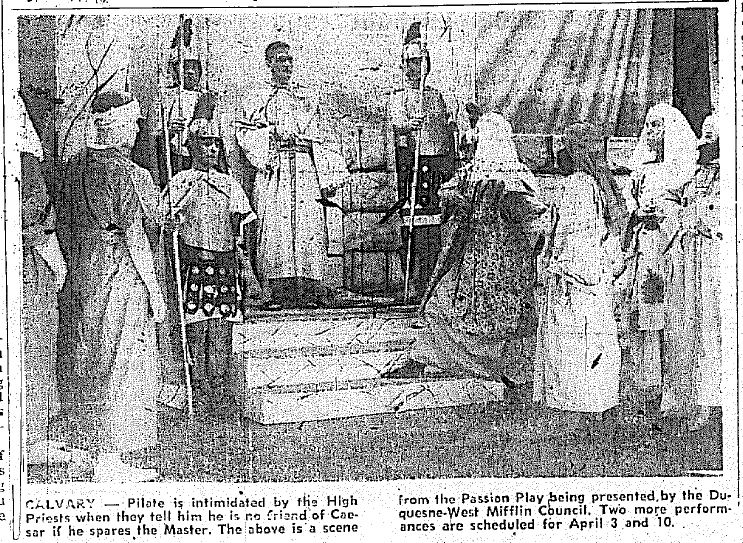
Another image that is sure to provoke some memories is the following photo of the K of C production of the Passion Play at OUR Carneige Library, this one from 1960 –


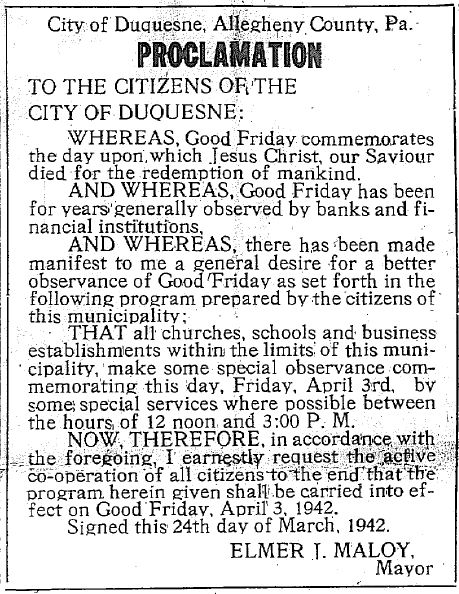
In 1942, a proclamation was issued that unfortunately wouldn’t happen in our day and age and society:

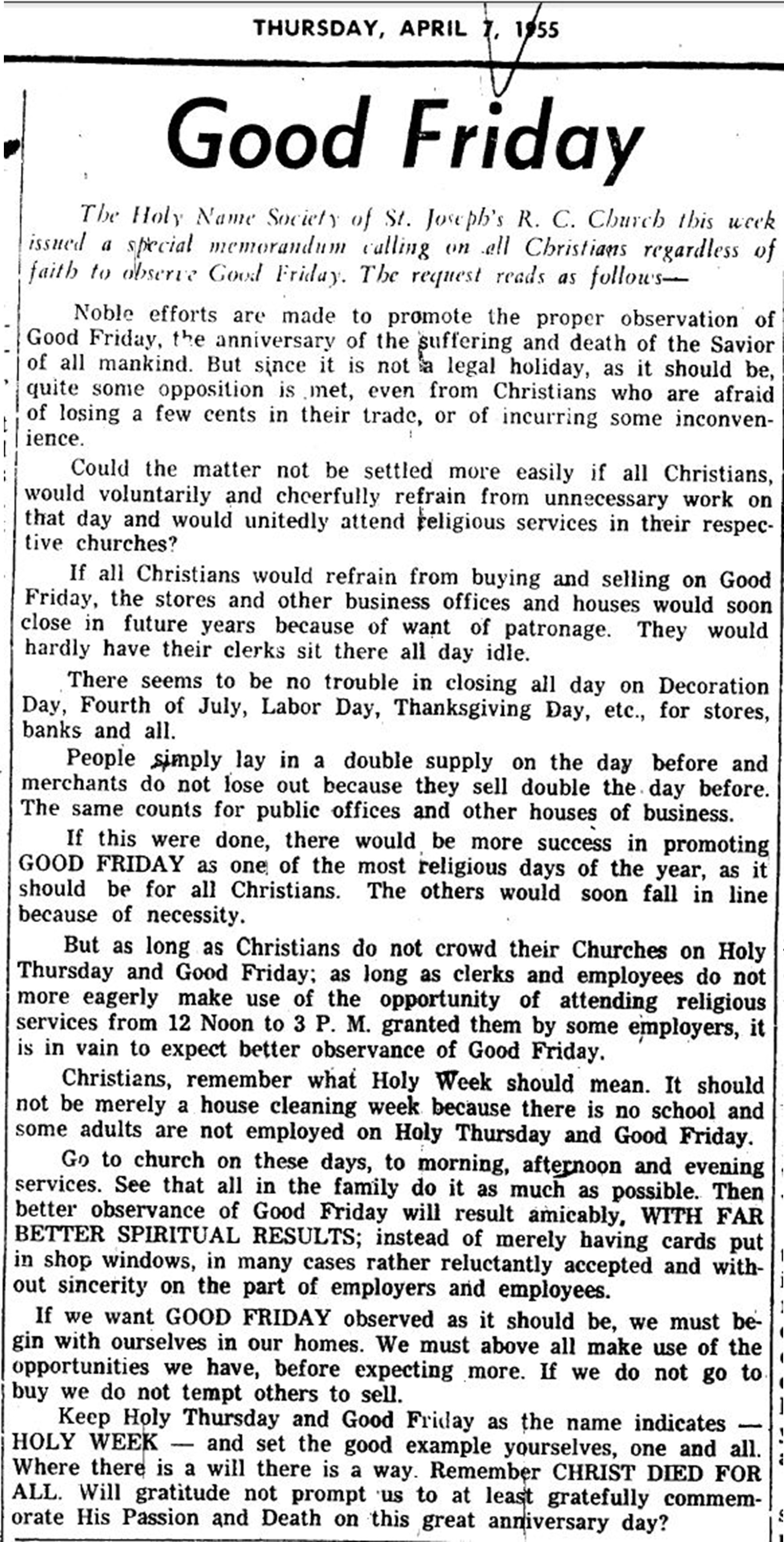
By 1955, the same request was put forward by The Holy Name Society at St. Josephs as opposed to the government. I suppose times were changing:

Merchants in were attempting to get everyone ready for the Easter Parade one hundred years ago in 1912:

Finally, just as a point of trivia, I enjoyed the following article from the 3-27-1942 edition of the Duquesne Times about two local artists, one of whom worked with Gene Kelly:


Posted in Holidays - Non-Christmas and New Years, Springtime | 4 Comments

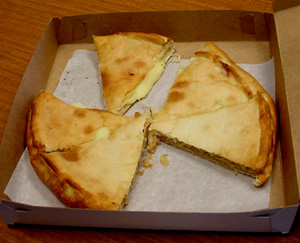
PAGACH Recipe – A.K.A. Hunky Pizza!

I have never made the following recipe, however it sounded very tempting! If anyone attempts this wonderful dish, let us know how it turns out!

Pagach

 Pagach is a Slavic dish that can be served as a side item like bread or as a main meal. Grandma made Pagach as our Friday supper since it contained no meat. She served it dripping with melted butter. Pagach is mashed potato-stuffed bread. It can be rolled out round or rectangle. Do not whip or add additional liquid to the potatoes or the pagach will puff up like a pillow in the oven.

 Pagach

¾ c. scalded milk

1 tsp. salt

4 Tbsp. sugar

3 Tbsp. shortening

3 c. flour

1 egg, slightly beaten

1 cake yeast

¼ c. lukewarm water

 Fillings:

Cabbage: 1 medium head cabbage, chopped fine Butter

Saute cabbage in butter until soft.


Potato: 3 medium potatoes, mashed – Chopped chives – 1 egg, beaten

Combine potatoes, chives, and egg (add ½ shredded cheddar cheese and/or crumbled bacon if desired)


Sauerkraut: ½ lb. sauerkraut, drained – Butter

Fry sauerkraut slowly in butter about 5 minutes.


Pour milk over salt, sugar, and shortening. Cook to lukewarm. Add egg. Add

yeast which has been dissolved in water. Add about half the flour. Beat well.

Add remainder of flour. Beat well. Turn out onto floured board and knead about 5

minutes. Place in greased bowl and let rise until doubled in bulk. Divide dough

in 2 portions. Flatten out one piece to about 2-inch thickness. Place desired

filling in center. Draw up and pinch edges together to cover filling. Roll out

lightly and carefully to pie shape, about 3-fourths inch thick. Follow the same

method for remaining half of the dough. Place on greased cookie sheet. Let rise

about ½ hour. Bake at 375 degrees about 20 to 30 minutes. When done, brush both

sides with browned butter.


Makes 2 round loaves.


Posted in Food and Restaurants | 31 Comments

Slovak Easter Cheese – Sirecz

Richard Terek added a comment yesterday, March 20, 2012, in response to my posting about the wonderful treats our mothers and grandmothers used to make at Eastertime. Specifically, he mentioned the hot cross buns and the puska. Richard then added:

” I remember my grandmother making Sirecz (Egg Cheese) for Easter too!”

In honor of your grandmother and all of our “Bubbas” and mothers who cooked from their hearts, I found a recipe that duplicates the Easter Egg Cheese of our youths.


Called cirek, sirets, sirok, sirecz, Hrudka or just Easter egg cheese since it traditionally served on Paska (Easter Bread) A traditional Slovak Easter Cheese served with the Easter meal. This is served sliced and cold. It tastes like a sweet custard.”

 Ingredients

12 eggs

1 quart milk

1 cup white sugar

1 tablespoon vanilla extract

1 pinch ground nutmeg

Directions

1. In an electric mixer, beat the eggs until mixed well.

2. Transfer the eggs to a double boiler and stir in milk, sugar, vanilla and nutmeg. Cook over a medium heat for 30 minutes. Use a metal slotted spoon and constantly stir the bottom of the pan to prevent scorching.

3. When the mixture looks just like cooked scrambled eggs, pour it carefully into a cheesecloth-lined colander. Carefully gather the ends of the cheesecloth in your hands and pull them together until the cheese forms into a ball. Tie the cheesecloth tightly at the top of the ball. Tie the cheesecloth ends over a faucet or to the handle of a kitchen cabinet (place a bowl under to catch the whey dripping down) and let hang for about 3 hours.

4. Untie the cheesecloth and wrap the cheesecloth ball in plastic wrap before refrigerating. The cheese will keep for about a week. Slice and serve.


Posted in Food and Restaurants, Holidays - Non-Christmas and New Years | 57 Comments

More of Duquesne’s Houses of Worship

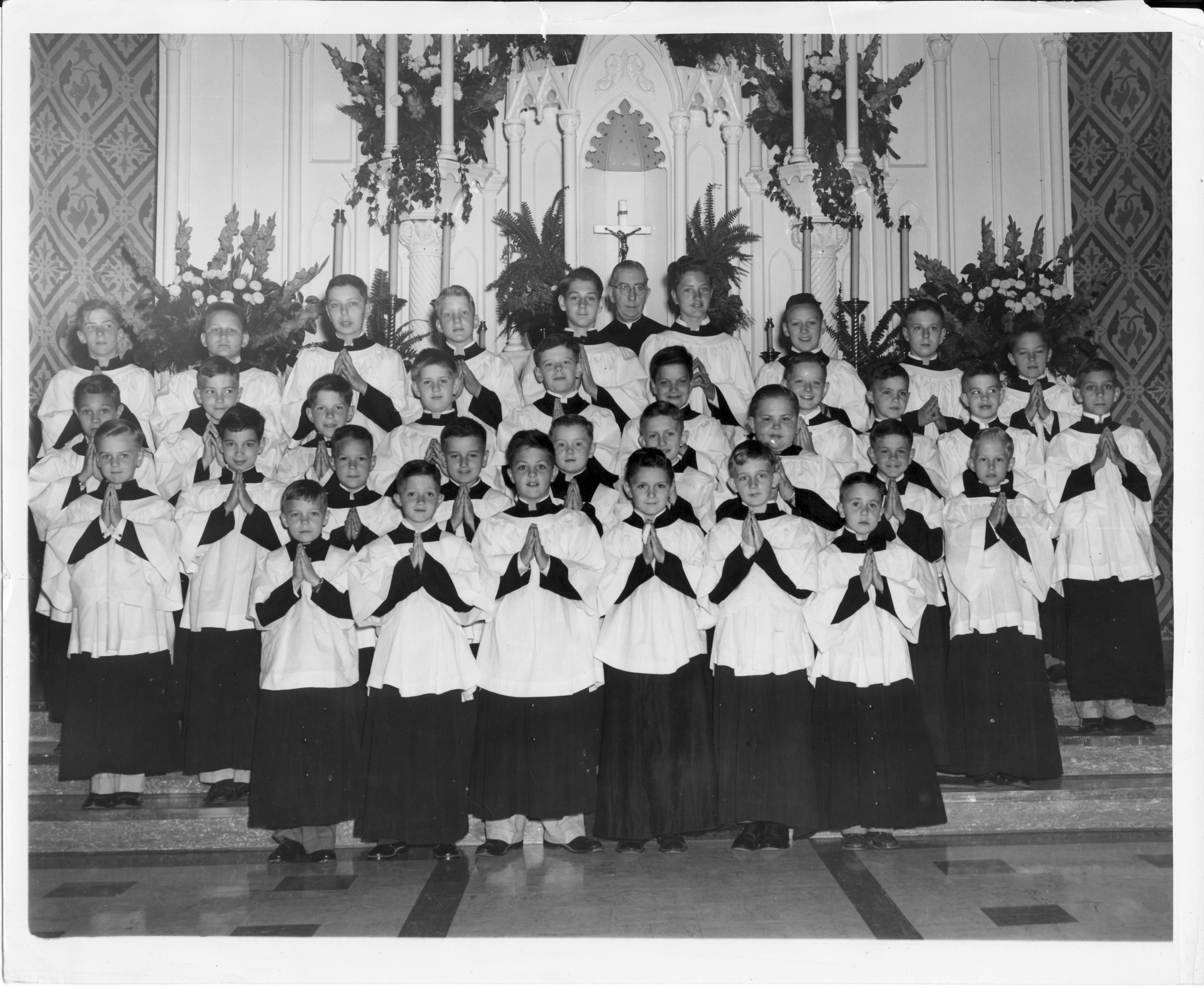
After I became an altar boy at Holy Name, I looked forward to being scheduled for Stations of the Cross duty. Since we attended Holy Name School, we would always attend Stations of the Cross services each friday during Lent. I prefered to be the one serving which meant I didn’t have to sit still in the pews for the entire service. Being assigned to carry the cross during the event was the pinnacle of success as an altar boy, much like becoming an Eagle Scout in the Boy Scouts! I still remember the huge Stations of the Cross icons that hung in the church prior to their modification during a later renovation. They were glorious, elaborate, and reflected the ornate detail of the altar at the time. In retrospect, they must have been a real challange to keep clean since they were riddled with curlicues! I can still picture little old ladies in their work babushkas trying to clean them while perched on a ladder. “Sveta Marija!”

Thanks to Frank Mullen for sharing this picture of the Holy Name altar boys with Fr. Shaughnessy. Frank is the fourth from the left in the top row of altar boys. Its rather hard to imagine this large of an amount of servers today! 

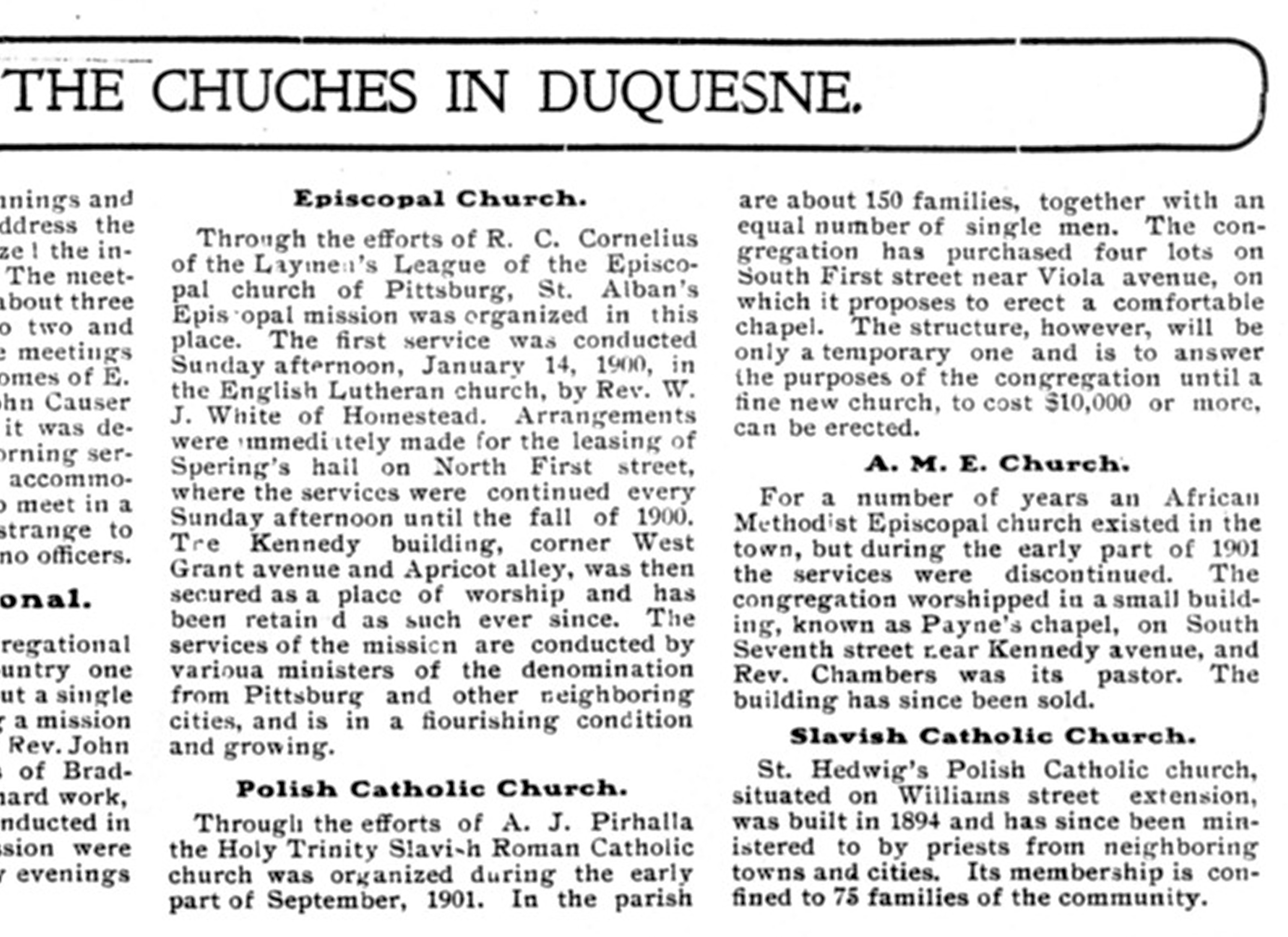
I wanted to continue on with the information about Duquesne’s spiritual communities as they existed 110 years ago in 1902. The following is a word for word transcript of information contained in the 1902 supplement to the Duquesne Observer. As you will see in the reprint, an error was made when headling the ethnicities of Holy Trinity and St. Hedwig’s Churches.

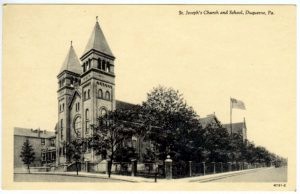
St. Joseph’s

In the fall of 1895 prominent German Catholics of the town decided to establish a church here. M. Wolf, Peter Stinner, Sr., Peter Zewe, Sr., and Joseph Meyer got together and purchased from the Duquesne school district the old Dutchtown school property, at the corner of West Grant avenue and Aurilles street, paying therefor $3,500. A canvass developed the fact that the proposed parish numbered 40 families, and an application was immediately made to the Bishop for an organization. The request was granted before the close of 1895 and the congregation organized with Rev. Father Ehrhart as priest. In November, 1897, Father Ehrhart was succeeded by Rev. Father Joseph Linder. The latter died on July 24, 1899, and on August 13, of the same year, Rev. Father Charles Dewell assumed the duties of priest. The parish now numbers 100 families, and the present trustees are N. Schauming, John Meter, Peter Stinner, Sr., Nich. Bach. August Stinner, Peter Stein, and John Ohler. The church is known as St. Joseph’s German Catholic church. The building has been considerably enlarged and is well adapted for the purpose. A rectory has also been erected on West Grant avenue, and the congregation has had plans prepared for a $20,000 church edifice, to be built during the coming year.
 St. Dominick’s

St. Dominick’s Catholic chapel is the oldest house of public worship in the town. It is situated near the western limits of the borough and was erected in 1872. The ground was donated by Jordan S. Neel for church and school purposes. Services have been conducted in the chapel now just often enough to fulfill the obligation imposed by the donor of the property. 

Greek Catholic 

One of the few Greek Catholic churches in this country has a home in Duquesne. It is known as the “Greek Catholic Church of St. Nicholas” and was organized in May, 1891, with a parish of nearly 100 families. Immediately after the organization the congregation erected a neat frame building on Oak street, Third ward, and in July of the same year occupied it for the first time as a place of worship. From the time of organization to November, 1898, Rev. Father Stephen Jackovich was the priest, but during that month he was succeeded by Rev. Father Antony Mhley. About a year ago Rev. Julius Stankanetz took charge of the congregation and remained at its head until May 17, 1901. ON June 23, 1901, Rev. Father J. Polivka was placed in charge. The parish as present numbers 200 families, its members coming not only from Duquesne, but also from McKeesport and other surrounding towns. After some repairs to the building, the church was rededicated on August 5, 1894.

 First Baptist

 In Collin’s hall, March 17, 1889, was formed the First Baptist church, the organization being effected by Rev. T. H. Chapman of Pittsburg. Ten members were enrolled, among them John R. Davies, Chas. Beddow, Fred. Rawlings and wife and Mrs. Robert Snowden. The first deacons were, Jas. McGilchrist, Jon. R. Davies and Chas. Beddow. On January 11, 1891, Wm. Oliver donated two lots for a church building at the corner of Hamilton avenue and North Second street, and during the same year the present building was erected at the cost of $3,000. Pastors who have served the congregation were called on the following dates:

Aug. 3, 1890, Rev. A. Turner; Jan. 17, 1892, Rev. W. S. Wood; May 21, 1893, Rev. G. F. Wainwaring; about Feb 28, 1895, Rev. C. A. Wilson; Dec. 14, 1895, Rev. J. K. Cramer, who served until Feb. 12, 1901, when he resigned on account of failing health. He had been engaged in active ministry 49 years. On July 7, 1901, a call was extended to and accepted by Rev. R. A. McFall, the present pastor. Present membership, 100. Present board of deacons, Chas. Beddow, John R. Davies, Joshua Davies and Wm. Clement.

Epicopal Church – Holy Trinity – A.M.E. Church and St. Hedwig’s Church write-up from The Duquesne Observer Supplement of 1902.

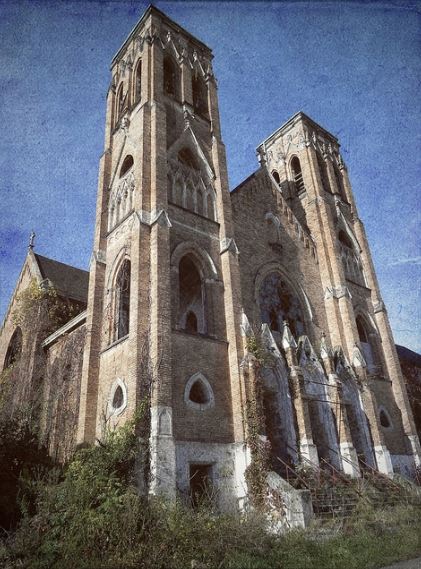
                                             Holy Trinity on South First Street

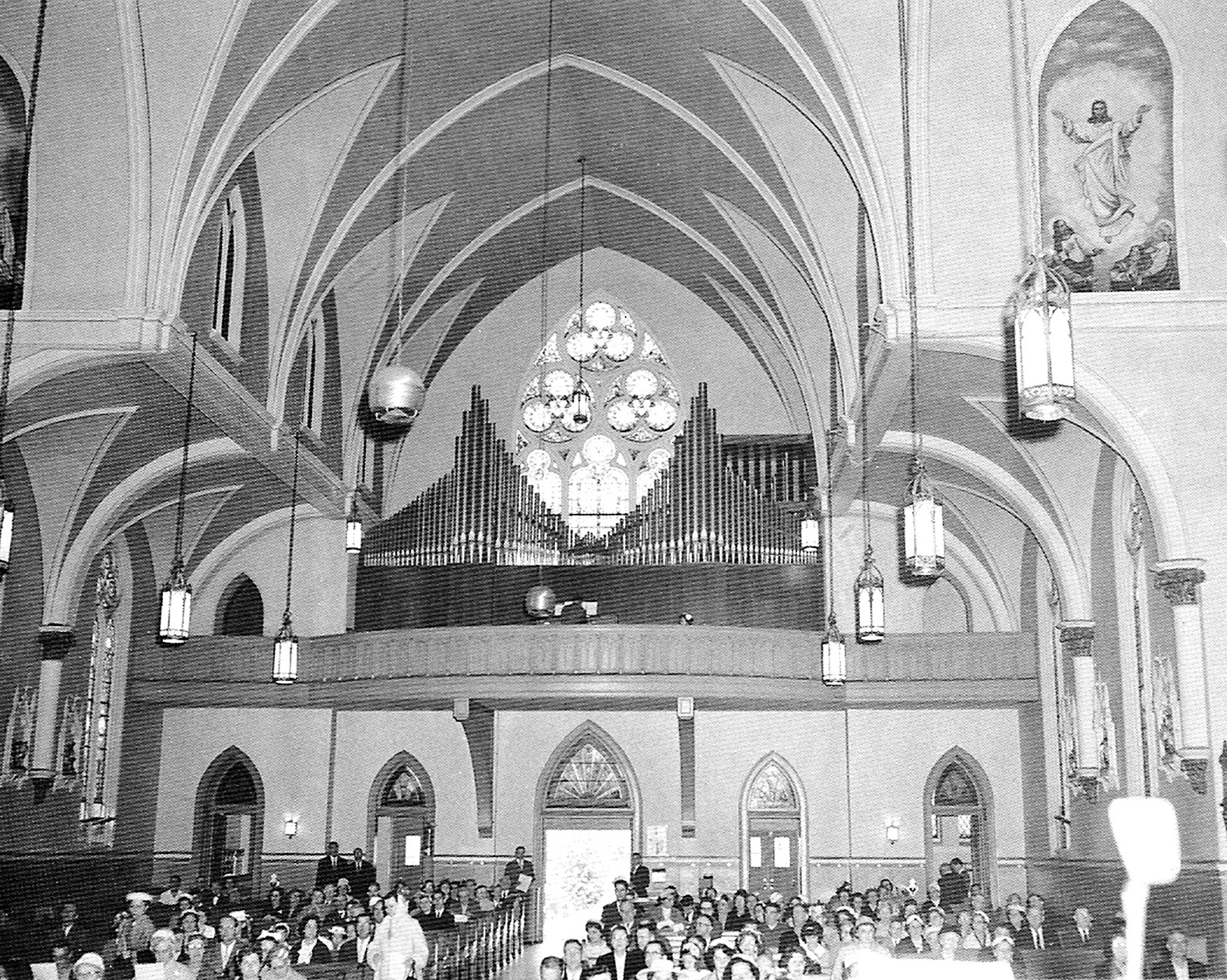
                                        Holy Trinity Church Interior – Late 1960’s

Posted in Church and School - Holy Name, Church and School - Holy Trinity, Church and School - St. Joseph, Churches - Other | 28 Comments

Reflections at Easter

*NOTE – Please check out the addendum at the end of this post.

In most cases, growing up in Duquesne in its heyday meant a very strong emphasis on the essential parts of developing a strong character. Education, hard work, honesty, family, and staying healthy shared roles in the formation of our character along with an equally strong emphasis on our spiritual life and religious foundation. Testimony to our parent’s and grandparents strong religious and educational convictions was the fact that by 1902, Duquesne boasted 40 public schools, parochial schools and SIXTEEN churches. The city was a mere 10 years old at the time, but the population was already well over 10,000 residents.

In 1902, The Observer was Duquesne’s newspaper. That year, the newspaper published an Industrial – Historical Supplement to The Observer, Duquesne, Pa which provided some very interesting insight into some of the 16 churches in Duquesne. As we approach Easter Sunday and during this very special time of the Christian religious year, I thought it would be appropriate to learn more about the churches of our youth.

The sixteen churches that were part of Duquesne’s early history and were described in the Historical Supplement were as follows:

  • Church of the Holy Name (Irish Catholic Church)
  • St. Joseph’s Catholic (German Catholic Church
  • Holy Trinity Catholic Church (Polish Catholic Church)**
  • Greek Catholic Church of St. Nicholas (Greek Catholic Church)
  • Grace Reformed
  • First Presbyterian
  • The Swedish Lutheran
  • First Baptist
  • First Christian
  • First Methodist Episcopal (First M.E.)
  • English Lutheran (First English Evangelical Lutheran Church)
  • Church of Christ (Church of Our Redeemer)
  • Slavish Congregational
  • Jerusalem Baptist
  • Episcopal Church
  • A.M.E. Church (African Methodist Church)
  • St. Hedwigs (Slavish Catholic Church)**

**The 1902 Duquesne Observer Supplement INCORRECTLY identified Holy Trinity as the Polish Church when it was actually the Slavish Church AND INCORRECTLY identified St. Hedwigs as the Slavish Church when it was actually the Polish Church. 

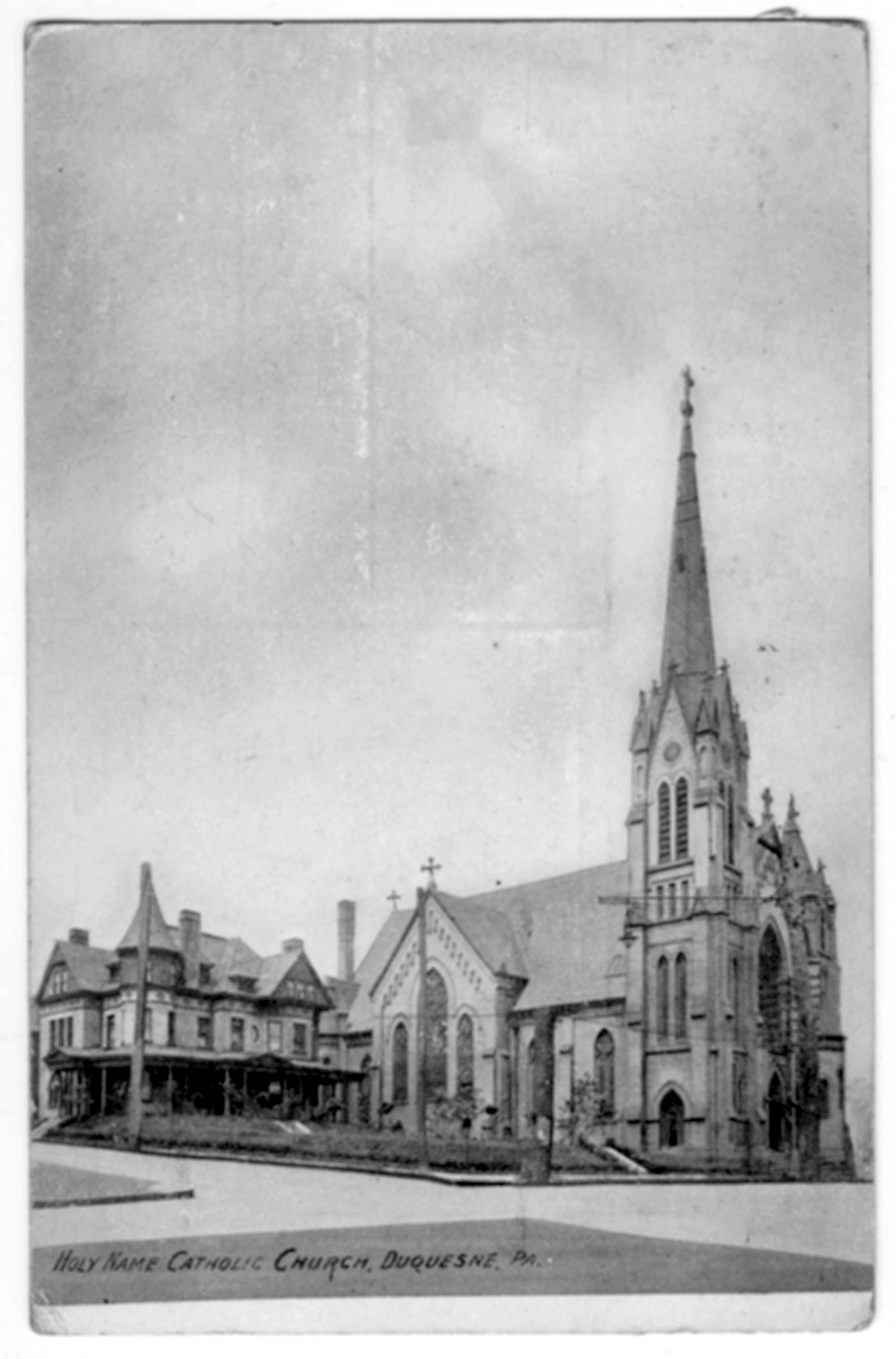
 The church that is the nearest and dearest to my heart, of course, is Holy Name Church, my family’s church and my grade school alma mater. We, like most families, had the same area that we sat in each Sunday. Our family always sat on the right hand side of the church in a pew nearest the outside wall and about three-quarters of the way back in the church. My perspective and memory of the church’s interior was somewhat static since we always sat in the same place. It wasn’t until I became an Altar Boy that I got to see the church from different perspectives.

 The Observer’s 1902 Supplement described Holy Name as follows:

Rev. Father Jeremiah O’Callaghan organized the Church of the Holy Name during the summer of 1890, and in August of the same year was appointed resident priest. The first services were conducted in a room over the present store of Joseph C. Wolf on South Second street, near Camp Ave. In 1890 Charles Downey loaned a lot at West Grant avenue and S. Fourth street to the congregation and in 1890-1891 a comfortable frame building was erected on it. This was used as a place of worship until November 12, 1899, when the structure was destroyed by fire. Prior to this time, however, the late Byron Cochran and niece, Miss Zella Bovard had donated a site for a proposed new church and rectory at the corner of South First street and Kennedy avenue. The corner stone of the church edifice was laid, amid imposing ceremonies, on July 30, 1899. The building was completed in due time, and its occupancy dates from Christmas, 1900. Finished and furnished, the edifice cost about $58,000. It is the finest church in the town, is 74×135 feet, constructed of Pompeian vitrified brick, with Cleveland sandstone trimmings, and with a seating capacity of 800. A parochial residence adjoining the church, was finished July 22, 1899, at a cost of $7,000. It is occupied by Rev. Father David Shanahan, who succeeded Father O’Callaghan as priest in November, 1897. The congregation worshipped for some time following the fire in the First National Bank building. A magnificent pipe organ, the gift of Andrew Carnegie, was completed in the church on February 16, 1901, at a cost of about $6,000. The parish as present numbers 1,500 souls.


In 1990, Holy Name celebrated its 100th Anniversary with a celebration entitled “Jubilee of Generations.” In the Memory Book that was published in celebration of the event, additional information about Holy Name’s history was presented:

 The Reverend Jeremiah O’Callaghan organized a parish in Duquesne which was eventually to become known as Holy Name Church. The congregation, who’s Mother Church was Saint Agnes on Thompson Run in West Mifflin, first held services in Wolfe’s Hall. Wolfe’s Hall was a room above a store on South Second Street and Priscilla Streets near Camp Avenue.

 Later in 1890 a frame building was erected on a ploy of land located on South Fourth Street and West Grant Avenue. This land was loaned to the congregation by Charles Downey. The Church became known as St. Killian’s and Fr. O’Callaghan was appointed as resident priest.

In 1897, Fr. David Shanahan succeeded Fr. O’Callaghan as pastor of St. Killian’s. St. Killian’s continued to grow as a worship community until the building was destroyed by fire in 1899.

The Irish-Catholic community continued to hold services. The new temporary location was on West Grant and Duquesne Avenues, above the First National Bank Building……………………..

…………..The first Mass at Holy Name was celebrated on Christmas Day 1900. Formal dedication of the church was held on November 24, 1901.

…..………For the first 91 years, Holy Name Parish was under the Spiritual

Leadership of Irish priests in keeping with its ethnic determination. Fr. Jeremiah O’Callaghan was the first pastor. He served the community from 1890 till 1897. He was succeeded by Fr. David Shanahan. In his 24 years, Fr. Shanahan witnessed the destruction by fire of St. Killian’s and saw the birth of Holy Name. During the Depression era, Holy Name was ministered to by Fr. David Walsh. In 1936 and for the next sixteen years Fr. James J. Kelly was the pastor. 1952 marked the beginning of the eighteen years of spiritual leadership of Fr. William P. Shaughnessy. In 1970, following the death of Fr. Shaughnessy, the assistant pastor, Fr. Joseph R. Bryan was appointed pastor. Fr. Bryan ministered to the needs of the parish until ill health forced his retirement in 1894. It was then that a 91 year old tradition was broken and the first non-Irish pastor was appointed. Fr. Dennis Colamarino was appointed as the Spiritual Leader of the Holy Name worship community.

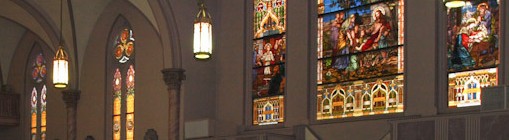
 I found these facts about Holy Name to be very interesting. As mentioned earlier, my recollections of the building were somewhat skewed by the fact that I always viewed it from the same vantage point. However, I was always awed by the immense leaded glass windows that lined the north and south sides of the church. Unfortunately, I don’t remember each individual window and promise to photograph them on my next trip to Duquesne, with Father Dennis’ permission. The windows I do remember were the north side windows. The center and largest window depicted Jesus teaching the children. I recall him sitting on a rock and the children and a lamb gathered around him. To the left of that window was one that illustrated Jesus teaching in the temple and my favorite to the right portrayed the nativity.

 There was a magnificent window behind the pipe organ as well as behind the altar. The huge white altar was in place when I became an altar boy. I was surprised to see yet another beautiful window that was behind the altar, although obscured by the mere size of the altar itself.

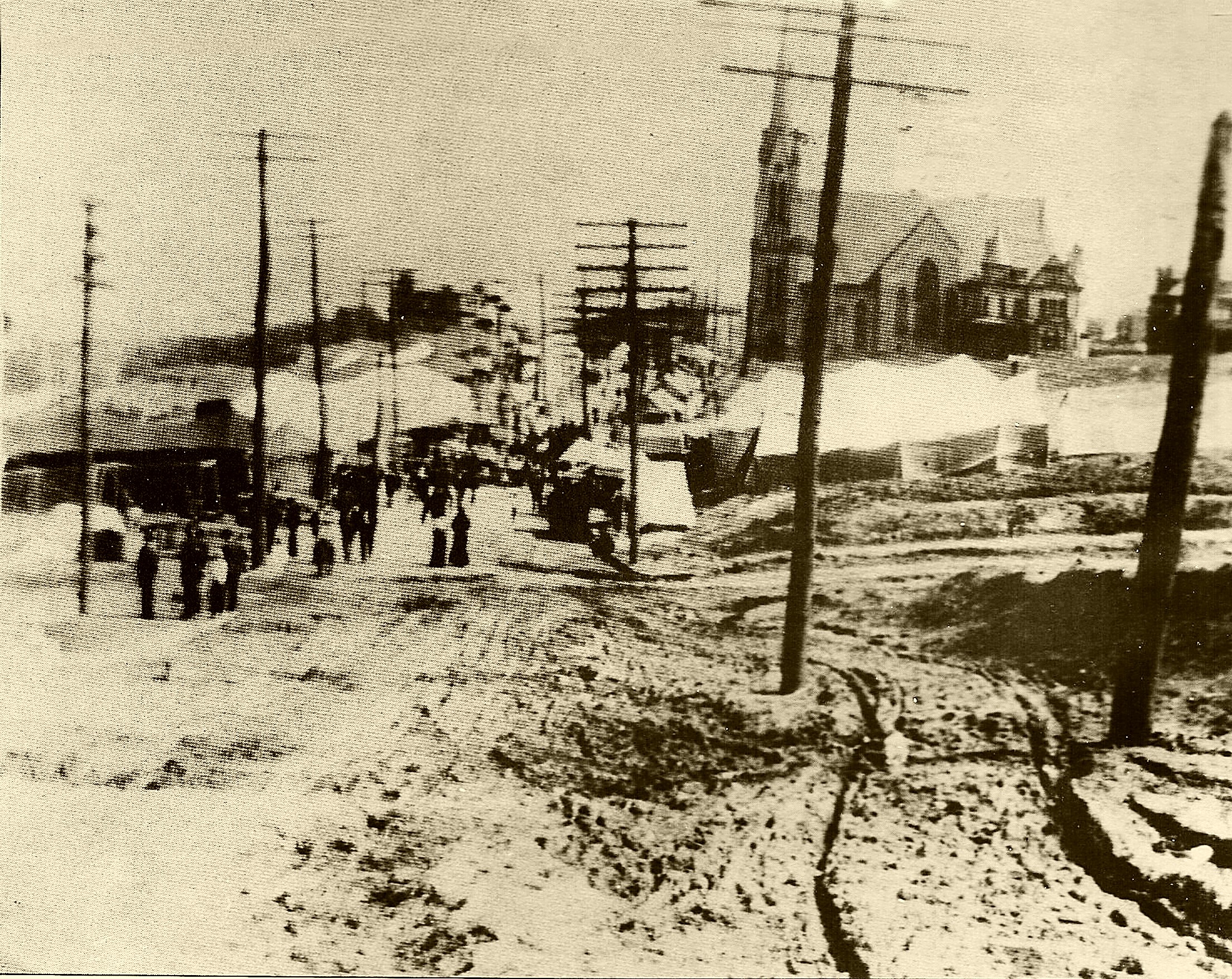
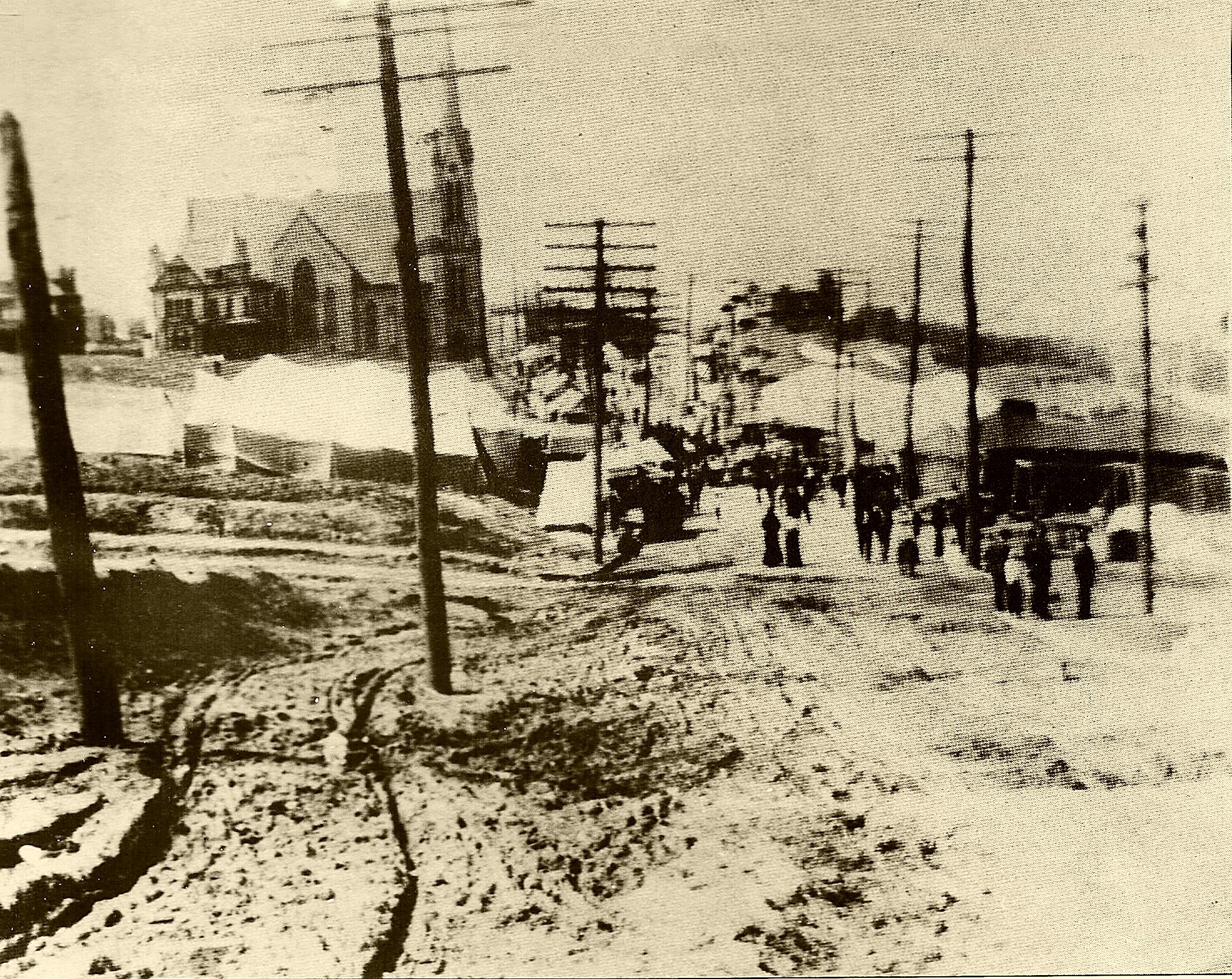
 Originally, the church had a soaring steeple on the front left hand side of the building that contained a clock. The steeple was apparently toppled during a weather related event and was never rebuilt. Its existence is verified however in the photograph of the worshippers approaching the church at the turn of the century. Interestingly, that photograph also shows a row of homes on the south side of the church as if there were another street or alley that ran parallel to Holy Name. I dug through some old maps, but could not find any evidence of the homes next to the church, but remain fascinated about them.

 I find it fascinating how much of an impression some of the smallest details made as I looked at many of the interior shots of Holy Name. For instance, I had totally forgotten about the speakers that hung down the main aisle, the iconic paintings that adorned the soaring side walls over the confessionals. I remember the paintings reminding me of the small religious cards we used to buy from the school’s religious article table. I “think” I recall the icon paintings being painted by artists on scaffoldings when the church interior was being updated as opposed to being applied in pre-printed forms. I tried to show as many photos as I could, however, if anyone had any photographs of Holy Name that you would like to share with all of us, please email them to duquesnehunky@gmail.com!!

 In future postings, I would love to continue to share the information contained in the Observer’s 1902 Supplement with you. Attached to this posting is a survey that will indicate which churches you’d like to hear about. Choose your church from the list, or write in the house of worship. In the meantime, keep well and stay in touch!!


Posted in Church and School - Holy Name, Churches - Other, Surveys and Opinions | 11 Comments

The Way to a Hunky Heart is Through Their Stomach!

Earlier this week, I received a special email from one of the blog readers who wanted to share the following recipes with all of us.  Unfortunately, I am unble to share her full name since it wasn’t included. Nonethe less THANK YOU Gloria for sharing your family recipe with all of  us. Be sure to add a comment to this post at the end and let us know all about you!

 Dear Jim, 

Having been raised as a first generation American with two Hungarian parents, I want to share with your readers the authentic Hungarian recipe for Chicken Paprikas and Nokedli (dumplings.)

 Chicken Paprikas

 1 onion chopped

1/4 cup oil

2 tablespoons salt

1 tablespoon paprika

4 to 5 pound chicken cut up

1 1/2 cups water

1/2 pint sour cream

 Brown onion in oil; mix in seasonings; add chicken and brown 10 min. Add water and simmer until tender. Remove chicken; add sour cream to drippings admix well. Add dumplings; arrange chicken on top. Heat and serve.


Nokedli (dumplings) 

3 eggs beaten

2 1/2 cups sifted flour

1/2 cup water 

Blend ingredients together, adding more flour if necessary, to make batter stiff. Drop by teaspoonful into boiling water. Cook ten minutes; rinse with cold water; drain.

Hope someone enjoys this recipe as my family has for many, many years. Keep up the interesting articles! I am hoping you will share with us some more articles from The Duquesne Times.

Since you whetted our appetites Gloria, I thought I would gear everyone up to begin thinking about some traditional Easter food recipes that an adventurous hunky might just want to try out for the upcoming holiday!

HOT CROSS BUNS (Slovak-American)

1 cup milk, scalded

1 package cake yeast in 1/4 cup of water

3/4 tsp salt

4 1/2 cups flour

1/2 cup sugar

3 egg yolks

1/2 cup shortening

1 cup raisins

1. Preheat oven to 400 degrees

2. Add milk to salt, sugar, and shortening. Add soft yeast and 1 1/2 cups of flour. Beat well, let rise until very light.

3. Add egg yolks and flour, knead, and let rise til doubled. Roll to 1 inch thickness and cut into rounds.

4. Set close together on greased pan and let rise. Glaze surface of each with egg white diluted with water.

5. With sharp knife, cut a cross on tip. Bake about 20 minutes in hot oven. Just before removing from oven, brush with sugar and water.

6. Fill the cross with plain frosting (optional, but traditional)

Paska Slovak – Easter Bread

1 cake yeast

1 cup warm water

1 tablespoon sugar

2 cups milk (brought to a boil)

1/2 cup sugar

1/4 pound butter (1 stick)

8 cups of flour

2 tablepsoons salt

3 eggs

cheese Dough

1 cake yeast

1/2 cup warm milk

1 tablespoon sugar

1 pound dry cottage cheese

1 cup sugar (to taste)

1 teaspoon salt

1 teaspoon lemon zest

1 teaspoon of baking powder

3 cups flour, sifted

  • Crumble yeast in 1/2 cup water and 1 tablespoon sugar.  Set aside for 5 minutes.  Pour boiling milk over remaining 1/2 cup water, sugar and butter.  Cool to lukewarm.  Sift flour into bowl; add salt, eggs, milk mixture and yeast.  Knead dough until smooth and elastic.  Cover and let rise until doubled in bulk, about 2 hours, in a warm place.
  • Crumble yeast in warm milk to which 1 tablespoon of sugar has been added and let stand 5 minutes.  Mix cottage cheese with spoon until smooth.  Add raisins and yeast mixture.  Add unbeaten egg yolks, remaining sugar, salt, lemon zest, baking powder and flour; knead well.  Set aside to rise until doubled in bulk (about 2 hours).
  • When the basic dough has doubled in size, turn out onto a lightly-floured board and divide into 4 parts (one part of the basic dough is for decorating, the remaining 3 parts are for the 3 loaves).  Shape three of the parts into rounds.  Let basic dough stand on the board covered for 15 minutes.  Take one part of the basic dough and lightly punch around the edge so that the center is elevated.  Take the cheese dough divide it in thirds.  Place one third of the cheese dough around the elevated edge of the basic dough; then lightly make an opening in the center.  Join edges; press carefuly so that the cheese dough is completely covered.  Place dough in a pan and let rise about 30-45 minutes.  (Round pans or stainless steel bowls are typically used here.)  Use the remaining part of basic dough to make braids, crosses, etc and attach with a little egg yolk.  Brush the top with egg yolk before placing in oven.  Bake for 10 minutes at 325 degrees F.  Increase to 350 degrees F and bake for an additional 40 minutes.

Kolachki, Kolacky, Kolachy, Kolace, Kolachi, Kolache, or Kolachke

COOKIE DOUGH

24 ounces cream cheese (3 pkgs)

2 lbs butter

8 cups flour

Filling A walnut

½ lb walnuts , chopped fine

honey , enough to bind

Filling B Lekvar

1 ½ cups pitted prunes , tightly packed

2⁄3; cup water

1 teaspoon lemon zest

3 tablespoons lemon juice

1⁄3; cup brown sugar

Filling C apricot or peach

1 ½ cups dried fruit

½-¾ cup sugar

1 teaspoon cinnamon

1 teaspoon vanilla or 1 teaspoon almond extract

Filling D Cream Cheese

16 ounces cream cheese (2 pkgs)

½ cup sugar

1 beaten egg

1 teaspoon vanilla

Filling E Pineapple

1 (16 ounce) can crushed pineapple

2 tablespoons cornstarch

1 pinch salt

Filling F Cherry-Choc-nut

1 cup drained canned sweet cherries

¼ cup semisweet chocolate , chopped fine

¼ cup walnuts , chopped fine

¼ teaspoon almond extract

Filling G poppyseed

2 cups scalded milk

1 lb ground poppy seed

1 ½ cups sugar

Preheat oven to  350

Allow cream cheese and butter to soften to room temperature Mix till well blended.

Add Flour a little at a time and mix in till well blended.

Divide into balls. one ball for each filling you will make and wrap and refrigerate for at least 4 hours or overnight.

Using one ball at a time, Roll out square about 1/8 inch thick on board sprinkled with flour or confectioners sugar or a combination. You can cut the dough into 2 inch squares and place a little filling on each square and fold the dough over. As a time saver, I place a little filling in a line across the bottom of the dough and roll till filling is covered. Should be about 1/2 inch in diameter (or a little more).

With a knife, cut through the dough at that point and cut the roll into 1 1/2 to 2 inch pieces. Then place a little filling in a line across what is now the bottom and repeat steps.

Place on ungreased cookie sheet and bake for about 20 minutes.

(I found that they were better if I turned them over after about 10 minutes) Check them at 10 and see how they are doing on the bottom.

Cool for a couple of minutes then place on wire rack to cool.10FILLING A (walnut) Mix ingredients until blended.

FILLING B (Lekvar) Simmer ingredients (except brown sugar) covered for 25-30 minutes until very soft and most of the water is evaporated Uncover last few minutes if necessary remove from heat and mash Stir in brown sugar will keep in refrigerator for a long time in a covered jar Lekvar can be purchased in the Jewish section of grocery store already made.

FILLING C (Apricot or Peach) Place fruit in medium saucepan and cover with water until about an inch over the fruit bring to boil and reduce to simmer for 35- 45 minutes until very tender mash until fruit is smooth Add cinnamon and vanilla add 1/2 cup sugar to taste– and more if desired.

FILLING D (Cream Cheese). Allow Cream Cheese to soften to room temperature. Mix all ingredients until well blended.

FILLING E (Pineapple). Combine, Cook until thick, cool.

FILLING F (Cherry-Choc-nut). Chop cherries in food processor until finely chopped. Add remaining ingredients and blend well.

FILLING G (poppyseed) — Mix together and set aside till milk is absorbed and mixture is cooled.

Read more: http://www.food.com/recipe/kolachki-kolacky-kolachy-kolace-kolachi-kolache-kolachke-81373#ixzz1p6nhsoJJ

In closing, I found an article about coloring Easter eggs that was published in the Duquesne Times, 100 years ago in 1912. If anyone tries any of these techniques, let us know your results!!


Posted in Food and Restaurants | 4 Comments

That’s For The Birds!

Although I don’t realize it sometimes, I find myself following some innate rituals that are rooted in my youth. For instance, I have an uncontrollable need to not waste any bread once it reaches the end of the loaf or has gone stale. One of two things would normally occur once this had happened in our house when I was growing up.

 Occasionally, Mom would use the bread in some recipe or other cooking application. It could be that the remaining bread would be dried out in a warm oven until crumbly and then crushed between two towels with a rolling pin to create breadcrumbs to use for breaded pork chops, chicken or even city chicken.

 Sometimes, Mom would make a batch of bread pudding with the leftover bread slices. My dad really liked bread pudding, so Mom would usually only have enough bread to make a portion that would only satisfy my dad. This was perfectly fine for my brother and I since neither of us particularly cared for bread pudding. Dad was more than welcome to have it all for himself, along with any pig’s feet, blood pudding, and peppered bacon that Mom would make.

A way that Mom would, as a last resort, use the scraps of bread would be to feed the birds. This was the only time that I would be asked to assist with the final consumption of the bread. I looked forward to stepping outside of our kitchen, standing on the back porch, and methodically breaking down whole pieces of bread into tiny tidbits for the birds to consume. It was always exciting to have the birds begin to dive-bomb our back or side yard as soon as they realized that there was a treat in store for them. This was especially true in the winter when their food sources were so much sparser. After finishing my chore, I would run back into the warmth of the house and watch from the dining room as each and every piece was carried off to the bird’s winter shelters to be enjoyed, as they shielded themselves from the fierce weather.

 Over half a century later, I still find myself following the same ritual as when I was a mere lad. Today, I stood on my deck and dissected the three remaining pieces of bread from a loaf that had gone stale. I tossed them into my yard, but was disappointed when I failed to immediately attract a bird to the outdoor feast that awaited them. I sadly retreated into the house, glanced out the window and one by one, saw the bread banquet begin to attract the neighborhood’s winged citizens.

 I watched transfixed as the birds flew off with their tiny bits of wheat bread. As they did, I noticed the difference between the birds that I normally see here on the Eastern Shore vs. the Duquesne feathered friends from long ago. Here at the Eastern Shore, it is common to see a wider range of different species versus the birds I recall from my youth. I am fortunate to have the opportunity to see graceful white egrets, large blue herons, seagulls, terns, ducks of all varieties, white and Canadian geese, hummingbirds, finches of many colors, bluebirds, and even an occasional eagle.

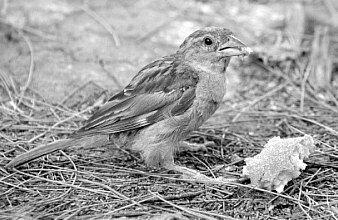
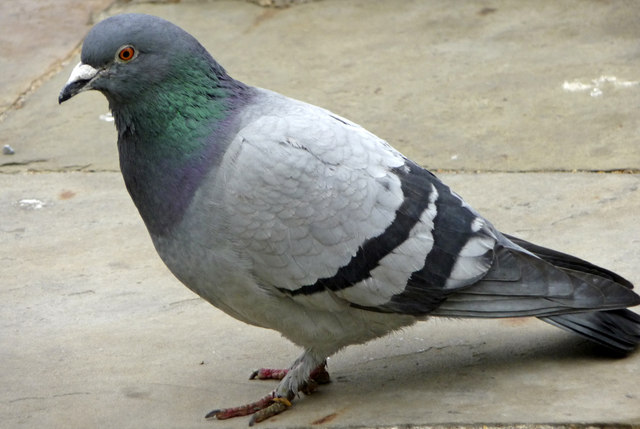
 When I lived in Duquesne, the bird population was less “diverse.” It seems that the only type of birds I can recall seeing were robins, common sparrows, wrens, pigeons, a few crows and an occasional burst of color from a cardinal or on very rare occasions, a yellow finch. Back then I was somewhat disinterested in birds, so I’m sure there were probably other types hanging around that I didn’t notice.

 Every once in a while, my friends and I would decide that we wanted to catch a bird and make it a pet. Although I realize today that this was not the best idea, we were kids and didn’t know better. On those occasions, we would set up a trap for the poor helpless bird in the backyard. I came to learn that the type of trap that we set had an actual name, a “dead fall trap.” It sounds really ominous, but was nothing more than an old shoebox, a stick and a piece of string, as well as the ever present piece of bread that acted as bait. I would carefully set-up the trap and patiently wait for what seemed like hours, hidden behind a nearby bush, waiting for some hapless bird to come along and fall for my ruse. On very rare occasions, I’d be able to yank the string that was attached to the stick that was propping up one side of the shoebox in an attempt to catch the poor creature. Usually, they were long gone before the box would fall.

 I can only remember actually trapping a bird on one occasion. I was SO excited and couldn’t wait to tell Mom about my achievement. Unfortunately, Mom didn’t share my passion or excitement for trapping and handling our feathered friends. Instead of praise, my exploits elicited a scolding from Mom and a lecture about the diseases that wild birds carry. Instead of a typical warm and welcoming hunky embrace from my mother, I was barked orders that resulted in my little ward being set free to enjoy life, and to ultimately be able to poop on our lawn furniture if he desired on every pass by flight in retribution for daring to trap him.

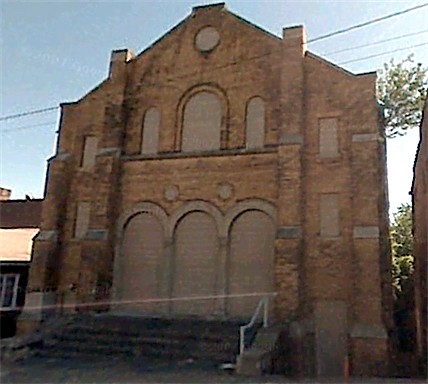
Although Duquesne’s “human” population never swelled to the point that it could be called a metro area, walking along South Second Street across from City Hall would have given you a different opinion. Directly across the street from the main entrance to City Hall stands the shell of the Beth Jacob Congregation House Of David Synagogue. I don’t remember much about the synagogue at all; only that it had closed down at some point and had fallen into a terrible state of disrepair. I recall seeing some once beautiful leaded glass windows becoming the target of vandals.

Once the empty structure had been breached by the vandal’s rocks, it became a virtual tenement for hoards and hoards of pigeons. Even before it officially closed its doors, the synagogue, like City Hall, was a virtual magnet for pigeons. I would see them roosting along the roof edges and keeping vigual on the street below for stray bits of food. 

Although I was not able to find any articles regarding the issue, I understand that at one point, pigeon droppings had accumulated inside the synagogue over the years to a knee deep layer on the floor. It had posed such a high health risk that, there was talk of demolishing the building.

Sometime in the past decade or so, Beth Jacob Congregation House of David*, had the leaded glass windows removed from the synagogue and boarded-up all of the openings. I happened across an article publishing in the 1996 or 1998 Pittsburgh Post-Gazette which reported that Duquesne’s Mayor at that time, was trying to champion a project that would convert the synagogue into a public library for the town. Unfortunately, it never came to fruition.

 *Note: Congregation Beth Jacob first organized in Duquesne in 1904. There were a total of 350 members of the congregation when it began on South First St. before it opened the synagogue on South Second St. in 1923. Rabbi, R. A. Hollander; Pres., D. Mandel; Sec, Sam Klein; were the first congregation’s leaders.

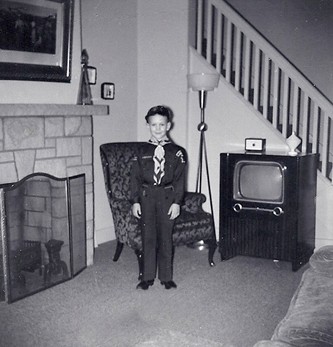
 My final recollection that will surely validate that this blog is “For the Birds,” is my brief stint in the Cub Scouts in the late 50’s/early 60’s. There are only four things that I recall vividly from my time as a Cub Scout; the two projects that I made in order to earn a badge, the cool uniform, and finally, the pledge and how to hold my fingers while I recite it.

 I was a member of Cub Scout Troop #3??. My Aunt Fran (Puskaric) was the Den Mother, and we met at her home on Monterey St. which was off of Crawford. I remember being very excited about joining the troop and all the adventures that it would bring. Although I didn’t remain a scout long enough to really take part in all those “adventures,” the time spent as part of the den was a lot of fun. I may have only been part of the group for about 6 months or so. I don’t recall what the exact reason I left the troop, but it was most likely an issue of me getting bored and wanting to do something else. Call it an early form of ADHD!

 As you can tell from my Cub Scout picture, I was pretty excited about the uniform. When I look at my photo, I think I look like one of those perfect little “Arian” child, about to march down the streets of Berlin in some horrible WW2 movie. Obviously, I was really proud of being a scout and of wearing the uniform.

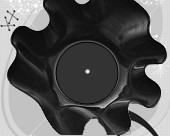
As part of my Aunt Fran’s troop, we did a lot of cool things. In order to earn one of our patches, the whole troop made bowls for our mothers. Aunt Fran had gathered some old 78 rpm records that she no longer wanted. (I wonder if they would have been worth something today?) We then patiently waited while she placed each record into a warm oven in order to soften the disk and make them pliable enough to be shaped into the bowl. I remember how proud we all were of the end result, and how we couldn’t wait to take them home to Mom. I think mine survived for about 6 months before my mother was able to judiciously remove it from the end table in our living room and stash it in some hidden place in our home. Truth be told, it really wasn’t that attractive.

 My favorite project as a cub scout was being able to earn my woodworking badge with a bird house I had crafted. I recall spending time with my dad in the garage and in his basement workshop, building the “perfect” birdhouse. We had to purchase the kit from Helmsteader’s in McKeesport, since they were the “go to” store for all Cub Scout supplies. Once we arrived back home from McKeesport, I tore into the kit and excitedly read the instructions, all the while just aching to grab a hammer. My dad didn’t disappoint, and soon I was hammering away under my dad’s guidance.

 I remember having to patiently start pilot holes for the nails, glue the joints and sand the crap out of the birdhouse once it was assembled. I had been over zealous with the glue bottle and had managed to have runs on the back of the birdhouse. Dad told me to just take my time and try to remove them with sandpaper after they has dried. I sanded that little house until it was as smooth as glass before I submitted it to find out if it was “merit badge worthy.” I am happy to report that it made the grade, inspite of the very visible globs of glue, and I was awarded the “woodworking” certificate which allowed my mom to buy my merit badge at Helmsteader’s.

 Once I earned my badge for the birdhouse, Mom and Dad let me hang it outside to see if any bird would decide to actually build their nest in it. I hung it on the side of the garage and watched patiently the following Spring to see if any bird would take a liking to it. It finally happened and soon a sparrow family called it home. I think that little birdhouse remained in place for as long as I can remember. Whether or not it continued to act as a recluse for birds each Spring is a mystery to me. Like most kids, I lost interest after that first Spring. Just like the 78 rpm bowl I made, somehow those special handcrafted projects seemed to vaporize over the years and the birdhouse was no exception. I have no idea what happened to either item. I’m sure they both met their demise by either falling apart or shattering.

I eagerly look forward to the opportunity to build yet one more little birdhouse with my grandson Jackson. I’m sure that in spite of my best efforts, it too will somehow slip away in years to come. However, just like my Cub Scout project, it will never escape my mind’s eye! The thought that it ever would is just “For the Birds!”


Posted in Life in General, Miscellaneous | 8 Comments

Signs of OUR Times

As an Art and Design major, one of the rudimentary lessons I learned was that sometimes, “less is more.” I have been studying all of the photos I have from Duquesne and have concluded the following:

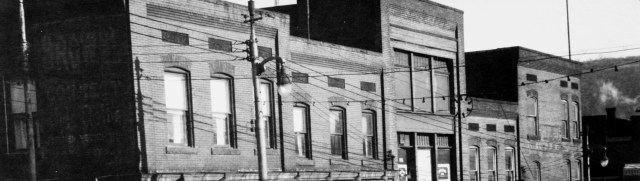
As much as I love the City of Duquesne, the buildings and environment weren’t exactly “pristine” or “breathtaking” by today’s standards. The early century buildings that were “down street” were showing signs of age by the 1950’s and 1960’s. So many of the edifices were blackened by the decades of mill dust and smoke that they were exposed to, and had all acquired the same ashen pallor.

As technologies and utilities had advanced, the buildings and the streets had begun to sprout countless wires that carried anything from electrical power to telephone conversations to cryptic messages in Morse code! Thick black wires crisscrossed overhead, creating Tic-Tac-Toe grids in the sky.

Well before the idea of underground utility cables had surfaced, oversized ceramic connection posts marred each building’s exterior surface. Unfortunately, the posts were not always applied in a uniform and balanced manner, so buildings began to look as if they had contracted a very bad case of smallpox with white eruptions dotting their surface in a random basis.

There wasn’t a single building in Duquesne that was exempt from the daily exposure to the elements from the mills, even the churches fell victim. When I was a student at Holy Name, nothing about Holy Name Church’s exterior really stood out. Although it was huge in a little boy’s eyes, nothing about the exterior of the building made an impression as the interior had. Again, the brick and stone façade looked just the same as the convent, the school, the Post Office and virtually every other building within the same proximity to the mills. Blackened, ashen, and rather dismal looking, Holy Name Stood for decades before an astonishing transformation took place during the 60’s.

One summer, I recall being over at my dad’s garage. Across the street at the church, I remember seeing workmen busily piecing together scaffolding around various sections of the church’s exterior. I was convinced that they were building some really big Monkey Bars for our use once we had returned to school in September, but was set straight by Dad. He explained that they were going to clean the outside of the church by sandblasting it.

Over the course of many weeks, years and years of soot and discoloration from the mills were dissolved from the church’s façade. Just like a butterfly emerging from its chrysalis, a golden hued church emerged to grace South First Street. To this day, probably 50 years later, the Holy Name is standing as majestically and brilliantly as the day it was built.

Sadly, not every building in Duquesne received the same reawakening as Holy Name did. Beginning with the Duquesne’s redevelopment projects of the 60’s, piece by piece, the Duquesne of our youth was dismantled and driven off to unnamed places to become landfill for unknown structures. Fortunately, we will always have the remnants of the place we hold dear, tucked away in our minds and in fortunate photographs that remain as testimony to days now lost in time.

I thought it would be interesting to share with you, a patchwork of images that are sure to evoke some of those warm memories that keep Duquesne alive in our minds. Each of us passed these icons hundreds of times as we were growing up, but probably never gave them a second thought! Only now, in retrospect do we realize how much we miss them and the town that they part of…..

Posted in Churches - Other, Duquesne Buildings | 11 Comments

Steeler Football Is A Religion Not A Sport !!!

 I had to pass along the following that was sent to me by our friend and former Duquesne kid, Barry Long! Barry currently makes his home in Honolulu, Hawaii for 7 months each year, and in Kirkland, WA for 5 months. (We feel for ya Barry! L.O.L.) I am certain you’ll enjoy it. I adapted it just a tiny bit to bring it even closer to the home we all love. THANK YOU BARRY!!!

Being a Steeler fan means so much more than football. It means being from a corner of the world unlike any other. 

It means being from a place where the people are so tough-minded that they have survived the Homestead strikes, the Johnstown flood and most recently the Etna Floods. These people have the DNA of hard work, in mills and mines, without the necessity of complaint. They live simply, with no frills. They don’t have movie stars or fancy cars.

Instead, they have simple traditions like kielbasa, Kennywood, and celebrations. They live in distinctive neighborhoods like Polish Hill and the Hill District and all of the surrounding counties. These people are genuine.

They don’t have chic internet cafes and cappuccinos, but they have Jim’s Hot Dogs, Paule’s Lookout, Eat n’ Park and Iron City Beer.

People from Pittsburgh don’t have sunny beaches or fancy boats, but the rivers roll gently, connecting the small towns of people whose histories have been built on strength and humility.

People from Pittsburgh don’t have the biggest shopping malls or the best nightclubs, but they’ll take Friday night high school football and Steeler Sunday over anything.

Steeler football means so much more than you think. It symbolizes a diaspora of generations who had the best childhood they could imagine.

They ran free without a care or concern in the valleys of those Allegheny Mountains . Their blue-collar world was easy … there was no one to tell them that they lacked material things. There was no one to tell them that they needed more.

As the steel mills closed and the jobs disappeared, some of these people had to leave. While the world benefits because they spread their Pittsburgh values, they long for their home where things were simpler and more pure.

They teach their kids about Jack Lambert, Lynn Swann, Terry Bradshaw, Franco Harris, Jack Ham, and L.C. Greenwood, Joe Greene, and Myron Cope in hopes of imparting not just the knowledge, but the feeling that they represented.

They are everywhere, those Terrible Towels. They wave, not just for the team, but for the hearts they left behind.

They wave in living rooms in Nashville , TN , Fort Lauderdale and in the bars of Washington , D.C. They wave all the way to the Seattle Superdome! They wave for the Rooney family, whose values mirror our own – loyalty, grit, and humility.

They wave for football players like Jerome Bettis and Hines Ward, whose unselfishness and toughness have allowed sports to be about the game and the team.

Make no mistake that Steeler football is not just about football. I could not be prouder to be from the Pittsburgh area than I am right now!!

Even if you no longer live in the area, you have South Western Pennsylvania in your blood no matter where you go.

And deep down in your heart of hearts, you can still hear the Super Bowls of times past, the excitement in everyone’s voices especially our fathers, cousins, and anyone else who gathered around the TV on Football Sundays!

Make no mistake, it’s just as exciting right now! It’s not just about rivalries and who is better than the other, it’s about family, tradition and roots! It’s more than football, but its football at its finest! If you now live in Arizona , Colorado , Ohio , Indiana , California , Florida , Nevada , or Tennessee , be proud of where you were born and who your FIRST favorite football team was!

Go Steelers Picksburgh GO STILLERS! Ah yes! “Picksburgh”

Yunz is from the Picksburgh area or maybe you grew up there if:

1. You didn’t have a spring break in high school.

2. You walk carefully when it is “slippy” outside.

3. You often go down to the “crick.”

4. You’ve told your children to “red up” their rooms.

5. You can remember telling your little brother/sister to stop being so ” nebby.”

6. You’ve gotten hurt by falling into a “jaggerbush”.

7. Your mother or grandmother has been seen wearing a“babushka” on her head.

8. You’ve “worshed” the clothes.

9. I ask you to hand me one of those “Gum-Bands” an’ you actually know what I’m talking about.

10. You know you can’t drive too fast on the back roads, because of the deer.

11. You know Beaver Valley , Turtle Crick, Mars, Slippery Rock, Greentree, Brockway and New Castle are names of towns. And you’ve been to most, if not all, of them.

12. A girl walks up to three of her girl friends and says,“HEY,YENZ GUYS!”

13. You hear “you guyses” and don’t think twice. Example: “you guyses hause is nice.”

14. You know the three rivers by name and understand that “The Point” isn’t just on a writing instrument.

15. Someone refers to “The Mon” or “The Yough” and you know exactly what they’re talking about.

16. You remember the blizzard of 1993 (or 1976, or 1950, or 1939, or…) and remember not being able to go outside because the snow was over your head and you would have suffocated.

17. Someone starts the chant, “Here we go Still-ers!” and you join in. In the proper cadence, waving the appropriately colored towel.

18. Bob Prince, baseball commentator saying “There’s a bug loose on the rug.” hold special meaning for you.

19. You’ve either eaten a Farkleberry Tart or know someone who has.

20. You drink pop, eat hoagies, love perogies and one of your favorite sandwiches is chipped ham on white with mayo, all at room temperature!

21. You know what a “still mill” is.

22. You expect temps in the winter to be record-breaking cold and temps in the summer to be record-breaking hot.

23. You know what Eat ‘N Park is and frequently ate breakfast there at 2:00 AM after the bar closed and made fun of people.

24. You order “dippy eggs” in a restaurant and get exactly what you wanted.

25. You spent your summers, or a school picnic at Luna Park , Kennywood, Westview, Sand Castle, or Idlewild.

26. You’ve been to the Braun’s Bread Plant or Story Book Forest for a school field trip. We went to the Heinz plant and the Isaly’s plant for Cub Scouts.

27. “Chipped ham” was always in your refrigerator when you were growin’up.

28. You refuse to buy any condiments besides Heinz unless a Pittsburgh athlete’s picture is on the side of the container.

29. When you call the dog or the kids you shout, “Kum-mere” and they come.

30. Franco, Roberto, and Mario don’t need last names and you can recite their exploits by heart.

31. Food at a wedding reception consists of rigatoni, stuffed cabbage, sauerkraut and polska kielbasa.

You’ll send this on to family and friends who used to live in the Pittsburgh area as well as to those who have never lived there, just so they can appreciate how different western PA really is. Wonder how many of yinz guys actually understood all dat? Some folks just don’t.

Finally, from a wonderful IUP co-op teacher over in Johnstown:

 It’s winter in Pennsylvania

And the gentle breezes blow

Seventy miles an hour

At twenty-five below.


Oh, how I love Pennsylvania

When the snow’s up to your butt

You take a breath ofwinter

And your nose gets frozen shut.


Yes, the weather here is wonderful

So I guess I’ll hang around

I could never leave Pennsylvania

‘Cause I’m frozen to the ground!!


Posted in Food and Restaurants, Sports | 22 Comments