Duquesne and Kennywood In Print

Writing this blog has provided me with a vehicle to relate some “snippets” of memories that I have about Duquesne and about our beloved Kennywood Park. Did you know that there are a number of publications that are available that provide even more history and information?

Listed below are several books and videos that you can find that you might enjoy. I tried to provide links to where you can get them, but there is limited availability in some cases. I own several (most) of these books and really love paging through them.

Images of America – Kennywood by Daniel Burns

Book Description

Release date: May 18, 2005

Scan_Pic0001“Located just eleven miles southeast of Pittsburgh, Duquesne has a history that began when British general Edward Braddock and American colonel George Washington marched through the area and were defeated by the French in 1755. Once a part of Mifflin Township, Duquesne was later named in honor of the French governor general of Canada. Through the 1800s, the area was primarily fertile farmland. After the construction of the Carnegie Steel Mill in 1901, the town became an industrial giant in steel production. Incorporated as a town in 1891, Duquesne became rich in culture, with people from ethnic backgrounds as diverse as the skills they utilized to build the community. By the height of World War II, the Carnegie Steel Company, now the Duquesne Works of United States Steel, employed over ten thousand people. Through nearly two hundred photographs, Duquesne extols the history of this prosperous town.” – Amazon.com Review

Click the link below to find out how to get this book:

http://www.amazon.com/Duquesne-Images-America-Daniel-Burns/dp/0738537721

Three Slovak Women by Lisa Alzo

Book Description

Publication Date: June 24, 2003

tswcover-210“Three Slovak Women is a nonfiction account of three generations of Slovak women in the steel-producing town of Duquesne, Pennsylvania and the love and sense of family binding them together. The book opens with Verona Straka, who immigrated to the United States from the tiny village of Milpos, Slovakia in 1922. The first section unfolds with Verona’s journey from her homeland, and then chronicles her arranged marriage to Jánoš Figlyar, a hardworking, but stern coal miner/steelworker, whose fondness for alcohol led him to the often violent outbursts of which she was the target. The story then follows Verona’s first-born, her daughter Anna, as she grows up as a first-generation American, fearful of her father and devoted to her mother, and how this influenced the choices she made for her own life. Finally, the book concludes with Verona’s granddaughter, Lisa, showing how the opportunities presented to her differed from those afforded her mother and grandmother, with reflection on family values and traditions of the Slovak culture—honoring those that have been passed down from the previous two generations, while lamenting what has been lost.” – Amazon.com review

Click the link below to find out how to get this book:

http://www.amazon.com/Three-Slovak-women-Lisa-Alzo/dp/0971063702/ref=sr_1_1?s=books&ie=UTF8&qid=1367948352&sr=1-1&keywords=3+slovak+women

Goodbye Billy Radish by Gloria Skurzynski

Book Description

Publication Date: October 1, 1996

n55547This is the poignant story of the friendship between two boys, Hank Kerner and Bazyli Radichevych, called Billy Radish, set in the steel town of Canaan, Pennsylvania, in 1917. The boys are very different, for while Hank considers himself, Billy is a Ukrainian immigrant straddling two cultures. As World War I rages overseas, both boys are faced with some difficult questions.

A steep wooden stairway descends from one Pittsburgh street to another, and, at its foot, two boys meet for the first time, bridging a gap of language and culture to extend the hand of friendship. With all the innocent arrogance of the second-generation American, Hank Kerner dubs Ukrainian Bazyli Radichevich “Billy Radish,” and Billy Radish he remains, to all but his family, until the end. Older and bigger than Hank, the boy has already graduated to long pants, will soon show an interest in girls, and looks forward to his 14th birthday when he can leave school and take a man’s job (7 days a week, 12 hours a day) in the mill. Despite their differences, the boys show their friendship in myriad ways, both touching and true, in a coming-of-age story made poignant by the fact that Billy won’t live to come of age. Steel mill accidents and the war take their toll on the boys’ world, but it’s the Spanish influenza that strikes tragically and without warning. Given the book’s title, readers will have adequate preparation for its outcome and will grieve as deeply as Hank for the lost promise of Billy’s life. In this story permeated with the realities of life in World War I Pittsburgh, characters, time, and place spring vividly to life from the very first pages. And scene after scene–from the boys’ first meeting to Hank’s final feverish farewell–will remain etched in readers’ memory through the unfolding of this richly textured, lovingly crafted historical novel. To be treasured as an involving drama and a welcome reminder of who we are and where we’ve been. –Marcia Hupp, Mamaro neck Public Library, NY

Gloria Skurzynski – Author

Born in Duquesne, Pennsylvania on July 6, 1930, Gloria Skurzynski grew up around the steel industry during the Great Depression, dropping out of college early. Persuaded to write by poet Phyllis McGinley and receiving numerous rejects from various publications, Skurzynski would go on to produce more than 60 books for children. Her works address subjects like history, folktales, science and technology, and the natural world.

Gloria Joan Skurzynski, daughter of steelworker Aylmer Kearney Flister and telegraph operator Serena (Decker) Flister. Since her father held a secure job, the family managed to ease through the Great Depression. She frequently visited the library and the movies in building an appreciation for literature. In 1948, she attended Mount Mercy College (now Carlow University), a Catholic women’s school. Uncomfortable with the restrictive education environment, she quit after her sophomore year and served as a statistical clerk for U.S. Steel in Pittsburgh (1950-1952).

Click the link below to find out how to get this book:

http://www.amazon.com/Good-bye-Billy-Radish-Aladdin-Fiction/dp/0689804431

DUQUESNE and the Rise of Steel Unionism by James Rose

Book Description

Publication Date: July 31, 2001 | Series: Working Class in American History

Union“Not all workers’ needs were served by the union. Focusing on the steel works at Duquesne, Pennsylvania, a linchpin of the old Carnegie Steel Company empire and then of U.S. Steel, James D. Rose demonstrates the pivotal role played by a nonunion form of employee representation usually dismissed as a flimsy front for management interests. The early New Deal set in motion two versions of workplace representation that battled for supremacy: company-sponsored employee representation plans (ERPs) and independent trade unionism. At Duquesne, the cause of the unskilled, hourly workers, mostly eastern and southern Europeans as well as blacks, was taken up by the union – the Fort Dukane Lodge of the Amalgamated Association of Iron, Steel, and Tin Workers. For skilled tonnage workers and skilled tradesmen, mainly U.S.-born and of northern and western European extraction, ERPs offered a better solution. Initially little more than a crude antiunion device, ERPs matured from tools of the company into semi-independent, worker-led organizations. Isolated from the union movement through the mid-1930s, ERP representatives and management nonetheless created a sophisticated bargaining structure that represented the shop-floor interests of the mill’s skilled workforce. Meanwhile, the Amalgamated gave way to the Steel Workers Organizing Committee, a professionalized and tightly organized affiliate of John L. Lewis’s CIO, that expended huge resources trying to gain companywide unionization. Even when the SWOC secured a collective bargaining agreement with U.S. Steel in 1937, however, the Union was still unable to sign up a majority of the workforce at Duquesne. A sophisticated study of the forces that shaped and responded to workers’ interests, “Duquesne and the Rise of Steel Unionism” confirms that what people did on the shop floor was as critical to the course of steel unionism as were corporate decision making and shifts in government policy.” – Amazon.com review.

Click the link below to find out how to get this book:

http://www.amazon.com/Duquesne-Unionism-Working-American-History/dp/0252026608/ref=sr_1_6?s=books&ie=UTF8&qid=1367948838&sr=1-6&keywords=duquesne%2C+pa

Kennywood – Images of America by David P. Hahner Jr. (Author), Carl O. Hughes (Foreword) 

Book Description

Release date: May 31, 2004

kennywood-david-p-hahner-paperback-cover-art“For more than a century, Kennywood has been the Pittsburgh area’s playground. Founded in 1898 at the terminus of the Monongahela Street Railway trolley line, the park quickly grew into a favorite summertime destination. Kennywood is unique in that it is one of the country’s few successful trolley parks. In 1987, Kennywood was designated a National Historic Landmark and is known today as America’s Finest Traditional Amusement Park. Many unique rides and attractions have distinguished Kennywood over the years. Some old favorites, such as the Rockets, Laff in the Dark, Ghost Ship, and Skooters, are long gone. Others, such as the Old Mill, Noah’s Ark, Auto Race, Turtle, Whip, and Grand Carousel, still entertain guests today. Kennywood is perhaps best known for its impressive collection of roller coasters, from earlier coasters such as the Figure Eight, Speed-O-Plane, and Pippin to the Racer, Jack Rabbit, Thunderbolt, and Phantom’s Revenge coasters that still thrill riders today.” – Amazon.com review.

Click the link below to find out how to get this book:

http://www.amazon.com/Kennywood-Images-America-David-Hahner/dp/073853563X/ref=sr_1_1?s=books&ie=UTF8&qid=1367948918&sr=1-1&keywords=kennywood

Kennywood…Roller Coaster Capital of the World by Charles J., Jr. Jacques

Publisher: Amusement Park Journal (January 1, 1982)

0075743Wonderful vintage photos throughout. A thorough and well-researched history of the famous Kennywood Amusement Park in Pennsylvania, located twelve miles from Pittsburgh.The park opened in 1898 (as a trolley park) and, in 1987, was designated a National Historic Landmark. This is one of America’s oldest existing amusement parks, featuring a classic collection of rollercoasters (and a vintage carousel as well). Sadly, there is no more vaudeville, or people in hobble skirts and bowler hats wandering around, but Kennywood is still in existence…go visit! Author Jacques was the editor of AMUSEMENT PARK JOURNAL, so he is quite an expert on the subject.

Click the link below to find out how to get this book:

http://www.amazon.com/Kennywood-Roller-Coaster-Capital-Charles-Jacques/dp/0961439254/ref=sr_1_2?s=books&ie=UTF8&qid=1367948968&sr=1-2&keywords=kennywood

More Kennywood Memories by Charles J., Jr. Jacques (Author), Rick Shale (Editor), Carl O. Hughes (Preface)

Publisher: Amusement Park Journal; First Edition edition (July 1, 1998)

9780961439248“Jacques can’t seem to get enough Kennywood. (A hot summer day there punctuated by hot dogs, cotton candy and traffic jams might do it.) This is his second volume on the West Mifflin amusement park. The first, “Kennywood: Roller Coaster Capital of the World,” is still in print after 15 years and seemed to mark the beginning of a new appreciation of the place.

The new book is even more in thrall with Kennywood and lovingly dotes on the modern era, with its new high-tech rides and its old-tech Lost Kennywood section.

Kennywood’s real accomplishment is its continued success under local ownership that has never allowed the park to stand pat. Jacques includes a Sandcastle chapter to emphasize the park’s willingness to try new things and improve a former industrial site.

Still, this book is for the amusement park aficionado, filled with the minutiae of management and construction. The many photos tend to overwhelm after a while, but if you love Kennywood, you won’t tire of returning to this book.” – By Bob Hoover, Post-Gazette Book Editor

Click the link below to find out how to get this book:

http://www.amazon.com/More-Kennywood-Memories-Charles-Jacques/dp/0961439246/ref=sr_1_3?s=books&ie=UTF8&qid=1367949176&sr=1-3&keywords=kennywood

Kennywood Memories

One of my favorite ways of reconnecting to my love for Kennywood is by watching and old VHS tape that I have titled “Kennywood Memories.” It was produced by WQED and first aired in 1988. My daughters love this video too. Although it is a pain to have to reconnect a VHS player whenever we want to see it, it is always worth the effort. It was re-released in 2003 in a DVD format, but I have failed to spring for it as of yet. Somehow, going through the effort of hooking-up the VHS in itself is like a journey back in time and make the occasion feel that much more special.

I have searched Amazon, eBay and Google, and have found copies available. They are difficult to find sometimes, but I assure you, it is worth the effort.

Below are a few clips from the broadcast that are available to watch on Youtube. Enjoy this journey back in time……………….

Kennywood Memories movie was released Jan 19, 2004 by the WQED Multimedia studio.
In KENNYWOOD MEMORIES, WQED Pittsburgh television host Rick Sebak looks back at Kennywood, the amusement park that provided Pittsburgh area families with happy memories for generations. Kennywood Memories movie From rollercoasters to french fries and ice cream, this lovingly made documentary is the best way to relive your own personal memories of Kennywood!

DVD Features: Region 1 Keep Case Full Frame – 1.33 Audio:  Dolby Digital Stereo – English Additional Release Material:  Bonus Footage  Vintage Commercials

The WQED classic documentary about Pittsburgh’s premier amusement park! Now with extra material, including rare old Kennywood commercials and historic films as well as some swell seldom-seen special clips from WQED’s archives! It’s the original old show with some snazzy new segments on DVD! Whooooooosh! It’s roller coasters! French fries! And lots of good times! It’s a high-flying, double dipped, screeching, squealing, scream-your-eyes-out documentary about one of America’s greatest amusement parks, Kennywood!

The like below takes you to a special site on WQED that outlines several video clips that are available about Kennywood. Great fun. All I need are some fries from the Potato Patch and a giant sno-cone!

http://www.wqed.org/education/pghist/units/fun/fun5.php

Posted in Uncategorized | 11 Comments

A Bubba In McKeesport

EUREKA!!!

I have been searching since I began this blog, and I have finally located a photograph (below) that I took when I was attending Community College of Allegheny County back in 1970.

I was taking photography classes and was given an assignment to capture “winter” in a single photograph. As I was standing in front of The Famous building, across from Kelly & Cohen, on 5th Avenue waiting for the bus home, the snow was falling pretty heavily. I saw a little old lady approaching with a very determined look on her face. I had been randomly shooting photographs of the snow event as I waited and decided to capture the moment as she passed in front of me.

She walked into and out of my life in an instant. I never knew who she was.

I attended photography classes in the building that was to the right of the Penn McKee Hotel on 5th Avenue. I believe it was/is the old YMCA. The college had a complete darkroom set-up available to their photography students, and so the day after my snow storm shoot, I proceeded to develop my film, hoping that I had captured an image that would appropriately represent the word “winter.”

As I reviewed all of the images on the roll of film that day, the photo of the little old lady jumped out. I immediately knew that she would be THE ONE to guarantee me an “A” for the assignment. I carefully cropped, composed and enhanced the black and white image, completed an 11×14 print, and submitted it to Mike Friedlander,  the professor, for grading. The good news? I aced the assignment!

I kept the picture tucked away for years at my childhood home on Thomas Street. It wasn’t until 1999, as I was packing-up Dad’s house after his death, that I was reconnected with the image of the little old lady.

As I stared at her face, I realized that since it had been 29 years since the picture was taken, she had probably passed away. Perhaps it was due to the fact that I had just lost my father, but I began to stare into her face and wonder who this little “bubba” was.

With her babushka tied tightly under her chin, I imagined that she was making her way down the streets of McKeesport to Balsamo’s Market. The snow was pelting down on her, but she was determined to make it to the market to purchase what she needed to prepare a huge pot of stuffed cabbage for her family that would be visiting her the next day. Or, perhaps she was on her way to St. Peter’s Catholic Church to attend morning mass?

By posting this photograph, I hope that someone recognizes this precious little lady. I am certain that she was a VERY important part of a family’s life. She certainly has meant a lot to me. I haven’t forgotten her for over 40 years, and I don’t even know her name.

There is an old Serbian rhyme that pays tribute to one grand lady in all of our lives, our Bubba!

Stara baba stara je,
Kad se ljubi mlada je!
Tebi baba volecu,
Od ljubavi umrecu!
TRANSLATION

 A bubba is old,
But when she kisses you, she’s young!
Bubba, I’ll love you,
I’ll die of love for you!

Bubba

Posted in Life in General, McKeesport, Miscellaneous | 17 Comments

Kennywood Revisited

When I was a kid, I remember that this time of year was almost as exciting as the Christmas season! I was FULL of anticipation and would be counting down the days until two MAJOR events would happen.

The first event that I’d start nagging my mom about was “How many more days till school’s out?” Granted, although the end of the school year was still 6 or more weeks away, it would have been difficult to maintain my excitement had it not been for the other MAJOR event that was just around the corner…..  KENNYWOOD OPENING!!!!

Kennywood first opened as a trolley park 115 years ago and was called “Kenny’s Grove.” What is now the oldest ride in Kennywood, the Old Mill, was opened in 1901 and has gone through numerous major theme and structural changes throughout its existence. The idea that the Old Mill has been there for 112 years is amazing! Equally amazing to me is that one of my favorite rides has been operating since 1920, 93 years ago! Believe it or not, the Jack Rabbit is  only 7 years shy of being 100 years old!

So, in an attempt to rekindle some of the old excitement that I felt and that you also probably recall, I would like to share a few things with you.

  • First of all, as I was rummaging through the numerous images I have of Kennywood, I thought it would be fun to pull together a short video of these moments in time. If you click the arrow on the video below, you’ll be whisked away to that time in your youth when you were getting as excited as I would about the approaching Kennywood opening!

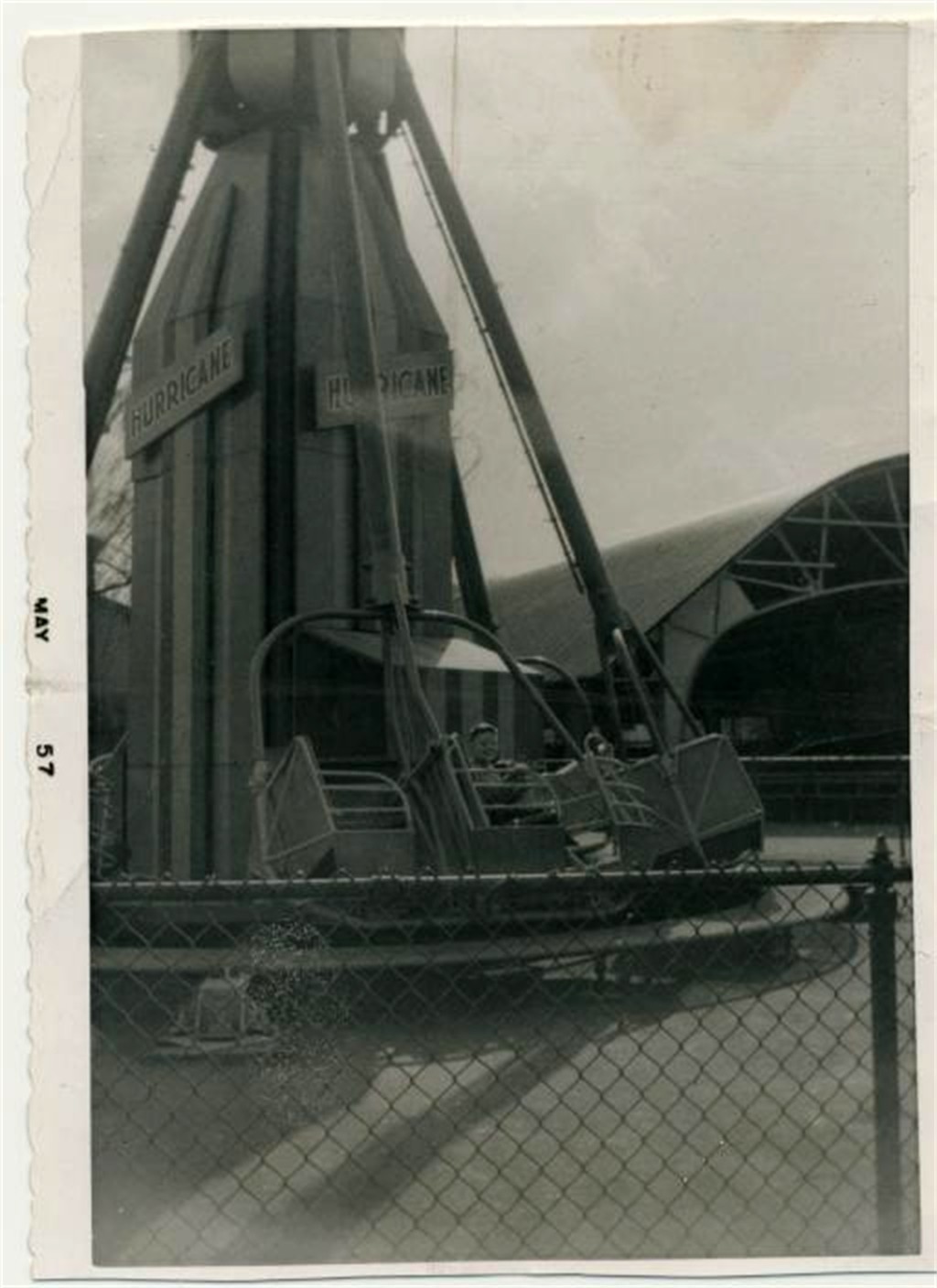
  • Frank Mullen recently forwarded some pictures that he unearthed at his home. The year was 1957. This was just about the time that I was going full throttle nagging Mom to take me to Kennywood! The location of each of the photos is immediately recognizable to me. I’m sure many of us knew Kennywood like the back of our hands. THANK YOU FOR SHARING FRANK!

Abcd

  • There is a YouTube series that has grown and grown in popularity, The Pittsburgh Dad. It appears that many people enjoy this internet series. I however, am not a fan. I think the “Pittsburgh Dad” is a bit “over the top,” making the character look more like and uneducated hillbilly than someone who actually lives in the area. I am reluctantly posting an episode about Kennywood simply to let you can catch a glimpse of what the park looks like today, and so that you can enjoy the sights and sounds once again. 

Posted in Kennywood, Life in General | 15 Comments

1954 Duquesne Retrospective

There are times that I really struggle with post ideas. It seems that I have covered every inch of my childhood memories. However, whenever “writer’s block” occurs, all I have to do is peruse a few issues of The Duquesne Times to discover new things about the city we love or to gain inspiration.

With that said, I started to dig into the 1954. 59 years ago, Duquesne was on the cusp of some dramatic changes, and hints of things to come were in the wind. However, life as WE knew it was perfectly normal. Little League was happening, Kennywood was open (made you check guys, didn’t I?), and some new fears had surfaced.

So, take a few minutes, place yourself in the 1954 frame of mind, and enjoy a quick trip to a moment in time………………

Nov 1954 Baseball Champs

Kennywood

Front Page Murphy's Ad

Library's Birthday!

This tidbit of information took me by surprise. I never knew they were even considering a drive-in theatre in Duquesne!!

Drive-inMay Queen

DUKES final

PolioAge

I hope you enjoyed reading through these bullets in time. Let me know if you would like to see more. I am to please!!! Many, many, many thanks to Jim Hartman from the Mifflin Township Historical Society for supplying me with copies of the Duquesne Times to use!

Posted in Duquesne Carnegie Library, Duquesne History, Duquesne Public Schools, Kennywood, Life in General, Springtime | 18 Comments

A Beautiful Duquesne

    2It appears that Spring 2013 has officially arrived. I’ve been busy clipping, racking, mulching and planting around my house, hoping to make it as neat and attractive as possible. Although the methods have changed in the last 99 years, the intention of making one’s home attractive as possible hasn’t wavered.

For instance, today if we are faced with a lawn full of dandelions, we’re able to trot off to the nearest Lowe’s or Home Depot and pick-up a bag or container of specialized weed killer to eradicate the whole population with one application. I recall fastidious little hunkys kneeling in their yards on weekends and patiently and meticulously digging out each individual weed. Once removed, they would carefully fill the hole with rich black soil and then lovingly spread grass seed over the bare spot followed by another thin layer of top soil. They were very diligent in the weeks that followed to assure the newly seeded patches were watered and nurtured into healthy areas of lawn. I remember that my Uncle Lou, whose house was on Martin Street next to the substation that runs along Mifflin Street, was relentless when it came to battling weeds in his yard! His yard was always pristine. My dad, on the other hand, felt that if God allowed something to take root in his yard, it was meant to be. His best defense was to mow it down each week and pray for the best! Understand that his point-of-view was nurtured by long hours of discussion with his friends each day at the G.B.U. or the Croatian Club!

Landscaping as we know it today was different for our parents. The majority of beautification efforts were centered around the creation of working gardens. In most cases, vegetables and flowers were cultivated from seeds that were planted in a patch of land in backyards throughout Duquesne. Tidy little roses of plantings would eventually emerge each Spring to eventually produce an array of vegetables that were used to cook or preserve and flowers that were often clipped and brought indoors to brighten up the home.

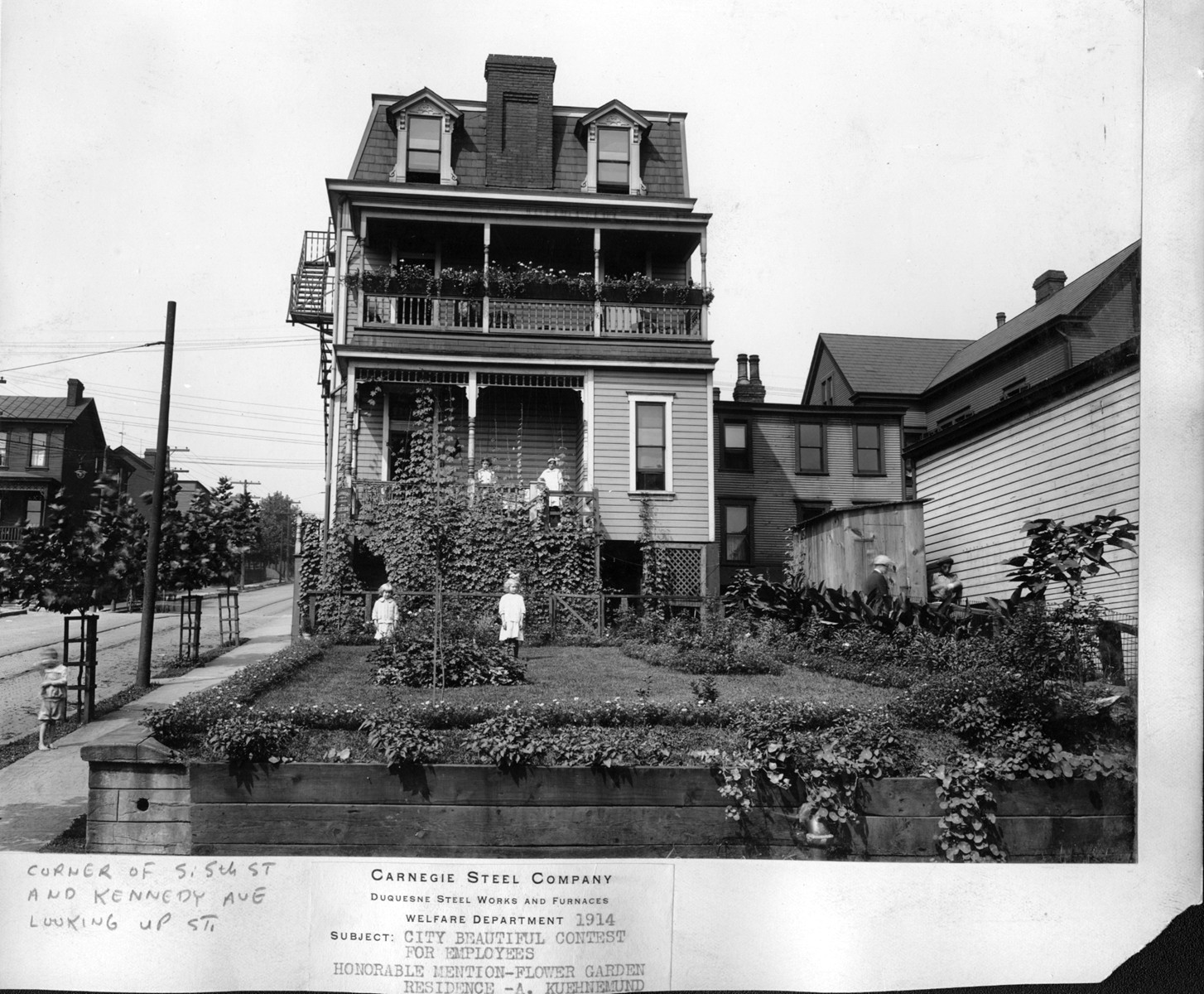
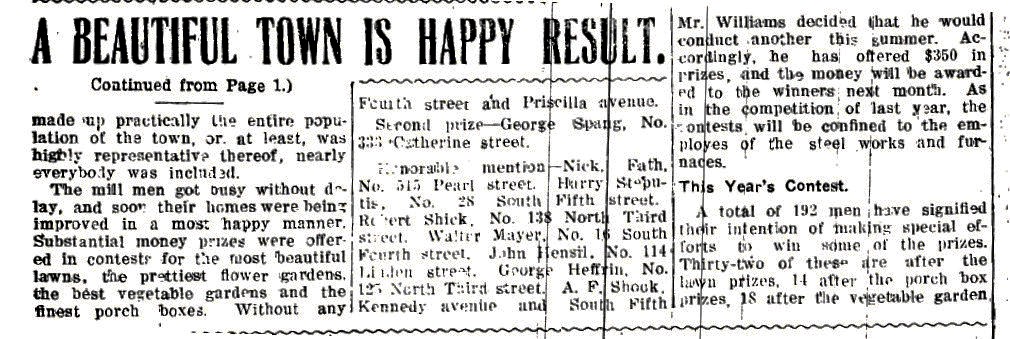
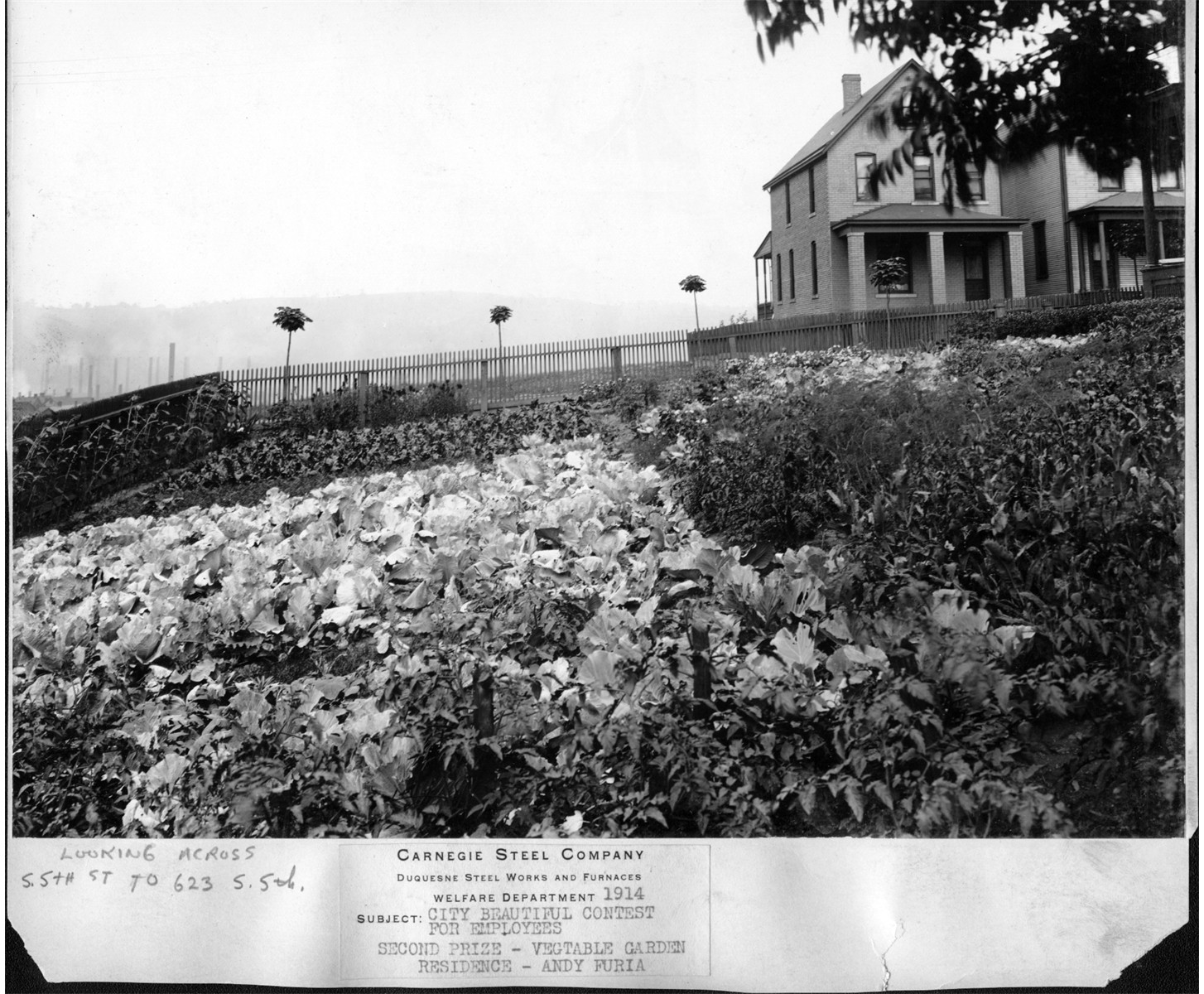
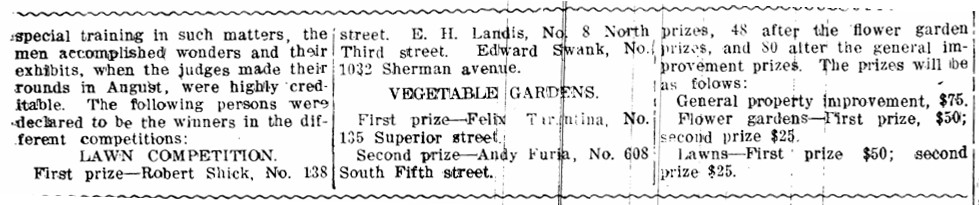
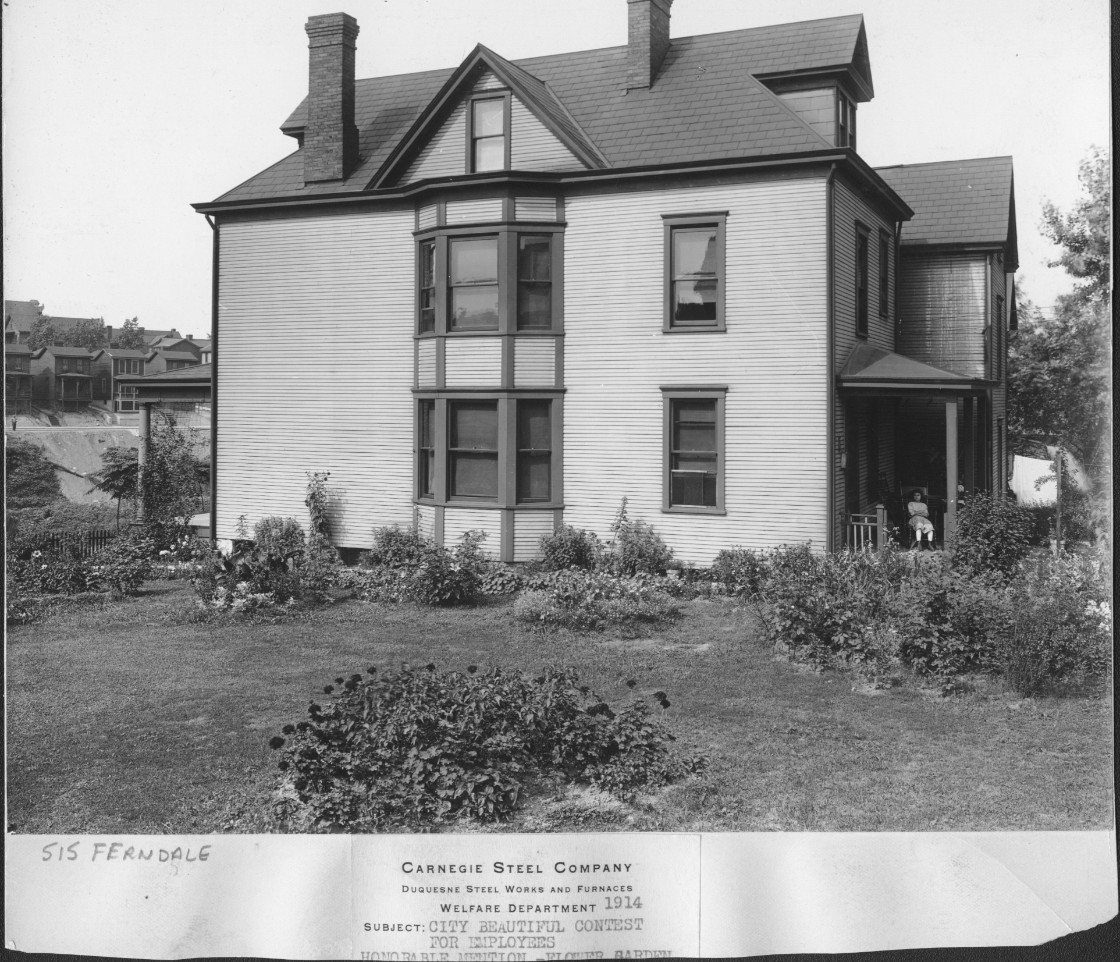
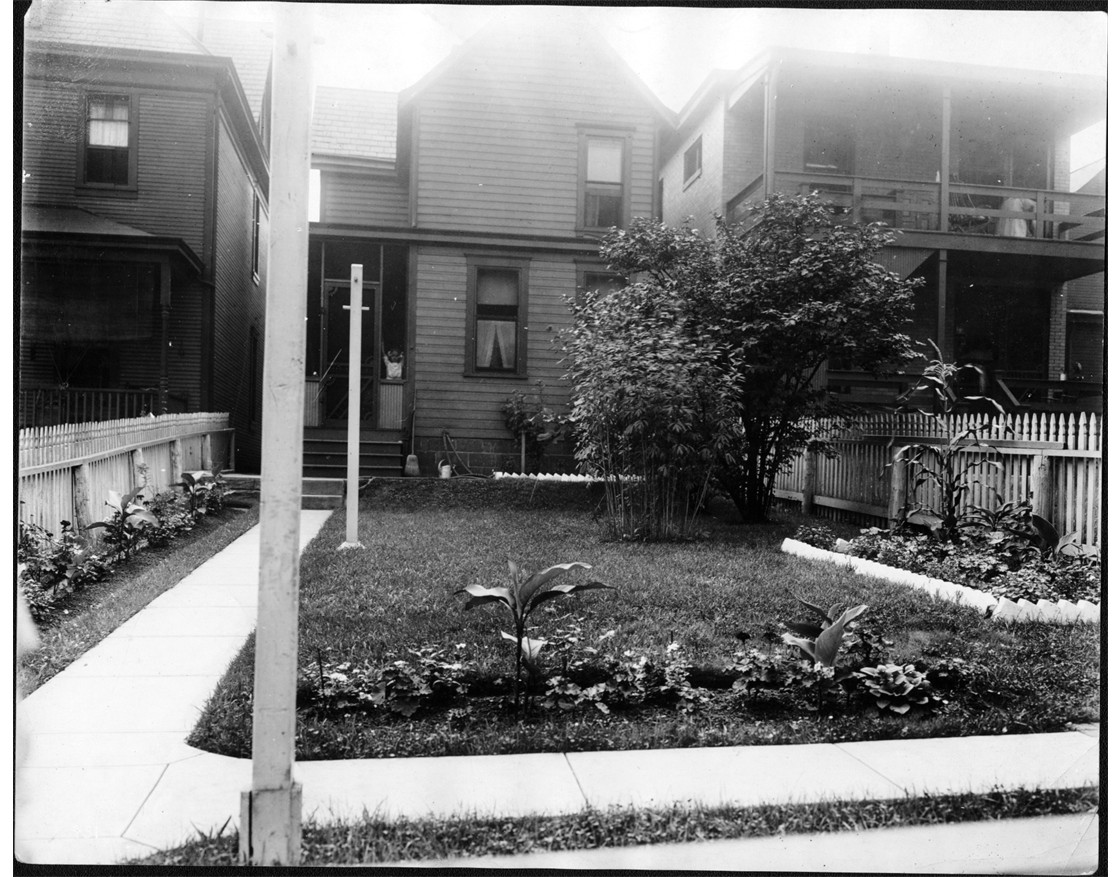
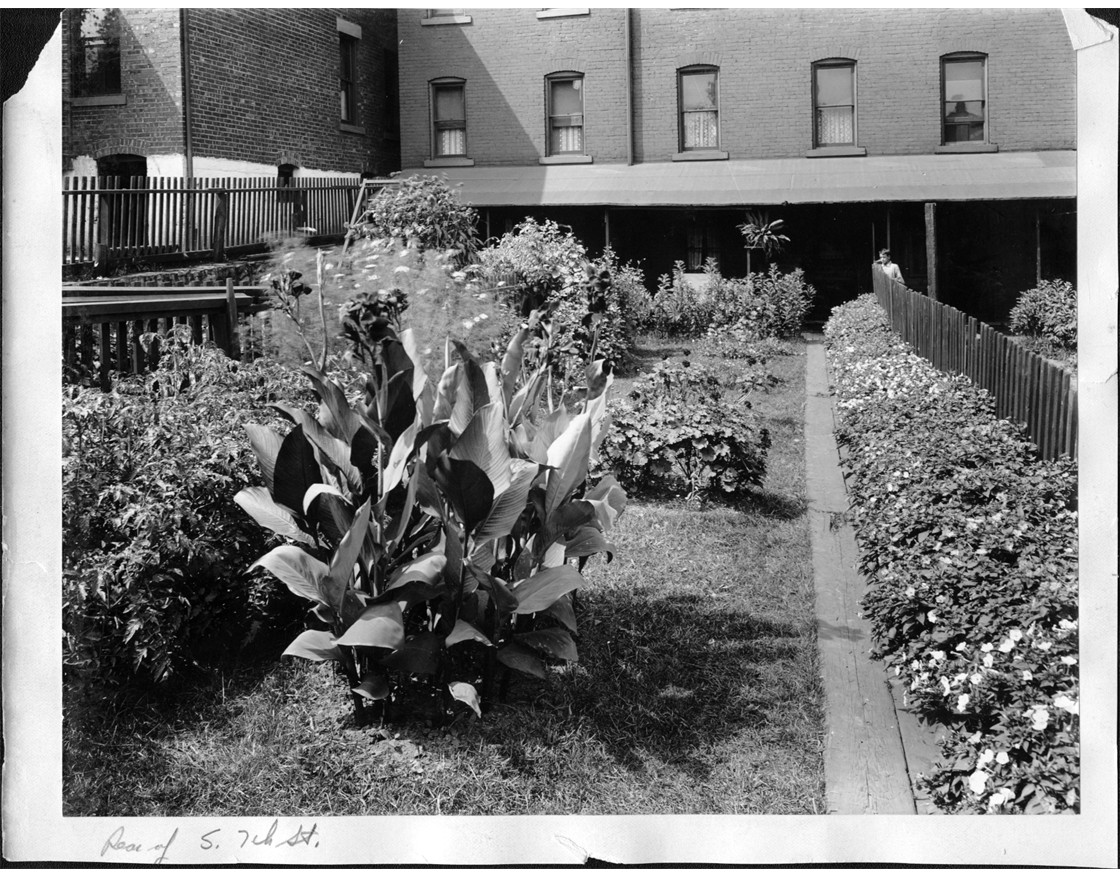
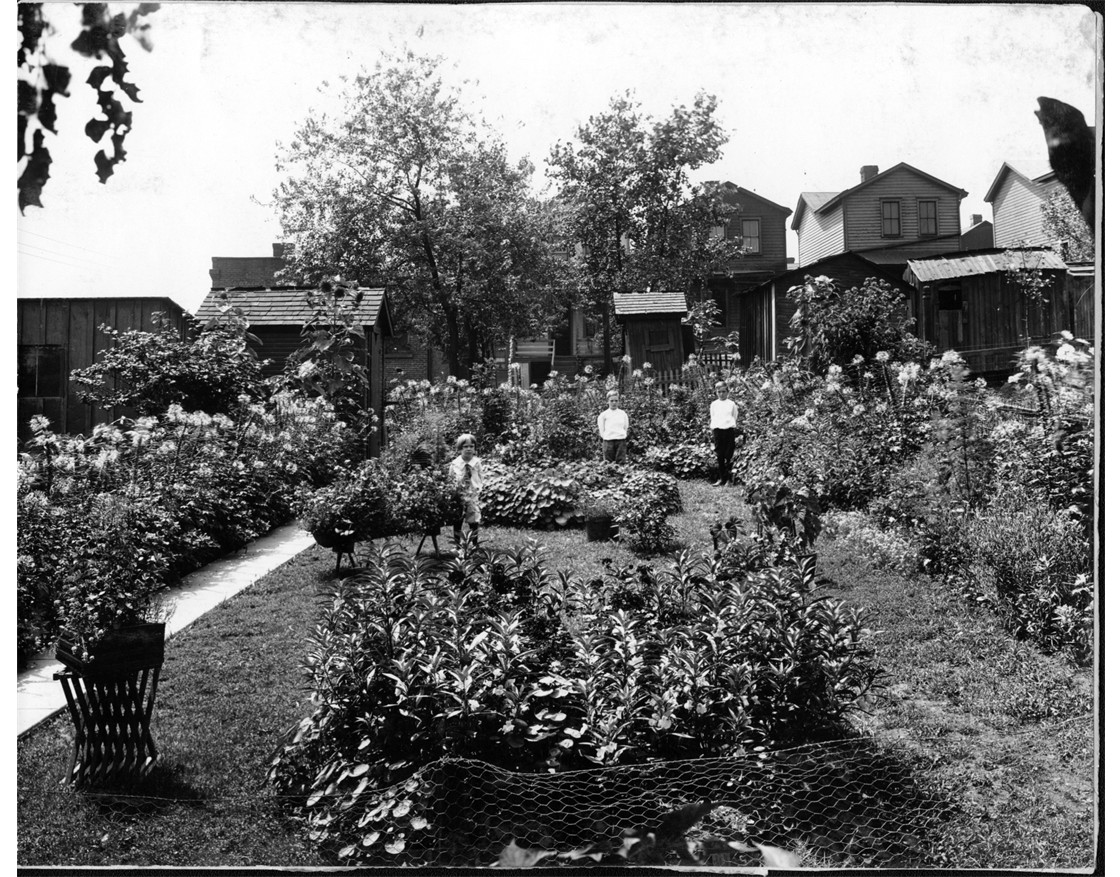
The US Steel Company, Duquesne Plant,  used to hold a beautification contest for its employees each year in the early party of the 20th Century. I thought you might enjoy a retrospective look to the care, grace, dignity and pride the residents of Duquesne took in their city. The results of one such beautification contest were published in what was then, the local paper, The Times-Observer. The year was 1914, 99 years ago. Although the contest judging took place at the end of July, it was this time of year, 99 years ago, that the busy little hunky hands were readying the gardens and lawns throughout the city. The stark contrast in what some of the homes looked like then, what they evolved into during our youth, and then how the appear today is quite dramatic. Here’s to the prodder times!

Article Pt 1

1

Article Pt 23Article Pt 3

5

Article Pt 4

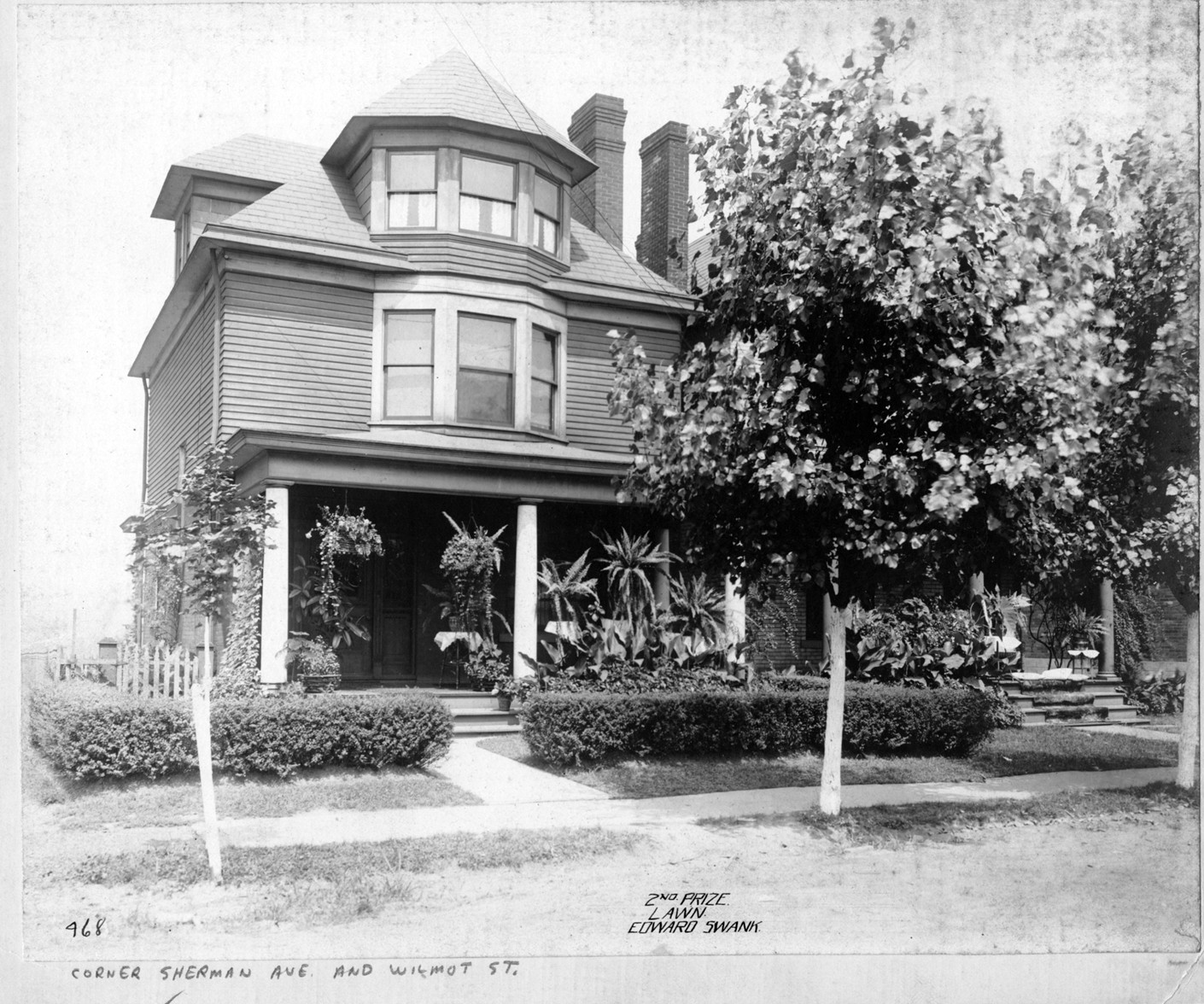
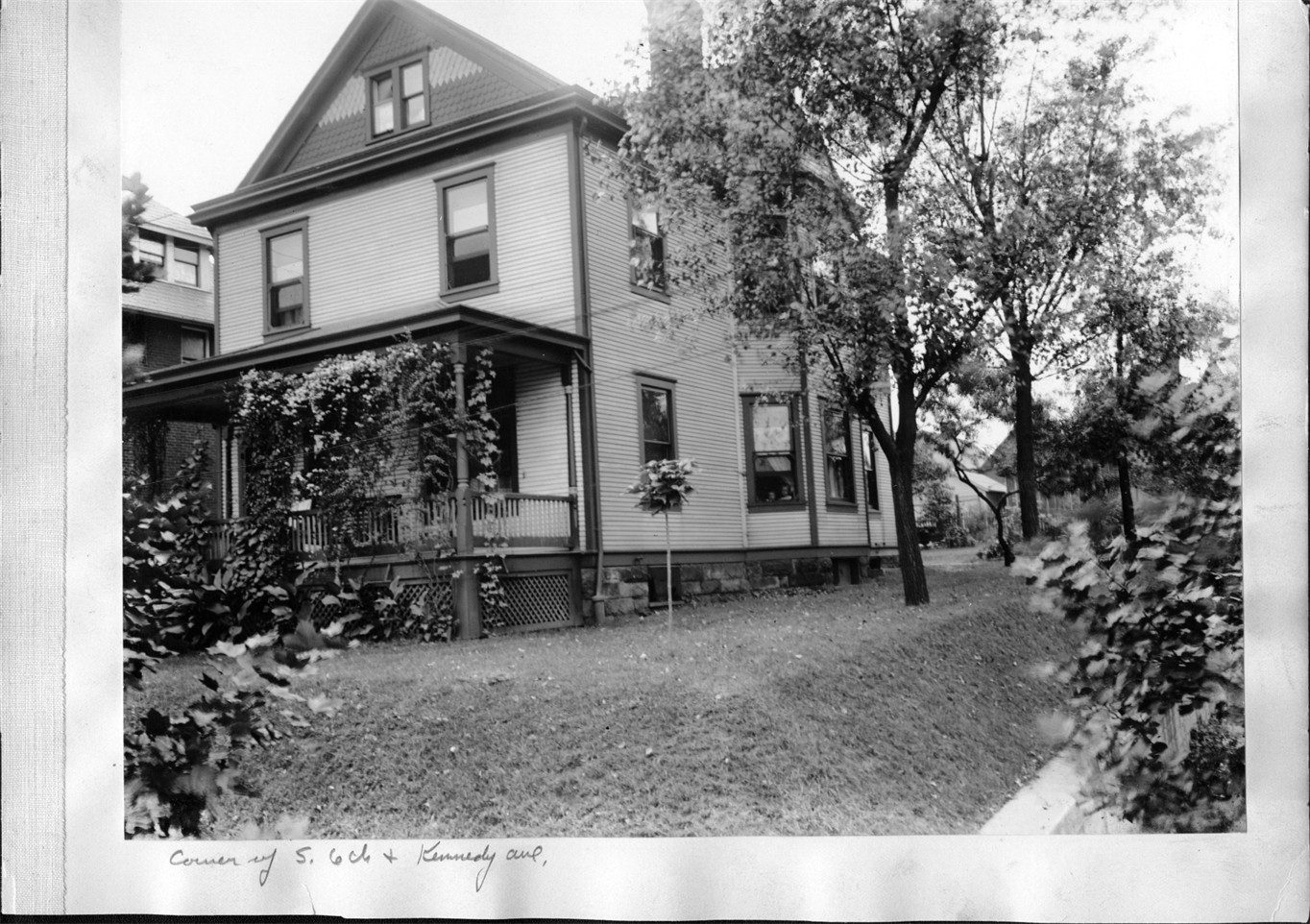
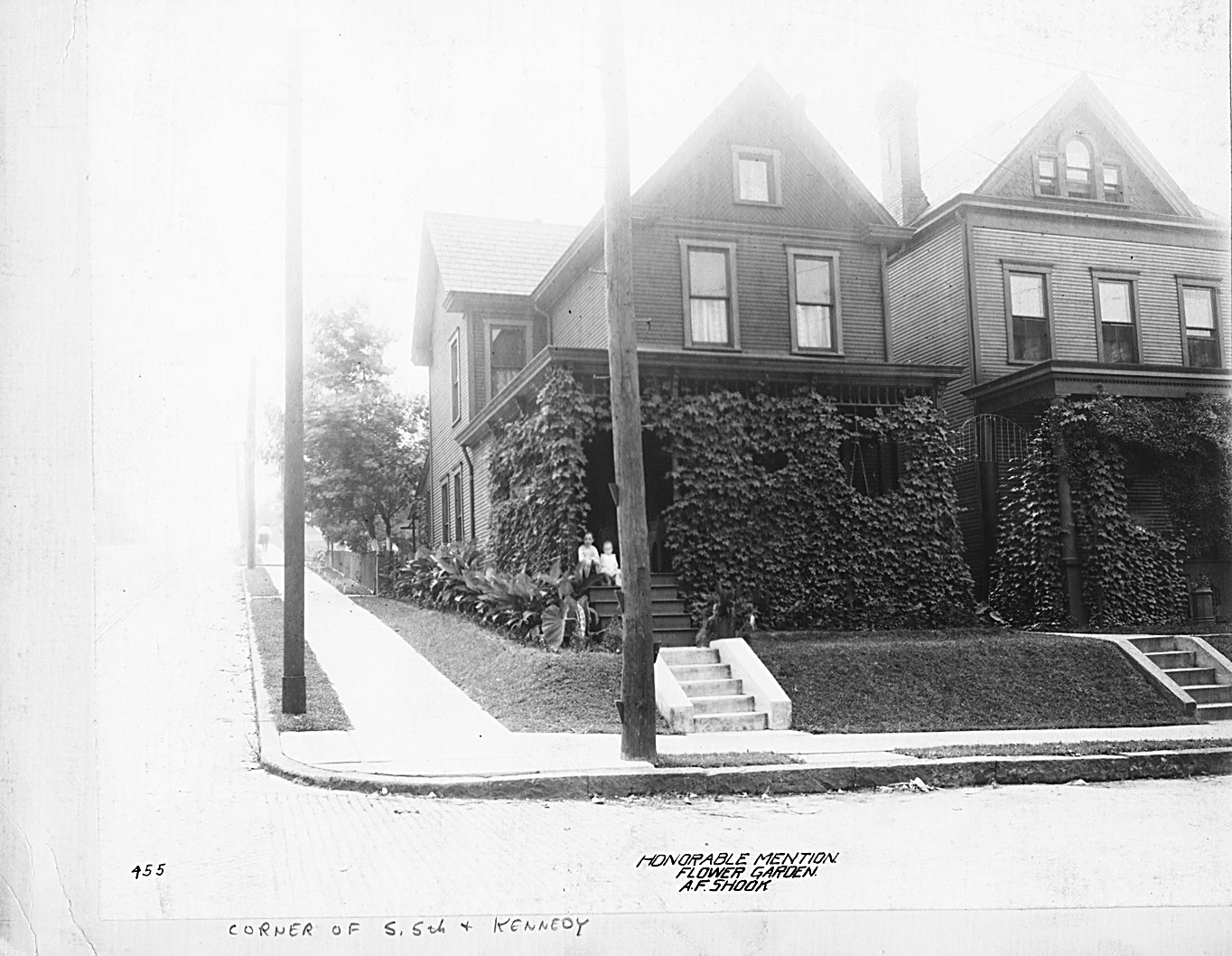
The following are random pictures from the same timeframe of the various entries into the Beautify Duquesne Contest. Foliage, gardens and residences took on a much more natural look as opposed to the minimalistic and sculptured style that’s used today.

When I look at these photos, the one point that I find to be rather “haunting,” is the presence of a child or children somewhere in the photo. I wonder how many of these kids grew up to be our grandparents. It somewhat reminds of those eerie pictures that you occasionally see in a movie about haunted homes. I would be very interested if any of you know about these children and who they grew up to be!

4

6

78

91011

Posted in Duquesne Buildings, Duquesne History, Life in General, Miscellaneous, Springtime, The Steel Mills | 21 Comments

A Duquesne Deluge of HOPE!

St. JOeThe power of prayer in itself is remarkable. I think we all believe that as part of our very being. However, the power of Duquesne prayer has proven itself to be very powerful. It was just 7 days ago that we all learned about the news of Fr. Dennis’ diagnosis. After the call for a Duquesne Deluge of Prayer, this blog saw its highest EVER viewing of a post since I first began the blog two and a half years ago. The post calling for prayers was viewed over 2500 times in less than one week!

I was thrilled when I saw an announcement scan0001on Facebook that announced a “Flicker of Hope” regarding Fr. Dennis’ diagnosis. I am posting his “From the Pastor’s Desk” column from Sunday’s bulletin. We need to continue with our prayers to assure that the “flicker of hope” turns quickly into a deluge of hope for Fr. Dennis. We did it once, so let’s not stop the momentum!!

From the Pastor’s Desk – April 14, 2013

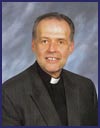
Last weekend, when the “bomb” on my most recent health diagnosis was dropped, an immediate volcanic eruption of love and prayers for me was released into the universe. I truly FrDennis2005believe that this eruption has caused the “Flicker of Hope” that I received on Monday afternoon. On my visit to my primary care physician, he informed me that I have “lower body muscular neuron disease.” He informed me that the disease takes on many forms or personalities and sometimes masks itself as another disease. A definite diagnosis is confirmed only after a series of elimination tests. He told me at this point, based on the results and evidence “It is inconclusive that I have full-blown ALS/Lou Gehrig’s Disease.” This news is a “flicker of hope.” He was at a loss why the neurologist diagnosed me last Thursday with get your affairs in order, tell your family, you have 3 to 5 years. I believe that the eruption of prayers and love caused this flicker. The positive energy caused by the love and prayers is real and present. After one year of visiting various doctors and not receiving any positive results, I am going to hold on to this “good news” as a hopeful sign. I am going to live life to the best of my ability and to its fullest. When the time comes for my final diagnosis, then I will deal with it as best as I can.

Good things and blessings from this have already happened. People are talking to each other, people are praying more than they have in quite a while. Much more is there to be learned on this transitional journey.

Thank You: for the outpouring of love, prayers and concern….for the cards, emails, gifts, flowers, food, etc….for anyone who has offered help and assistance….I am humbled and grateful for your love and prayers.

The Next Steps: The next step in this ongoing process is that I have an appointment with the ALS Clinic and Dr. Lacomis in Pgh. on May 6 for testing, recommendations, etc. On June 10, I meet again with my PCP to go over the results and decide on the next steps and a course of action if necessary.

Prayer to St. Jude

O Holy St Jude!     StJudeThaddeus

Apostle and Martyr,

Great in virtue and rich in miracles,

Faithful intercessor for all who invoke you,

Special patron in time of need;

To you I have recourse from the depth of my heart,

And humbly beg you,

To whom God has given such great power,

To come to the assistance of Fr. Dennis Colamarino;

Help him now in his urgent need and grant my earnest petition.

I will never forget the graces and favors that you obtain for him

And I will do my utmost to spread devotion to you. Amen.

St. Jude, pray for us and all who honor you and invoke your aid.

(Say 3 Our Fathers, 3 Hail Marys, and 3 Glory Bes after this.)

Posted in Church and School - Holy Name, Church and School - St. Joseph, Duquesne's Special Citizens | 9 Comments

Voices from Duquesne LIVES!

I cannot believe it, but I have not posted a “Voices from Duquesne” since October, 2011!! I don’t know if its that I have been derelict in my duties or if I just haven’t been receiving many emails from all of you. None the less, I am attempting to play catch-up with some  emails that I received since December of last year. I hope you enjoy them, and perhaps can help some of the folks out!

Thank you for the outpouring of prayers and love for Fr. Dennis, Pastor of Christ the Light of the World in Duquesne. With your help, the Duquesne Deluge of Prayers reached over 3,000 readers in two days!!! I am confident that Fr. Dennis will be overwhelmed and so appreciative of the prayers and comments. Keep them coming! In case you missed the posting, click HERE.

Now, enjoy the voices from Duquesne……

FROM GARY GOYKE

Jim,

Just wanted to reach out and thank you for such a wonderful blog. I actually stumbled on Facebook post regarding Fr. Dennis’ diagnosis that led me to your page.

I shared this sad new with my 91 year old friend Deloris Pohelia, who admires Fr. Dennis and continues to support the church although she now resides in Verona, PA. Deloris and her brother Cy, who was buried from Holy Name, he passed on 11-11-11, Veteran’s Day….

I am so looking forward to printing out most of your blog for her reading, she will greatly enjoy it! She was so curious to find out who you were, and I finally did some digging on the site and found your name, so I will pass it along to her, I am sure she will remember the name Volk. Her family resided in Duquesne all of their lives and even had to raise up the house when they did something on North Second Street many years ago.

I bought the old Boucher house at 114 N. 3rd Street many years ago, and really enjoyed the house…………….. I moved to Elizabeth, and was actually 2 doors down from the Boucher family relatives! Mr. Boucher from Elizabeth was instrumental in the re-enactment of the Lewis and Clark exposition that they did in town.

Anyway, I wanted to pass along my gratitude for your putting together so much wonderful information, I know Deloris will greatly enjoy the many newspaper clippings and the wonderfully written articles on your site. She’ll be very excited to see the article about Matt Gallagher as well!

Thanks again,

Gary

FROM PAUL CHERKES

DH, Good Morning. My name is Paul Cherkes. I am a newly appointed trustee at the Duquesne Croatian Lodge. I am not Cro Cluboriginally from Duquesne, but really enjoy your stories about the past. We have recently hosted the 70th annual Croatian Basketball Tournament. The Lodge is still an active fixture in Duquesne with many proud and dedicated members ( we are always looking for more members). We have a loyal following to our Tuesday Wing night and Friday Fish Fry. I was hoping you might want to do an article about the lodge. Our 13 to 15 year Boys team won the championship yesterday. It was a great way to end the tournament. What we have going on at the Cro is a feel good story. I am sure from your research you have plenty of general information on the clubs past. Please consider an article about our lodge. I am sure our board members can provide pictures and candid insight to today’s Croatian Club. I look forward to hearing from you. Thank you. Paul Cherkes

P.S. I am an active member of Christ the Light of the World Parish. My wife’s maiden name is Plake, her father was a Duquesne High teacher forever.

FROM JACK SCHALK

Hi Jim,

I had a flash back last week to a guy that was a couple of years older than I.

We used to ride bikes together along with a few others that respond to your posts.

Glenn Swank lived on Wilmot St near the intersection with Sherman Ave. I graduated DHS in ’54 and I think he would have been in the class of ’52 but I don’t remember him in the high school era, mostly during Jr. High.

I have a bit of memory about Glenn going into the Air Force and earning himself a name there. He was a pilot but I don’t remember his claim to fame.

Maybe with your contacts you could locate something about him and use it for a post.

Jack Schalk

FROM MARLENE PROSNIK

Jim,

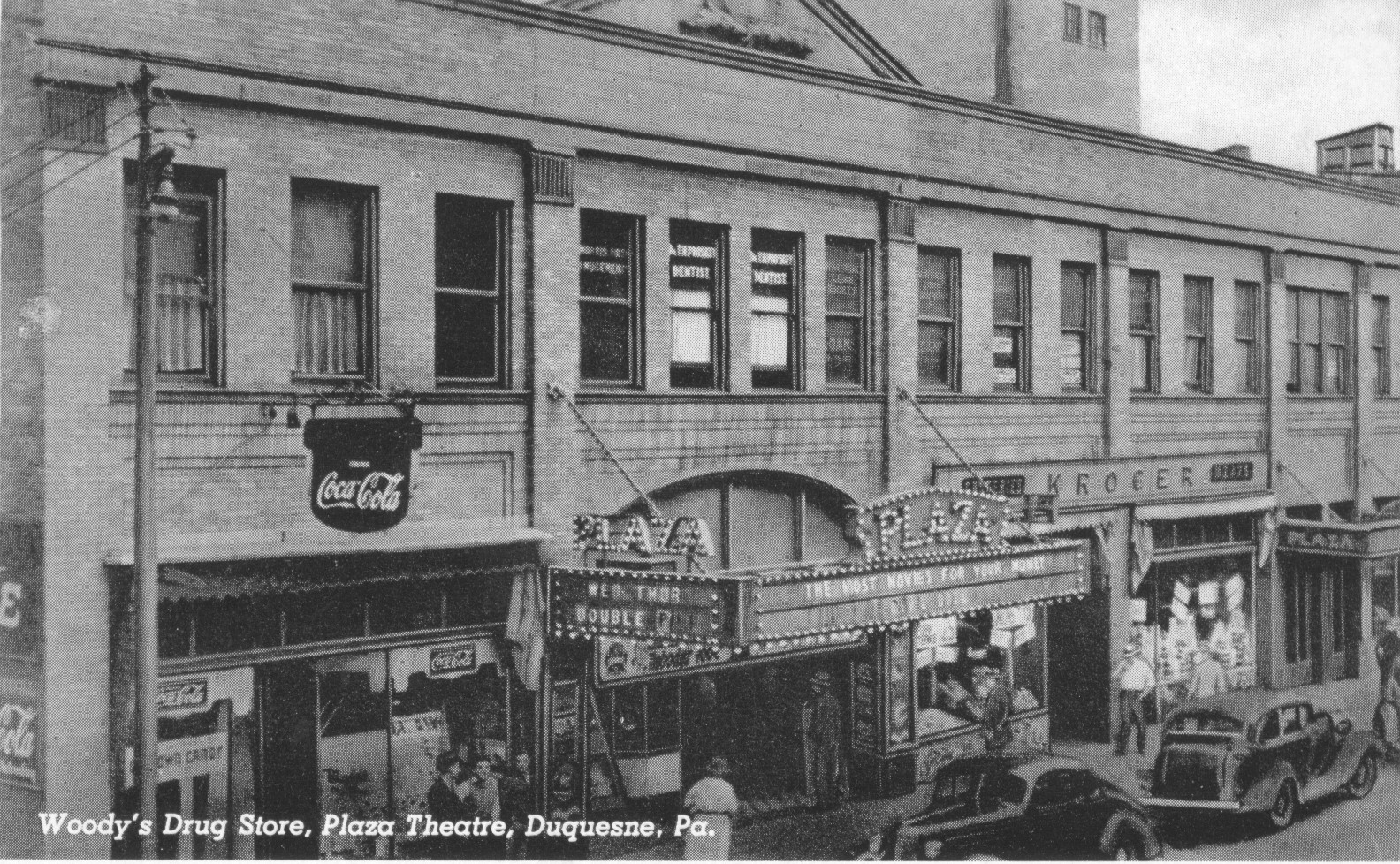
I thought our fellow “Dukes” might have reminiscences of the local movie theater next to Woody’s drugstore. I remember my parents giving my sisters and I 50 cents apiece to see the Duq Paza theatreSaturday morning extravaganzas (can anyone ever get enough of Wile E. Coyote or the Chicken Hawk? I also remember being scared out of my wits at a screening of the Vincent Price flick, House of Wax. I actually sat on the floor because I couldn’t watch anymore! I also remember coming out of screenings in the winter and then running all the way home because we girls were afraid someone might follow us (oh, the drama!) There was another theater on the same side of the street but across from Helmstadter’s, I think, that showed B movies. That one didn’t last long.

Does anyone remember the roller rink on Polish Hill? That was a fun place to go in the late 50’s. Not sure how long it hung on.

BTW, what year did you graduate? (I’m from the Serra Class of 1969)

Marlene Prosnik (’64)

FROM JACK BERTA

Jim,

I really enjoy when you write your reflections in the Duquesne Hunky about your family’s customs and traditions. There is always a lot of interest when you include recipes. It helps get the gray matter stirred up. Some readers want to attempt to make them. In a lot of cases the grandmothers, mothers, and aunts have passed away. We are lucky if we have some of those old favorite recipes handed down. You Mentioned a good source, the Slovak-American Cook Book in one of your latest articles, Hunky Springtime Rituals.

Baba's KitchenI’d like to recommend the book Baba’s Kitchen, Slovak & Rusyn Family Recipes & Traditions by Lisa Alzo. You list her on your blogroll. Lisa is my cousin and Godchild. She gave me a copy after it came out. I had loaned it to a neighbor who returned it today. As I reviewed through it I remembered your recent recipe posting and thought you might mention it if some of your readers may be interested. As the title states, she has included not only family recipes but traditions, and history also. Additional details about the book can be viewed on the Baba’s Kitchen Web site. Click HERE.

This past June my wife and I had the pleasure of traveling with Lisa on her second trip to Slovakia. We went to visit the family of our mutual grandfather she located on her previous trip. Beside visiting our grandfather’s family, Lisa went to do more research of her maternal grandfather. It was the trip of a lifetime.

John (Jack) Berta

FROM RUSSELL AND CAROL STRANGE

“All the Right Moves” with Tom Cruise and Lea Thompson was GEO COVERbased on this GEO article. As principal of Westmont Hilltop High School in Johnstown PA at the time, I had occasion to work with Phil Goldfarb, one of the film’s producers. 20th Century Fox staged the film’s football game at Point Stadium in Johnstown and worked with local school districts to secure football players, uniforms, band members, instruments, etc. The more Mr.Goldfarb talked about the screenplay, the more curious I became about the source of the story. He then provided me a copy of the GEO article. What a surprise to learn that Duquesne High School, my alma mater, and my neighbors and friends, the Gedman family lived the story being developed by the film makers.

Carol Macus Strange

Columbia, S.C.

FROM JANIE KING

Hi there: I just took a walk down memory lane after being informed of your blog. What a joy. My family (Kennedy) was one of the three founding families of Duquesne. Kennedy Ave, Priscilla, Catherine, Aurilles and other streets are named after family members. My Dad was a police officer in Duquesne for awhile and later became a plumber. My Mom owned a corner store on 5th St. and the family homestead still stands at 309 Kennedy Ave. across from the high school. I went to kindergarten at the old Kennedy school on 6th St. It was across the street from the Jr. High and was demolished either in the late 40’s or early 50’s. I was 13 or 14 when the tornado hit, I slept through it but remember it hit a lot of the bars on Grant Ave.(named after U.S. Grant). I could go on and on remembering snake dances before Duquesne and McKeesport football games and kangaroo courts when the men grew beards or got hauled through the streets in a cage and paid a fine but I’d be on this line forever. Thanks so much to all that have contributed to your blog but most of all to you for creating it. Almost forgot, my best friend still lives in Duquesne in the house she was raised in and she is half Croatian, her maiden name is Gorscak. There were 5 of us who went through all our school years from kindergarten through high school that have maintained our friendship and keep in contact, one died several years ago but the rest of us are still hanging in there and see each other every 5 years for school reunions. Anyway, thanks again!!!!!

Janie King

FROM KAREN LITTLEFIELD

Hello!

I am a Steel Valley native and I am enjoying your blog! I am in search of OLD photos of 8th Avenue in Homestead at Holiday time. I have such fond memories of the illuminated bells that hung over the street. It seemed like there were hundreds of them. One year, we were Christmas shopping and it was snowing and all the lights were lit up…. So beautiful!

Enjoy your time there….if you get an opportunity, visit St. Nicholas Church in Homestead on 9th Ave. Very beautiful and the choir is outstanding.

Happy Holidays,

Karen

Posted in Duquesne's Special Citizens | 17 Comments

A Duquesne Deluge of Prayers

I have often written about Fr. Dennis, Pastor of Christ the Light of the World, in CTLWDuquesne. Fr. Dennis is Pastor for the Holy Name site, the St. Hedwig site, and at the St. Joseph site. In December, 2011 after a visit to Duquesne, I posted the following:

It was 8 a.m. and we headed to Duquesne to the 8:30 Mass at St. Hedwig’s on South 5th Street. It had been drizzling that morning, so the air was filled with the familiar smells of damp fallen leaves on the sidewalks and streets. I parked across from the church on 5th Street underneath one of the majestic sycamores that line the bricked streets. Churchgoers were filing into the church and it reminded me of an idyllic Norman Rockwell illustration from the cover of the Saturday Evening Post.

St. Hedwig’s is the smaller of the Catholic churches in Duquesne. It offers an intimate setting for all attendees but doesn’t compromise on pure beauty. Even though I grew up in Holy Name Church, I have become very comfortable at St. Hedwig. My dad liked attending mass there and since his death, I have continued to do so as well.

To tell you the truth, it wouldn’t really matter which of the church I went to that Sunday. Since all they all had Fr. Dennis as the celebrant, they all would have been equally inspiring. For those of you who have never had the opportunity to experience attending a mass being conducted by Fr. Dennis Colamarino, you definitely need to do so.

As I sat next to my Aunt Peggy during mass on that 2nd Sunday in Advent, a thought crossed my mind. I realized that the extraordinary sense of belonging, of faith and of reverence that I was feeling was EXACTLY the same as I felt as a child when I first understood what being a Christian and a Catholic was all about. I remember how my parents were so passionate about attending mass and always seemed to be so “connected” to what was occurring. THAT’S what I felt that Sunday morning with Fr. Dennis.

fatherd_deskTo say that Fr. Dennis is captivating as a celebrant is an understatement. His personality, positive demeanor, style and speaking ability is “over the top” in a very positive way. When you couple his talents with the extraordinary musical talents of the Music Ministry members, Debbie Walters, Ray Judy and Greg Lesko, you have an experience just this side of heaven.

Fr. Dennis’ sermon contained a story about a woman who was nearing the end of her life due to a health issue. She was having a discussion with her priest about her wishes for her eventual funeral. She told her priest that she wanted to be buried in the dress she wore when she was married. The priest indicated that it should not be a problem. She then indicated that she wanted to have the song, On Eagle’s Winds, sung at her funeral. Again, no problem. Her final request took the priest aback however. She told him that she wanted to be buried with a fork in her hand. The woman explained. “My mother once told me a story that I never forgot and I have tried to pass along its message to those I love and those who are in need of encouragement. Here’s her story:

“In all my years of attending church socials and potluck dinners, I always remember that when the dishes of the main course were being cleared, someone would inevitably lean over and say, ‘Keep your fork.’ It was my favorite part because I knew something better was coming . . . like velvety chocolate cake or deep-dish apple pie. Something wonderful and with substance!’

So, I just want people to see me there in that casket with a fork in my hand and I want them to wonder, “What’s with the fork? Then I want you to tell them, “Keep your fork . . . the best is yet to come.”

What a wonderful way to begin my visit to Duquesne. Thanks Fr. Dennis.

I received some very sad news yesterday from my friend Lou Andriko, whose mother, Betty Andriko, had attended Sunday morning Mass at St. Joe’s. It was the type of news that hits you like a ton of bricks.

“Mom called me and said Fr. Dennis announced at Mass on Sunday morning, April 7th, that he has been diagnosed with Lou Gehrig’s Disease, i.e. ALS (amyotrophic lateral sclerosis) with extensive involvement of most of his voluntary motor functions; prognosis is poor, perhaps a 3 yr. survival….

With Bishop’s permission, he plans to remain at Holy Name and minister as long as possible and remain in Duquesne even afterwards until he passes.”

So many of us have been fortunate enough to witness the exuberance of the celebration of Mass with Fr. Dennis. His ability to make the congregation feel involved and joyous about Mass is unparalleled. Many of you moved from Duquesne prior to Fr. Dennis’ arrival, but may have been members of the parish that he currently shepherds or family members who still are part of the congregation. Those of other faiths should take solace in the fact that Fr. Dennis has embraced Duquesne as his home and the entire community as his family.

For those reasons, and countless more, we all need to pull together and inundate our Lord miracleand Savior with thousands of prayers on behalf of Fr. Dennis. We need to create a virtual Duquesne Deluge of prayers petitioning our Father in Heaven to provide strength and healing for Fr. Dennis and those responsible for his care. Together, with a concerted effort, we can provide love, hope and comfort to Fr. Dennis. 

I invite all of you to post your thoughts and prayers for Fr. Dennis in the comment section of this post. The love and spirit that each of you have felt and shown for our hometown can certainly be demonstrated now with your prayers and petitions.

In the Sunday bulletin this weekend, Fr. Dennis posted a “Letter from the Pastor’s Desk” that I thought was especially meaningful. In light of the announcement he was about to make and the news that he had received, I found his strength and determination inspiring:

From the Pastor’s Desk – Christ the Light of the World Parish

For a Happier Life!    

Posted on DateSaturday, April 6, 2013 at 04:01PM –

1. Throw out the non-essential numbers.  This includes age, weight and height. 2. Keep only cheerful friends.  The grouches pull you down.  If you really need a grouch, there probably are family members who fill that need. 3. Keep learning.  Learn more about the computer, crafts, gardening, whatever. Just never let the brain get idle. 4. Enjoy the simple things.  When the children are young, that is all that you can afford. When they are in college, that is all you can afford. When they are grown, and you are on retirement, that is all that you can afford. 5. Laugh often, long and loud. Laugh until you gasp for breath. Laugh so much that you can be tracked in a store by your distinctive laughter. 6. The tears happen.  Endure, grieve, move on.  The only person who is with us our entire lives, is ourselves. 7. Surround yourself with what you love, whether it is family, pets, keepsakes, music, plants, hobbies, etc.  Your home is a refuge. 8. Cherish your health.  If it is good, preserve it.  If it is unstable, improve it.  If it is  beyond what you can improve, get help. 9. Don’t take guilt trips. Go to the mall, the next county, a foreign country, but not guilt. 10. Tell the people you love, that you love them, at every opportunity. 

Remember, life isn’t measured by the number of breaths we take but measured by what takes our breath away. – Fr. Dennis

In you would like to contact Fr. Dennis, the parish contact information is as follows:

Christ the Light of the World Parish

32 South First Street – Duquesne, PA 15110

Posted in Church and School - Holy Name, Church and School - Holy Trinity, Church and School - St. Joseph, Churches - Other, Duquesne's Special Citizens | 63 Comments

Our Easter Celebration

As a Catholic child, a student of Holy Name Grade School, and an altar boy, the three days prior to Easter marked the most  pious and important days of the liturgical year. Although Holy Week officially began on Palm Sunday, the solemnness of the week really was felt and exhibited on Holy Thursday, Good Friday and Holy Saturday.

I remember the seriousness and significance of the meaning of each day. The good sisters at Holy Name drilled the importance into our impressionable minds throughout our eight years of attendance. My mother and father reinforced those beliefs and certainly, as an altar server, I was fortunate to be part of the observances during Holy Week.

Good Friday stands out as the day that I truly felt the most stirred, and to a degree, frightened by the history of events that occurred that day in the life of Jesus Christ. I remember watching how everything would stop in our home, and an eerie silence would occur in our neighborhood and in the City of Duquesne from noon until 3 p.m. that day. Parents, priests, neighbors, friends all focused on the fact that the crucifixion had taken place at this point in time.

I remember how I would watch the skies at this time. I recall how very often, it seemed toEaster at St. Joseph be either a rainy or cloudy day. The coincidence of the weather with day’s history always made an impression on me. In fact, the photograph below was taken on Good Friday in 1970 during the 12 to 3 p.m. timeframe. I had walked up to the statue of the Passion in St. Joseph’s Cemetery and snapped this photo of an approaching store. I found the original copy of this photo recently and noticed that it was dated 3/27/70 on the back. When I check out the date, besides being my brother’s birthday, it was also Good Friday that year.

If you are like me, so much has changed in our lives since the days of our youth. It is so helpful to me to recall all of those things that made this time of year so important in our lives. It restores and  my faith to even greater degree. To me, it is comforting that those doctrines of our faith were embraced and observed throughout our hometown.

After our steadfast observances of the Rites of Easter during Holy Week, like any child, my brother and I looked forward to waking Easter morning to all of the expected and traditional delights of the day. Carefully wrapped cellophane covered Easter baskets were always perched on the dining room table each year. Steve and I would peer through the colorful cellophane wrapping to try to see what was waiting for us inside the basket. We were never allowed to unwrap the basket before we went to Mass, however, before we were old enough to receive Holy Communion, Mom would always have some “spare” chocolate Easter eggs to tide us over.

Walking into Holy Name on Easter Sunday was sensory delight. The fragrances of Spring flowers filled the air. Hyacinths, Easter lilies and tulips graced every altar in the church. Combined with the sometimes “over-the-top” hats that the ladies would wear, the church was alive with color. The pews were packed and the celebration of Easter Mass was truly inspiring. I can still picture it all to this day. Once we returned home from Mass, the events of Volk Family traditions took effect and our day continued to hold one adventure after another that was shared with our entire extended family of Grandparents, Aunts, Uncles and Cousins. These are memories I will never forget!

The following are random images that might conjure up some Easter time memories for you, followed by a synopsis of the history and the rites of Holy Week.

To all of my Duquesne and Hunky friends, Have a Wonderful Easter Holiday!!

HOLY NAME’S FORMER INTERIOR

Holy Name Altar

HOLY TRINITY’S FORMER INTERIOR

HT Church 60s

EASTERTIME WITH THE VOLK BOYS CIRCA 1954 and 1955

Scan_Pic0003 Scan_Pic0001 Scan_Pic0002 Scan_Pic0075

 The Rites of Holy Week – Wikipedia

Holy Week in Latin Rite Catholicism 

Palm Sunday (Passion Sunday)

Holy Week begins with what in the Roman Rite is now called Palm Sunday of the Passion of the Lord. Before 1955 it was known simply as Palm Sunday, and the preceding Sunday as Passion Sunday. From 1955 to 1971 it was called Second Sunday in Passiontide or Palm Sunday.

 To commemorate the entrance of the Messiah into Jerusalem, to accomplish his paschal mystery, it is customary to have before Mass a blessing of palm leaves (or other branches, for example olive branches). The blessing ceremony, preferably held outside the church includes the reading of a Gospel account of how Jesus rode into Jerusalem humbly on a donkey, reminiscent of a Davidic victory procession, and how people placed palms on the ground in front of him. Immediately following this great time of celebration in the entering of Jesus into Jerusalemé, he begins his journey to the cross. This is followed by a procession or solemn entrance into the church, with the participants holding the blessed branches in their hands.

 The Mass itself includes a reading of the Passion, the narrative of Jesus’ capture, sufferings and death, as recounted in one of the Synoptic Gospels.

 Before the reform of the rite by Pope Pius XI, the blessing of the palms occurred inside the church within a service that followed the general outline of a Mass, with Collect, Epistle and Gospel, as far as the Sanctus. The palms were then blessed with five prayers, and a procession went out of the church and on its return included a ceremony for the reopening of the doors, which had meantime been shut. After this the normal Mass was celebrated. 

Monday to Wednesday

The days between Palm Sunday and Holy Thursday are known as Holy Monday, Holy Tuesday, and Holy Wednesday. The Gospels of these days recount events not all of which occurred on the corresponding days between Jesus’ entry into Jerusalem and his Last Supper. For instance, the Monday Gospel tells of the Anointing at Bethany (John 12:1-9), which occurred before the Palm Sunday event described in John 12:12-19.

 The Chrism Mass, whose texts the Roman Missal now gives under Holy Thursday, may be brought forward to one of these days, to facilitate participation by as many as possible of the clergy of the diocese together with the bishop. This Mass was not included in editions of the Roman Missal before the time of Pope Pius XII. In this Mass the bishop blesses separate oils for the sick (used in Anointing of the Sick), for catechumens (used in Baptism) and chrism (used in Baptism, but especially in Confirmation and Holy Orders, as well as in rites such as the blessing of an altar and a church).

 Tenebrae

When the principal services of Holy Thursday, Good Friday, and the Easter Vigil were celebrated in the morning, the office of Matins and Lauds of each day was celebrated on the evening of the preceding day in the service known as Tenebrae (Latin, “Darkness”).

Maundy (Holy) Thursday 

Mass of the Lord’s Supper 

On this day the private celebration of Mass is forbidden. Thus, apart from the Chrism Mass for the blessing of the Holy Oils that the diocesan bishop may celebrate on the morning of Holy Thursday, but also on some other day close to Easter, the only Mass on this day is the evening Mass of the Lord’s Supper, which inaugurates the period of three days, known as the Easter Triduum, that includes Good Friday (seen as beginning with the service of the preceding evening), Holy Saturday and Easter Sunday up to evening prayer on that day. 

The Mass of the Lord’s Supper commemorates the Last Supper of Jesus with his Twelve Apostles, “the institution of the Eucharist, the institution of the priesthood, and the commandment of brotherly love that Jesus gave after washing the feet of his disciples.”

 All the bells of the church, including altar bells, may be rung during the Gloria in Excelsis Deo of the Mass (the Gloria is not traditionally sung during the entire Lenten season). The bells and the organ then fall silent until the Gloria at the Easter Vigil. In some countries, children are sometimes told: “The bells have flown to Rome.”

The Roman Missal recommends that, if considered pastorally appropriate, the priest should, immediately after the homily, celebrate the rite of washing the feet of an unspecified number of men, customarily twelve, recalling the number of the Apostles.

A sufficient number of hosts are consecrated for use also in the Good Friday service, and at the conclusion the Blessed Sacrament is carried in procession to a place of reposition away from the main body of the church, which, if it involves an altar, is often called an “altar of repose”.

The altars of the church (except the one used for altar of repose) are later stripped quite bare and, to the extent possible, crosses are removed from the church or veiled. (In the pre-Vatican II rite, crucifixes and statues are covered with violet covers during Passion time, but the crucifix covers can be white instead of violet on Holy Thursday.)

Good Friday 

Roman Catholic Christians treat Good Friday as a fast day, which is defined as only having one full meal with, if needed, two small snacks that together do not make a full meal. 

The Catholic Good Friday in the Roman Rite afternoon service involves a series of readings and meditations, as well as the (sung) reading of the Passion account from the Gospel of John which is often read dramatically, with the priest, one or more readers, and the congregation all taking part. In the traditional Latin liturgy, the Passion is read by the priest facing the altar, with three deacons chanting in the sanctuary facing the people. Unlike Roman Catholic services on other days, the Good Friday service is not a Mass, and in fact, celebration of Catholic Mass on Good Friday is forbidden. Eucharist consecrated the night before (Holy Thursday) may be distributed. The cross is presented, with the people given an opportunity to venerate it. The services also include a long series of formal intercessions. The solemnity and somberness of the occasion has led to a phenomenon whereby in the course of history the liturgical provisions have a tendency to persist without substantial modification, even over the centuries. Some churches hold a three-hour mediation from midday, the Three Hours’ Agony. In some countries, such as Malta, Philippines, Italy and Spain, processions with statues representing the Passion of Christ are held.

The only sacraments celebrated are Penance and Anointing of the Sick. While there is no celebration of the Eucharist, Holy Communion is distributed to the faithful only in the Service of the Passion of the Lord, but can be taken at any hour to the sick who are unable to attend this service.

The altar remains completely bare, without texts, candlesticks, or altar cloths.

It is customary to empty the holy water fonts in preparation of the blessing of the water at the Easter Vigil.

The Stations of the Cross are often prayed either in the church or outside.

The Celebration of the Passion of the Lord takes place in the afternoon, ideally at three o’clock, but for pastoral reasons a later hour may be chosen.

Since 1970, the color of the vestments is red. Previously it was black. If a bishop celebrates, he wears a plain miter.

‘The liturgy consists of three parts in the Roman Rite: the Liturgy of the Word, the Veneration of the Cross, and Holy Communion.

The readings from Isaiah 53 (about the Suffering Servant) and the Epistle to the Hebrews are read. The Passion narrative of the Gospel of John is sung or read, often divided between more than one singer or reader. General Intercessions: The congregation prays for the Church, the Pope, the Jews, non-Christians, unbelievers and others. Veneration of the Cross: A crucifix is solemnly unveiled before the congregation. The people venerate it on their knees. During this part, the “Reproaches” are often sung. Communion service: Hosts consecrated at the Mass of the previous day are distributed to the people. (Before the reform of Pope Pius XII, only the priest received Communion in the framework of what was called the “Mass of the Presanctified”, which included the usual Offertory prayers, with the placing of wine in the chalice, but which omitted the Canon of the Mass.)Even if music is used in the Liturgy, it is not used to open and close the Liturgy, nor is there a formal recessional (closing procession).

It was once customary in some countries, especially England, to place a veiled monstrance with the Blessed Sacrament or a cross in a Holy Sepulchre”.

If crucifixes were covered starting with the next to last Sunday in Lent, they are unveiled without ceremony after the Good Friday service.

Holy Saturday 

Mass is not celebrated on what is liturgically Holy Saturday. The celebration of Easter begins after sundown on what, though still Saturday in the civil calendar, is liturgically Easter Sunday. 

On Holy Saturday the Church waits at the Lord’s tomb in prayer and fasting, meditating on his Passion and Death and on his Descent into Hell, and awaiting his Resurrection.

The Church abstains from the Sacrifice of the Mass, with the sacred table left bare, until after the solemn Vigil, that is, the anticipation by night of the Resurrection, when the time comes for paschal joys, the abundance of which overflows to occupy fifty days.

 In some Anglican churches, including the Episcopal Church in the United States, there is provision for a simple liturgy of the word with readings commemorating the burial of Christ.

The tabernacle is left empty and open. The lamp or candle usually situated next to the tabernacle denoting the Presence of Christ is put out, and the remaining Eucharistic Hosts consecrated on Holy Thursday are kept elsewhere, usually the sacristy, with a lamp or candle burning before it, so that, in cases of the danger of death, they may be given as viaticum.

Easter Vigil 

In the Roman Catholic tradition, the Easter Vigil, the longest and most solemn of the Catholic Church’s liturgical services, lasting up to three or four hours, consists of four parts:

1. The Service of Light

2. The Liturgy of the Word

3. The Liturgy of Baptism: The sacraments of Baptism and Confirmation for new members of the Church and the Renewal of Baptismal Promises by the entire congregation.

4. Holy Eucharist


The Liturgy begins after sundown on Holy Saturday as the crowd gathers inside the unlit church. In the darkness (often in a side chapel of the church building or, preferably, outside the church), a new fire is kindled and blessed by the priest. This new fire symbolizes the light of salvation and hope that God brought into the world through Christ’s Resurrection, dispelling the darkness of sin and death. From this fire is lit the Paschal candle, symbolizing the Light of Christ. This Paschal candle will be used throughout the season of Easter, remaining in the sanctuary of the Church or near the lectern, and throughout the coming year at baptisms and funerals, reminding all that that Christ is “light and life.”


All baptized Catholics present (i.e. those who have received the “Light of Christ”) receive candles which are lit from the Paschal candle. As this symbolic “Light of Christ” spreads throughout those gathered, the darkness is decreased. A deacon, or the priest if there is no deacon, carries the Paschal Candle at the head of the entrance procession and, at three points, stops and chants the proclamation “Light of Christ” or “Christ our Light”, to which the people respond “Thanks be to God.” Once the procession concludes, the deacon or a cantor chants the Exultet (also called the “Easter Proclamation”), and, the church remaining lit only by the people’s candles and the Paschal candle, the people take their seats for the Liturgy of the Word.


The Liturgy of the Word consists of between two and seven readings from the Old Testament. The account of the Exodus is given particular attention in the readings since it is considered to be the Old Testament antetype of Christian salvation. Each reading is followed by a psalm and a prayer relating what has been read in the Old Testament to the Mystery of Christ. After these readings conclude, a fanfare may sound on the organ and additional musical instruments and the Gloria in Excelsis Deo is sung. During this outburst of musical jubilation the congregation’s candles are extinguished, the church lights are turned on, and bells rung while the church’s decorative funnings — altar frontals, the reredos, lectern hangings, processional banners, statues and paintings — which had been stripped or covered during Holy Week, are ceremonially replaced and unveiled and flowers are placed on altars and elsewhere. (In the pre-Vatican II rite, the statues, which have been covered during Passion Time, are unveiled at this time. In some places, the church removes the covering of statues and puts Easter flowers and decorations on the day of Holy Saturday before the Easter Vigil celebration. Also, in the current ritual the lights are turned on after the last proclamation of ‘Christ our Light’.) Members of the congregation may have been encouraged to bring flowers which are also brought forward and placed about the sanctuary and side altars. A reading from the Epistle to the Romans is proclaimed. The Alleluia is sung for the first time since the beginning of Lent (or, in the pre-Vatican II rite, since Septuagesima). The Gospel of the Resurrection then follows, along with a homily.


After the conclusion of the Liturgy of the Word, the water of the baptismal font is consecrated and any catechumens or candidates for full communion are initiated into the church, by baptism and/or confirmation, respectively. After the celebration of these sacraments of initiation, the congregation renews their baptismal vows and receives the sprinkling of baptismal water. The general intercessions follow.


After the Liturgy of Baptism, the Liturgy of the Eucharist continues as usual. This is the first Mass of Easter Day. During the Eucharist, the newly baptized receive Holy Communion for the first time. According to the rubrics of the Missal, the Eucharist should finish before dawn.


Posted in Church and School - Holy Name, Church and School - Holy Trinity, Holidays - Non-Christmas and New Years, My Hunky Family, Parents, Springtime, Uncategorized | 21 Comments

The Sundays Of My Youth

This past Sunday was a crazy day for me. For me, so many activities are always pushed to Sunday as a result of my work commitments throughout the week; church, weekend d.i.y. projects around the house, cleaning the house, household maintenance issues, shopping expeditions, preparing meals, car repairs, etc. I always try to cram so much into one day, that by Sunday evening, I am usually BEYOND exhausted!

Sundays were so different when I was a kid in Duquesne. Sunday morning always meant going to 9 o’clock Mass at Holy Name. Of course, once I became an altar boy, things changed since I might have been scheduled to serve Mass at any of the four Masses scheduled each Sunday.

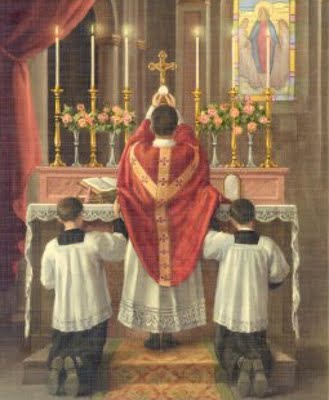
Low MassThe first two Masses were scheduled specifically to coordinate with the shift schedule at the mill. For the men working “Daylight” (7 am to 3 pm), Holy Name offered a 6 am “Low Mass.”  The workers that had worked “Night Turn” (11 pm to 7 am) were able to attend the 7:15 Low Mass. The 9 am Mass was the Children’s Mass. Student’s from Holy Name, as well as any school age child in the parish were invited to sit together in the pews at the front of the church. Although I am sure there were incidents of kids misbehaving, for the most part, one glare from any of the nuns that would guard and patrol the group would squash any “uprising!” Just like the first Mass of the day, the 7:15 and 9 o’clock Masses were also Low Masses. The final Mass of the day was at 11am and was celebrated as a High Mass.

Now, to be perfectly honest, as a wee altar boy, the difference between a Low Mass and a High Mass was that we would light more candles and it lasted longer. I didn’t know why it lasted longer, but I usually blamed it on the choir. In researching the information about the two different Masses, I discovered the following:

Low Mass (called in Latin, Missa lecta, which literally means “read Mass”) is a Tridentine Mass defined officially in the Code of Rubrics included in the 1962 edition of the Roman Missal as Mass in which the priest does not chant the parts that the rubrics assign to him. A sung Mass in turn is a Solemn or High Mass if celebrated with the assistance of sacred ministers (deacon and subdeacon); without them it is a Missa Cantata.

The worst Mass to be scheduled to serve in my mind was the 6 am service. Having to get up so early did not go over well with me. I don’t remember being uncooperative, but I’m sure I gave my mom a hard time about having to get up so early.

lucy04After our family had attended mass, our Sunday’s rolled out the same way for as long as I could remember. After we returned from Mass, Dad would always begin his Sunday morning ritual of preparing some over the top breakfast for all of us. Mom would kick back on the sofa and begin reading the Sunday paper while sipping a cup of coffee. Dad’s breakfasts ranged from perfectly prepared pancakes, to bacon and eggs, to a special concoction that he would create and call “soft-scrambled eggs.” His creation was slow cooked scrambled eggs that contained lots of milk to keep the eggs creamy, and chunks of fried Spam! Whenever he would be making that, my cousins Paula and Karla were always right there enjoying it with us. I was usually assigned toast duty, and would be responsible for preparing a mound of buttered toast that would sit in the middle of the breakfast table and be up for grabs for anyone.

We rarely had to deal with the distractions on Sunday that we deal with today. Stores weren’t open for the most part, a few gas stations might be open, grocery stores were closed and people were generally forced to spend time with their families. Although my dad might have a project to complete around the house, he would always try to get it done on Saturday so that he could have Sunday free.

A visit to my paternal grandfather’s house was always on the agenda on Sunday. NO matter when we visited, food was always involved. We were hunkys, what did you expect! We would usually eat lunch or dinner at Grandpa’s house. Somehow, there was always enough for everyone who showed up. It was like the Volk’s version of the loaves and fishes! There always seemed to be the hunky staples of soup, ham, stuffed cabbage rolls and kielbasa available throughout the year. We never tired of the food and being able to enjoy it with my aunts, uncles and cousins made it even more special.

At some point during our visit, my dad and his brothers would excuse themselves and gather either in the kitchen or on the porch for some hunky “libations!” Always beer and always whiskey.  Shots and beers were the only beverages that crossed their lips. Inevitably, my mom and my aunts would get ticked off at the fact that they were drinking, go out and yell at them and then give up and return to the kitchen.

At that point, the ladies would pour themselves cups of coffee and pull out a deck of cards to begin a game of euchre or gin rummy. The kids were busy running amok throughout the house, the basement and the yard, so we were occupied and they didn’t have to worry about us. After they had finished at least two or more pots of coffee and had tackled countless games of cards, it was time to round up the guys and head home for the evening. That wasn’t an easy task since the men were probably feeling really, really good, and would be reluctant to leave. After a few bouts of yelling by my Aunt Helen however, they would disburse and pack the Mrs. and kids into the Kaiser and head home. Fortunately, we always arrived home safely, along with all of my other aunts, uncles and cousins. I think that by Sunday evening, most everyone on the road in Duquesne and West Mifflin had been enjoying themselves in the same way, so everyone was extra careful while driving. It is amazing to think of how we all  survived as kids without the use of seatbelts, car seats, etc.

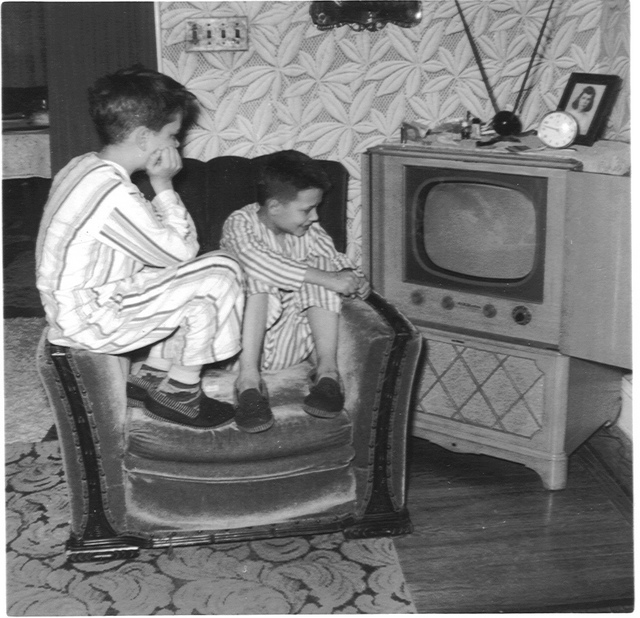
4851752925_5672b2f939_zSunday night routines didn’t waver much throughout the school year. From September through June, Sunday evenings meant getting a bath before bedtime. Reluctantly, my brother and I would march up to our second look bathroom and begin our preparations for the start of the school week.  Although it could have been a disappointment that the day was nearly over, it never was. We always knew that we still had more in store that evening as we all gathered as a family to watch some of our favorite TV programs.

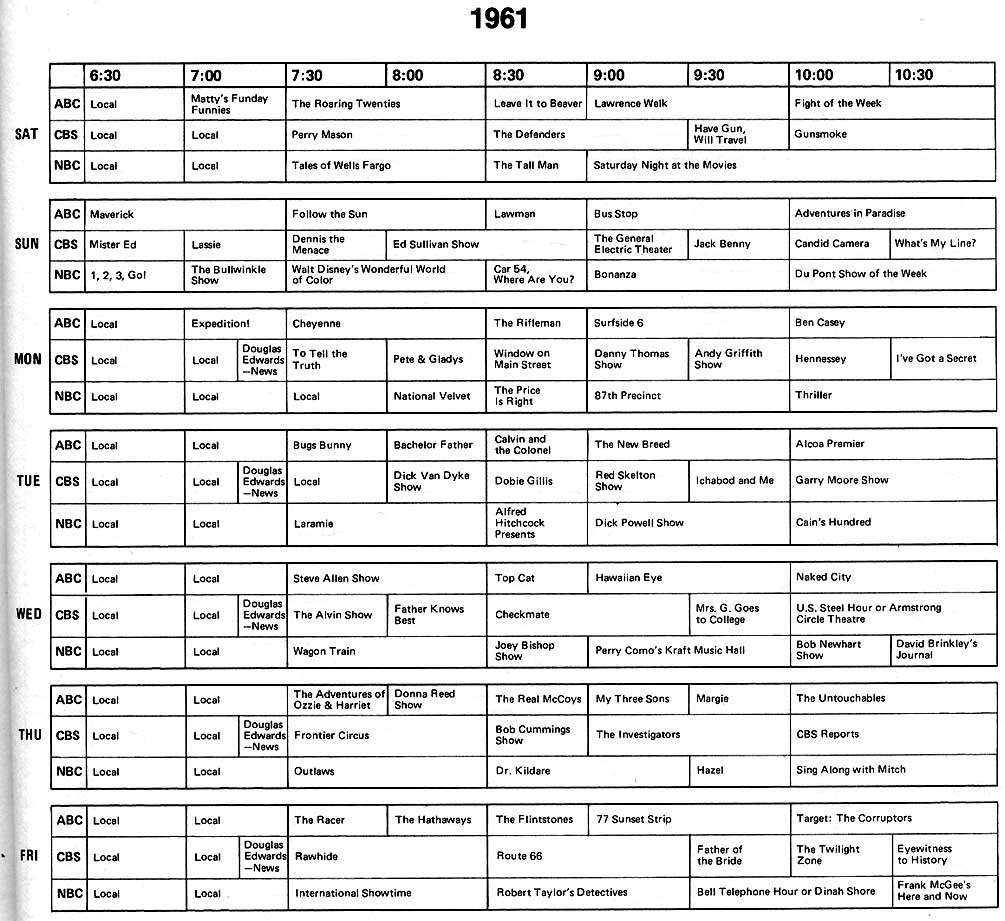
We never had the myriad of channels to choose from while growing up in Duquesne. There were only channels 2,4,11 and 13 and MAYBE if you were lucky and the wind was blowing the right way, you could get channel 6 out of Johnstown or channel 9 which was broadcast out of West Virginia or Ohio, I think.

1961_TV_Programs

In the 50’s and early 60’s, Primetime TV shows began 30 to 60 minutes earlier than today, starting each evening in some cases as early as 7 p.m. On Sundays, the primetime viewing began as early as 6:30 p.m. with some of our favorite programs. Throughout most of my childhood, our Sunday evening viewing became tradition. Lassie, Walt Disney’s Wonderful World of Color, The Ed Sullivan Show (known earlier as Toast of the Town), Bonanza, Candid Camera and finally, What’s My Line was the litany of programs we’d follow each week. When Bonanza shifted to the 9 to 10 p.m. time slot in 1961, we were even allowed to stay up and enjoy the show with our parents. That was such a treat and a great way to end Sunday for us. Seriously, how could one go wrong with Ben, Adam, Hoss, Little Joe and Hop Sing!?!

Now, enjoy a bit of nostalgia with some YouTube clips of these fabulous shows and let us all know your favorites!

Jackie Wilson on the Ed Sullivan Show……….

Posted in Church and School - Holy Name, Life in General, Miscellaneous, Movies, Music, Radio and TV, My Hunky Family, Parents | 22 Comments